The plagiarism (and plagiarised) iceberg

I once attended a conference on academic integrity. Full of academics and university managers all concerned about the rising tide of plagiarism, cheating and the exponential growth of services and products aimed at providing their users the means with which to ‘game’ the system. 

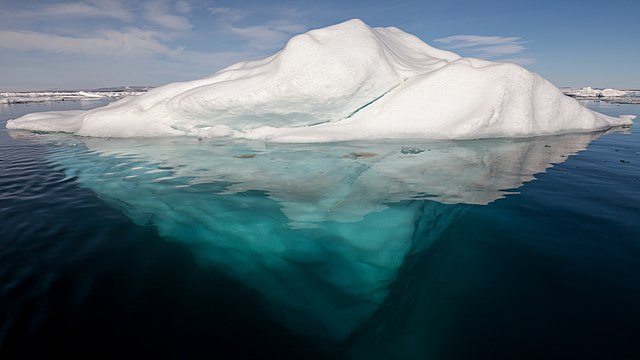
As is customary at such gatherings, there was a keynote presentation from an expert in such matters. In this case it was a senior academic and university leader talking about the way their university had approached the ‘problem’. The presentation, accompanied by the inevitable Powerpoint slides of charts and bullet points, was going well and had my full attention until the first photographic image appeared. It was a stunning image of an iceberg, showing the relatively small, visible above water section in contrast to the immense invisible section below the water line, used to illustrate the point that what we see and catch in terms of plagiarism, cheating, collusion etc. is only the ‘tip of the iceberg’.

I immediately recognised the image, and if you Google ‘iceberg’ and select ‘images’ you’ll see it amongst the first set of images. It’s also – because it’s a great image – promiscuously plagiarised on dozens of websites and blogs. I recognised it, because I’ve also ‘stolen’ it for a satiric poster…but that’s another story.

But here we had a patently plagiarised image, with no acknowledgment as to its source, being used to illustrate a presentation on tackling and preventing plagiarism, given by an expert in the field at a large conference where the ‘fair use’ conditions don’t apply.

A wee bit ironic.

But the thing is, I’m sure we’ve all done it at some point. Let’s ‘spice up’ our otherwise visually boring Powerpoint presentations with some nice ‘visuals’. Isn’t that what we’re encouraged to do? And doesn’t something like Google images or Flickr make it so easy? 

But is it so hard (and ignoring, for the moment, issues of copyright and fair use) to acknowledge one’s sources? There’s even less excuse when there are now several websites ( e.g. Unsplash, Openverse, Creative Commons, Freerange, Pixabay etc.)  that provide access to millions of images that are free to use but usually request that you cite the source.

Perhaps, when it comes to plagiarism, we should try just a bit harder to practise what we preach when we present our work – whether to students or colleagues. 

 Image: “Iceberg in the Arctic with its underside exposed” by AWeith is licensed under CC BY-SA 4.0.

 ~~~~~~~~~~~~

(See also ‘Is a picture worth a thousand words? Incorporating the visual into your teaching https://stumblingwithconfidence.wordpress.com/2023/12/15/2095/

Every menorah tells a story

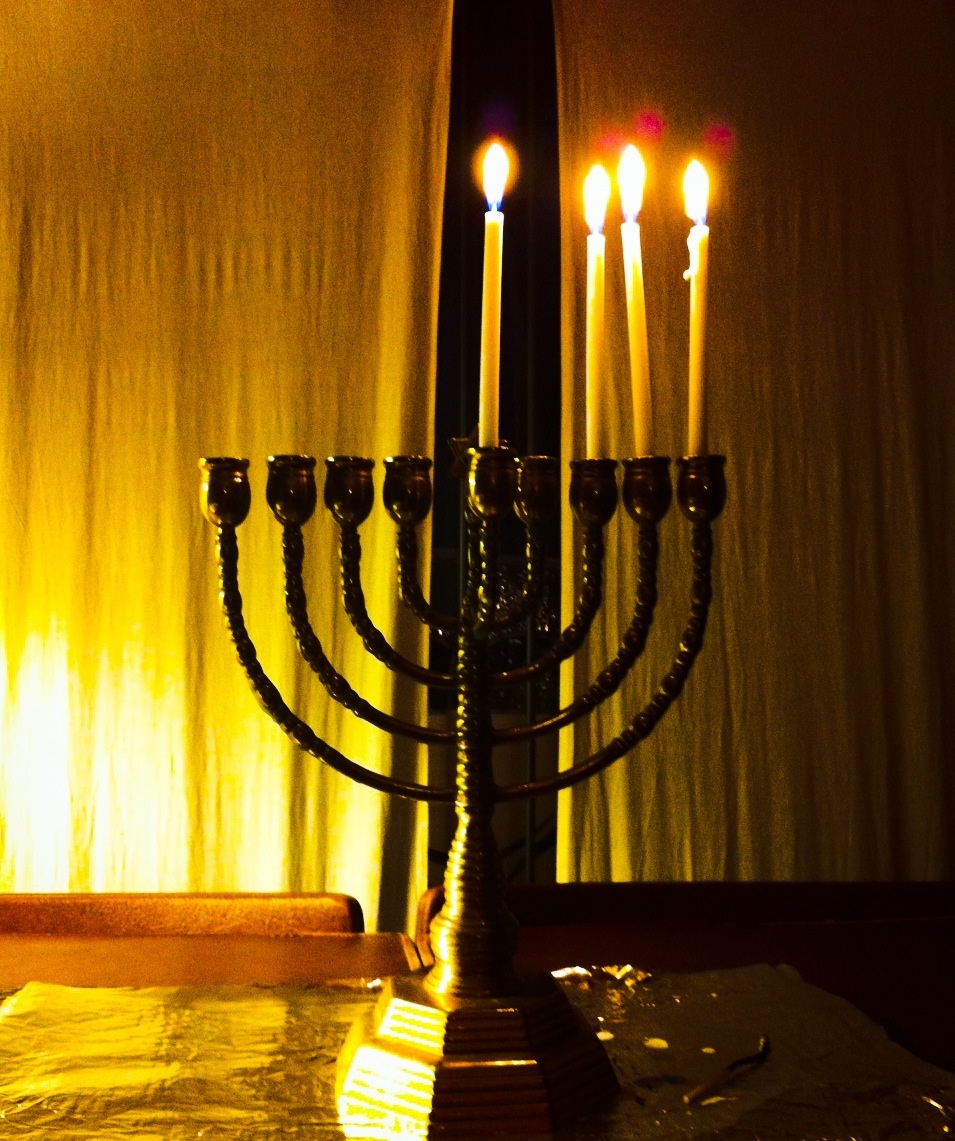
image This is one of our menorahs (more properly a chanukiah, a menorah has seven branches, but nearly everyone calls the eight branch version a menorah) ) that we light on Chanukah, the Jewish ‘Festival of Light’ that Jews around the world celebrate. The festival lasts for eight days, and you start lighting one candle on the first night, and end with lighting eight candles on the last night. The candles are lit by a candle known as the shamas. 

Menorahs come in all shapes, sizes and materials: from the traditional eight branch candelabra plus the shamas candle made in brass or silver, to ultra-modern designs of great ingenuity and beauty. Essentially anything goes as long as the basics are met i.e. eight candles in some form of row plus the shamas candle, and many designers have taken up the challenge.

We have acquired several menorahs over the years. Some were gifts. Some we’ve inherited from parents and grandparents. A few we’ve bought.

(Here are some of the menorahs we’ve acquired, with their stories: Eight Days of Chanukah)

But this menorah,  quite large and made of brass, which we call our ‘Irish menorah’ is my favourite one.

Several years ago, when our now adult children were really just children, we were on holiday in the far south west of Ireland. West Cork to be precise. We were staying on a very small island called Long Island in Roaringwater Bay and, as there were no shops, we had to cross over by boat to the small village of Schull on the mainland to get supplies. I say ‘we’, but I have to admit that it was my partner, Jo, who usually went off to do the shopping while I stayed and supervised – from a very relaxed distance – the children, as they played amongst the rock pools and went off with the small gang of other children also staying on the island.

Among the few shops in the village there an ‘antique shop’, which was actually more of a junk shop. Jo stopped one day, and looked into the shop. And there, amongst the usual bric-a-brac, was a brass menorah. She could see the label which said: ‘8 branch candelabra with extra candle holder’. Amazed, and knowing there were very few if any Jews in that part of Ireland, she asked the shop owner where it had come from. The woman didn’t know, and really didn’t know what it was, despite the Star of David in the centre of the menorah. So Jo bought it, for the ridiculous price of £8.00

When we got it back to our little holiday cottage and looked at it closely we realised that it was designed to come apart. By turning the Star of David, which was attached to a long, thin screw, we could unscrew it from the heavy base, and then everything came apart. It was, of course, designed to be taken apart, and the various parts placed in a case – which had obviously disappeared somewhere along the menorah’s long journey to a junk shop window in West Cork.

We reckoned, after a bit of googling, that it was c. 120 years old, had probably originated in Central Europe, and the chances were that it had belonged to one of the many thousands of families – like our own families – who came to the then British Isles and beyond to escape antisemitism, pogroms and persecution and to seek a new life.

Of course we’ll never really know the real story. But as I watch that old brass menorah glow as the candles burn and flicker, I feel a extraordinary link to the past: a link in a chain that remains – despite the tribulations and tragedies of history – unbroken.