
Object lessons and reflections on the HEA Arts & Humanities conference 2016
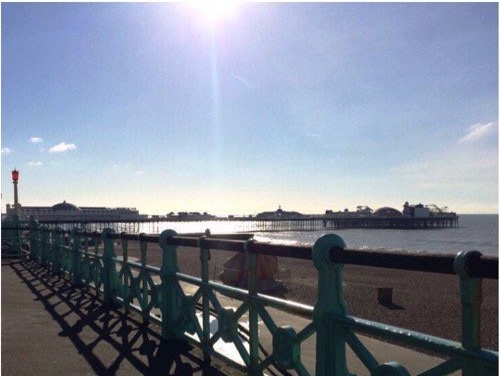
Early March. Brighton is an alluring place, despite the chill in the air. The sun is shining, the sea is blue, the promenade and beach lie temptingly just across the road from the conference venue, and the esoteric shops, cafés and bars of The Lanes are just a couple of minute’s walk away. So it was a testament to the commitment of the participants and the quality of the many and varied sessions on offer that so many were able to resist the temptation to ‘skip school’.
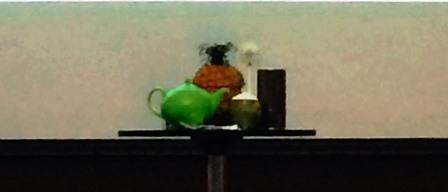
While, in some sessions and in Jonathan Worth’s fascinating keynote on the second day, there was an inevitable and valuable focus on the digital and the virtual, the most powerful message – for me – was the extraordinary pedagogic power of the physical, tangible object. From Kirsten Hardie’s opening keynote with accompanying green plastic teapot, pineapple ice bucket and toilet brush, to the Lego sessions of Contemplative Pedagogies, by way of Simon Heath’s wonderful drawings (see image below) that captured the essences of the whole event, it was the object that held centre stage. And there were plenty more sessions that focused on making and doing as a pedagogic activity, not just a practical or physical one.


Photo left: Hannah Cobb @ArchaeoCobb
I have written elsewhere (‘On history and all that’ ) on the power of objects to engage the imagination, to generate stories and lines of enquiry, to provoke philosophical, political, ethical debates, and to provide learning experiences that really ‘stick’. I still recall clearly the ‘History of Decoration’ seminars from my art student days when ‘Simi’ (Ms. Simeon the lecturer) would enliven her lectures on, say, Ancient Egypt, by taking a vase or piece of jewellery or some other artefact out of the cardboard box she always brought. She would casually hand the object to someone to examine and then pass around the room with the words ‘Do try to be careful, dear, that’s three and half thousand years’ old’. This would be repeated every session, whether the topic was Ancient Rome (jewellery), Medieval Europe (a crucifix) or Tudor England (a lace ruff). I only realised what we had been passing round when I heard that, on her death , Simi’s large collection of “just something to look at while I’m talking” had been bequeathed to and enthusiastically accepted by the V&A museum.
What also became clear during the conference, is that ‘object lessons’ are not just the preserve of the creative arts community. Every discipline clearly has its associated artefacts which can be used not only to enhance the teaching of an ‘academic’ subject, but to act as foci for the characteristics and qualities of the sort of learning that Kirsten Hardie talked about: learning that engages, amazes, provokes, exhilarates, takes risk, liberates.
 One of the things I remember from those, now distant, art history sessions is something I frequently refer to in my work on curriculum design and assessment. In one her first seminars, Simi passed round an Ancient Greek vase that was covered head to foot in decoration. The reason, she said, for filling every possible square inch was ‘horor vacui’ – fear of open space – because it was through open space that the ‘Evil Eye’ enters the world. That might well be one of the reasons (though I would avoid mentioning the ‘Evil Eye’ or the Devil in module specifications and handbooks) why we insist on filling our curricula with content: ‘Idle hands make the devil’s workshop’ and all that. But we also know that deep learning, creativity and innovation require time and space to incubate and develop.
Objects, importantly, enable us to slow down time: to observe, to really look, to touch, to feel, to explore. Simon Piasecki, at the conference, talked about how he gets his performance students to slow right down and focus on the minutiae of what they are doing, and the artist Marina Abramovich – one of whose concerns is the fact that we don’t stop to really look any more – has a number of exercises she uses with those who come to view her work to achieve the same slowing down. When I worked at the Liverpool Institute of Performing Arts (LIPA), one of the first year ‘options’ that I established – open to any student – was a traditional life-drawing class. All the students that participated in that quiet, contemplative two hours on a Wednesday evening, amidst an extraordinarily hectic timetable (‘horor vacui’!), reported that they understood that it wasn’t about being able to draw. It was about having the time and space to slow down and really observe not only the ‘object’ (usually another student) but also themselves….and to ‘take a line for a walk’ in Paul Klee’s famous phrase.
Ken Robinson, in his now famous TEDTalk on creativity and education, jokes about academics generally seeing their bodies as a form of transportation to get them to meetings. He, among others, stresses the importance of mind and body, the intellectual and the emotional, the psychological and the physiological. What came through so strongly at the HEA Arts and Humanities conference was that objects – in all their glorious variety – and our close interactions with them, provide a means to engage powerfully in deep, meaningful learning experiences. Objects both inhabit space and create space. We just need the space, the time and, impotently, the confidence to engage in our own object lessons.
 Stumbling with Confidence