Grief crept up on me, unexpectedly: a story of Christmas Eve.

As a Jewish family, we don’t really do Christmas. Yes, we’ll gather together, have a big meal, play board games, and watch far too much television. But that’s because it’s a holiday, everything is closed, and there’s not much else to do.  Coming up to Christmas that year we’d just had some building work done, and there was still loads of cleaning up, making good, re-decorating to do. So it was looking like a DIY Christmas and new year.

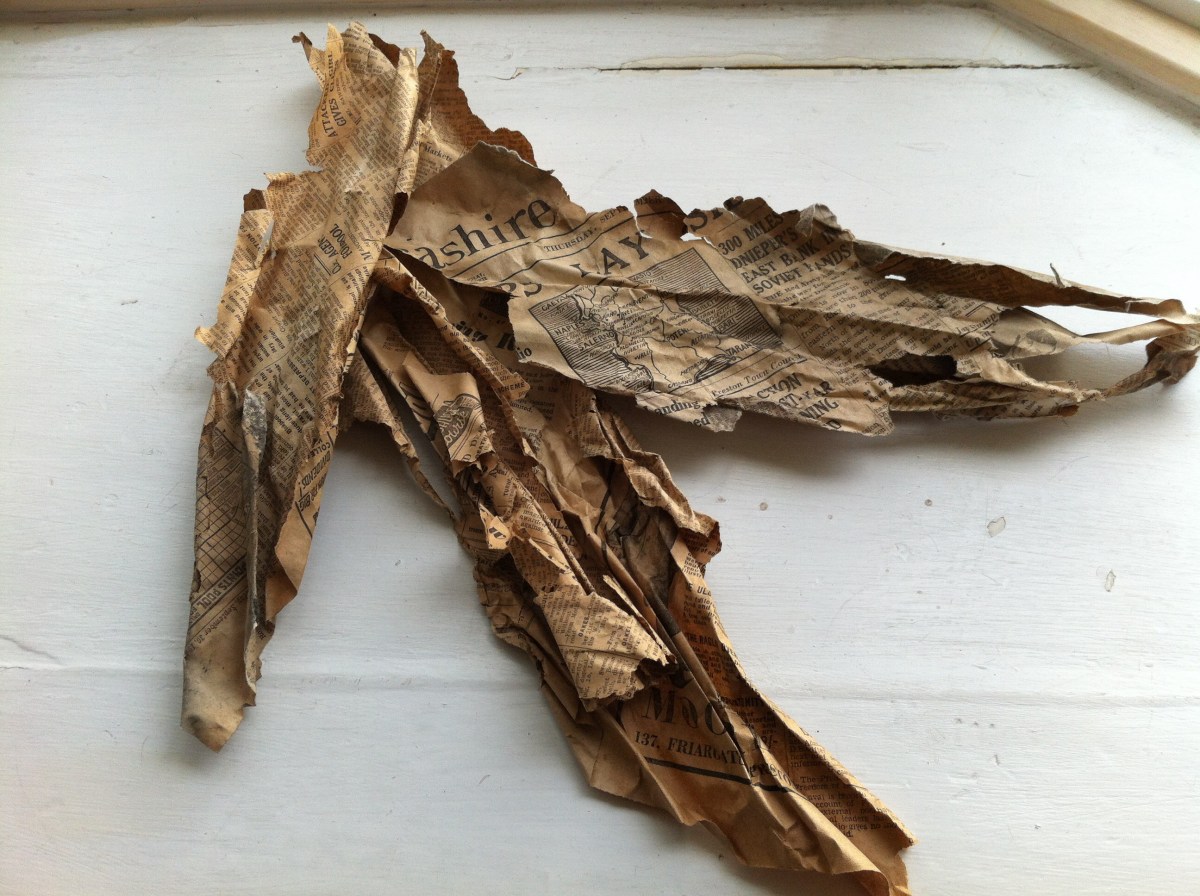
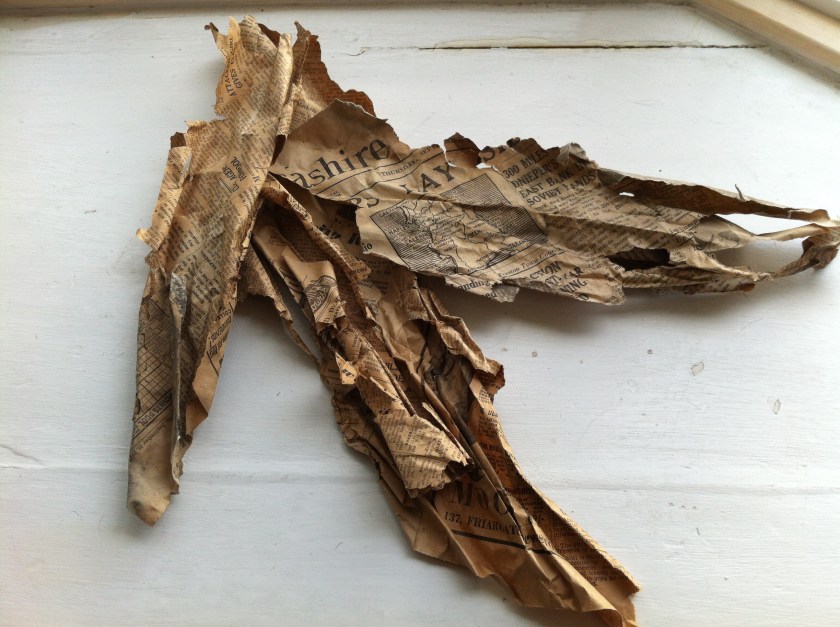
As it happens, the builders had found an old, crumpled newspaper stuffed into the gap between the window and the wall our bedroom. When they first found it, it reminded me of a dead bird.

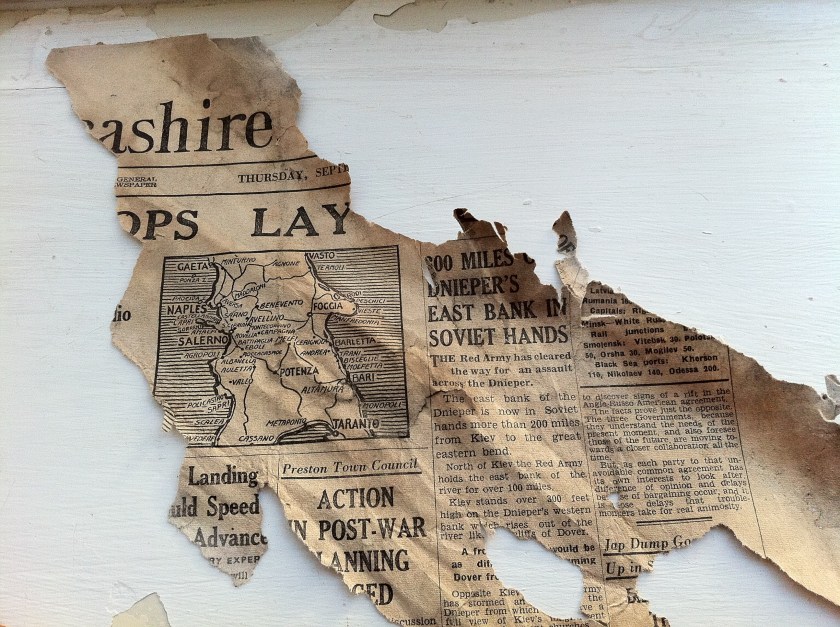
On the afternoon of Christmas Eve I decided to have a go at ‘uncrumpling’ it using our steam iron. It turned out to be the Lancashire Post from 30th September 1943. The paper was very fragile – I suspect they didn’t use the best quality newspaper during the war years – and I became absorbed in the task of slowly but surely flattening the paper one careful centimetre at a time. I wasn’t even aware that the radio was burbling quietly away on the other side of the room.

As each piece revealed its flattened secrets, I read about the Fifth Army’s losses in North Africa, the Russian advances along the Dneiper, a successful bombing raid over Germany (only eight missing in action). I also read about a local woman fined for fiddling ration books, and a Polish aircraft man convicted of drunk driving.
6B36571F-B19A-4FAF-9A7A-0D972EE9726C

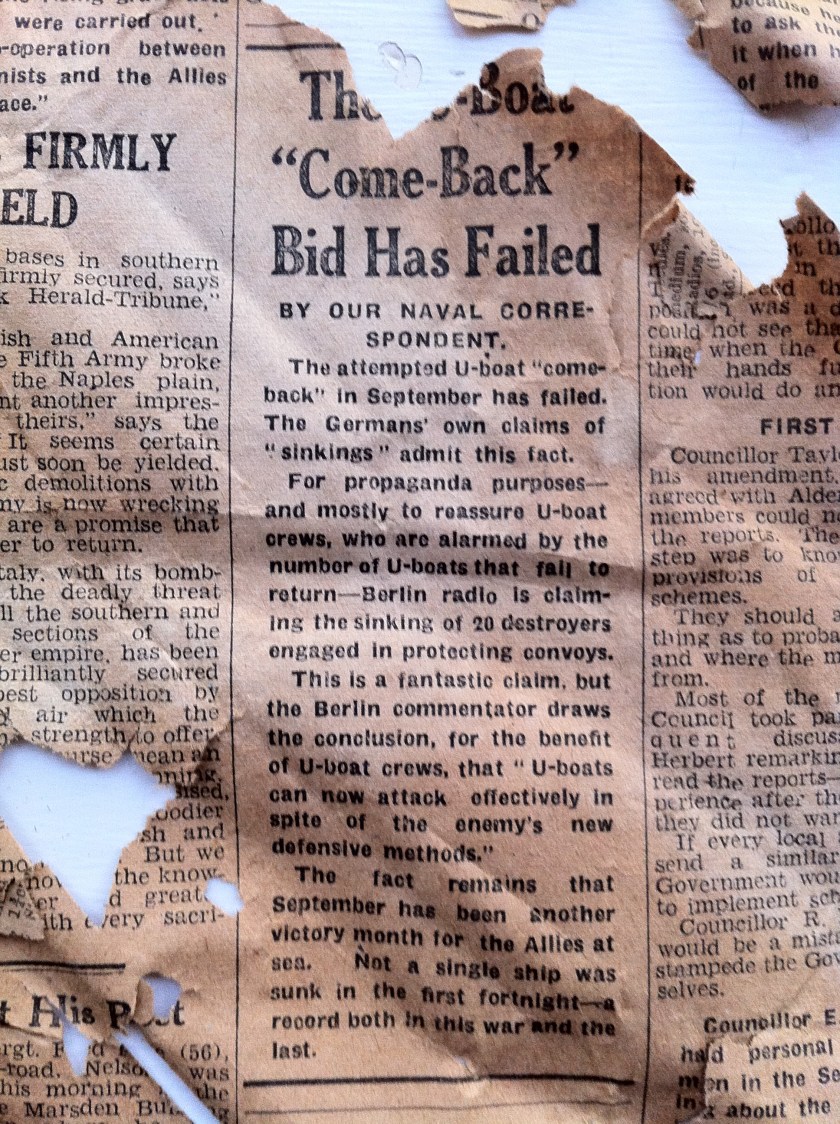
There was also a small item about how the German U-boats had failed to sink a single ship in the previous month. 70 years later, on Christmas Eve, the newspapers and television were full of the news about the Royal pardon given to Alan Turing, the man who had ‘cracked’ the German Enigma code used by the U-boats and, by doing so, had in no doubt saved thousands of lives and perhaps helped to end the war. But Turing was gay at a time when it was illegal, and had been found guilty of gross indecency, jailed, chemically castrated, and forbidden to undertake any work linked to national security. He was and should have been hailed as a national hero. Instead, he committed suicide two years later in 1954, and full recognition has only come very recently.

Those U-boat failures, reported on the front page of that 1943 Lancashire Post, were a direct result of the work Turing had undertaken at Bletchley Park.
7D82AF71-CB37-4FD9-91B3-88A0DF5D6033

Absorbed in the task and on this fascinating window on history, I suddenly became aware of a beautiful, solo treble voice filling the room, singing “Once in Royal David’s City….”. It was three o’clock in the afternoon and the start of that wonderful, traditional Christmas Eve ‘Festival of Nine Lessons and Carols’ from King’s College Chapel in Cambridge. And as that pure, high voice soared…..I burst into uncontrollable sobs. A veritable tsunami of grief poured over, into and through me: disturbing and disruptive in its power and intensity.

It took me a while to realise what it was.

When my mother died, I cried no more than a couple of times, and that was around the time when it all happened and usually  in response to an individual’s kindness and sympathy. But nothing like this.

Though, obviously, Jewish and very proud of her traditions, my mother also had a deep love for many things that were quintessentially English. Among them she had a particularly high regard for and interest in the great cathedrals and churches of England. After she passed away I discovered, amidst the thousands of documents she left, a neatly stacked pile of guides to virtually all the English cathedrals and some other churches, all annotated with her distinctive handwriting. I always smile when I see those guides as my father did not approve of my mother’s interest in Christianity, and I know he would not step inside a church. So I have a very clear picture of my mother wandering around inside with her guide, no doubt quizzing whoever she could find about the history of the building and making notes, while my father sat patiently on a nearby bench doing his Times crossword.

Just before three o’clock in the afternoon on Christmas eve, without fail, and though Jews – on the whole – don’t do Christmas, my mother would sit herself in her favourite chair, turn on the radio, quite loudly, and wait until that beautiful, soaring, solo treble voice filled the room, singing the first verse of the carol, followed by the choir and then the congregation. Earlier in the day she would have called me to remind me NOT to call her between 3pm and 5pm.

As that deep pang of grief and my sobbing subsided, and I was able to collect my thoughts, I wondered how that boy’s voice could trigger such intense emotion. I remembered how some of Mark Rothko’s last paintings, those gigantic fields of deep colour, have a similar effect on some individuals, and I recalled that in some therapeutic contexts music and song are used to enable individuals and groups to confront severe trauma.

In my case, that moment triggered an intense ‘remembrance of things past’ and a huge sense of both loss and love. I suspect we all have those triggers, those Proustian ‘Madeleine biscuit’ moments, when something – perhaps completely unexpected – plunges us into the deep well of memory, love and loss.

That afternoon, as I ironed that old newspaper (something my mother would have loved – the newspaper not the ironing!) and listened to that young boy singing those famous words, I probably missed her more than I’ve done at any other time.
Every menorah tells a story

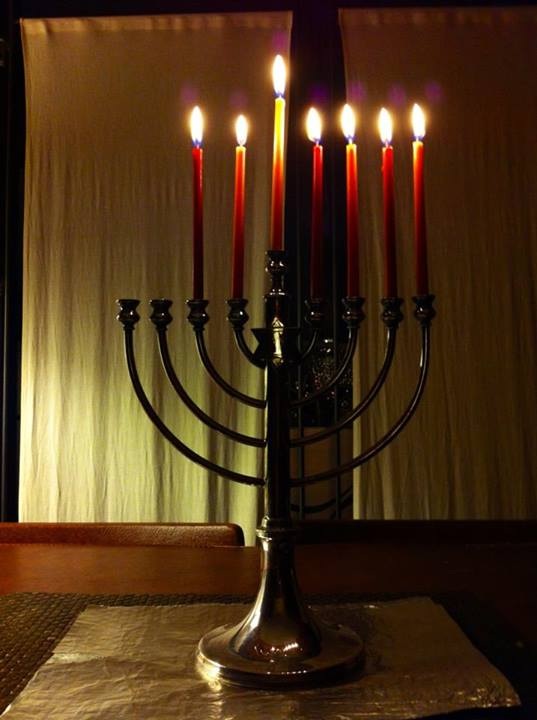
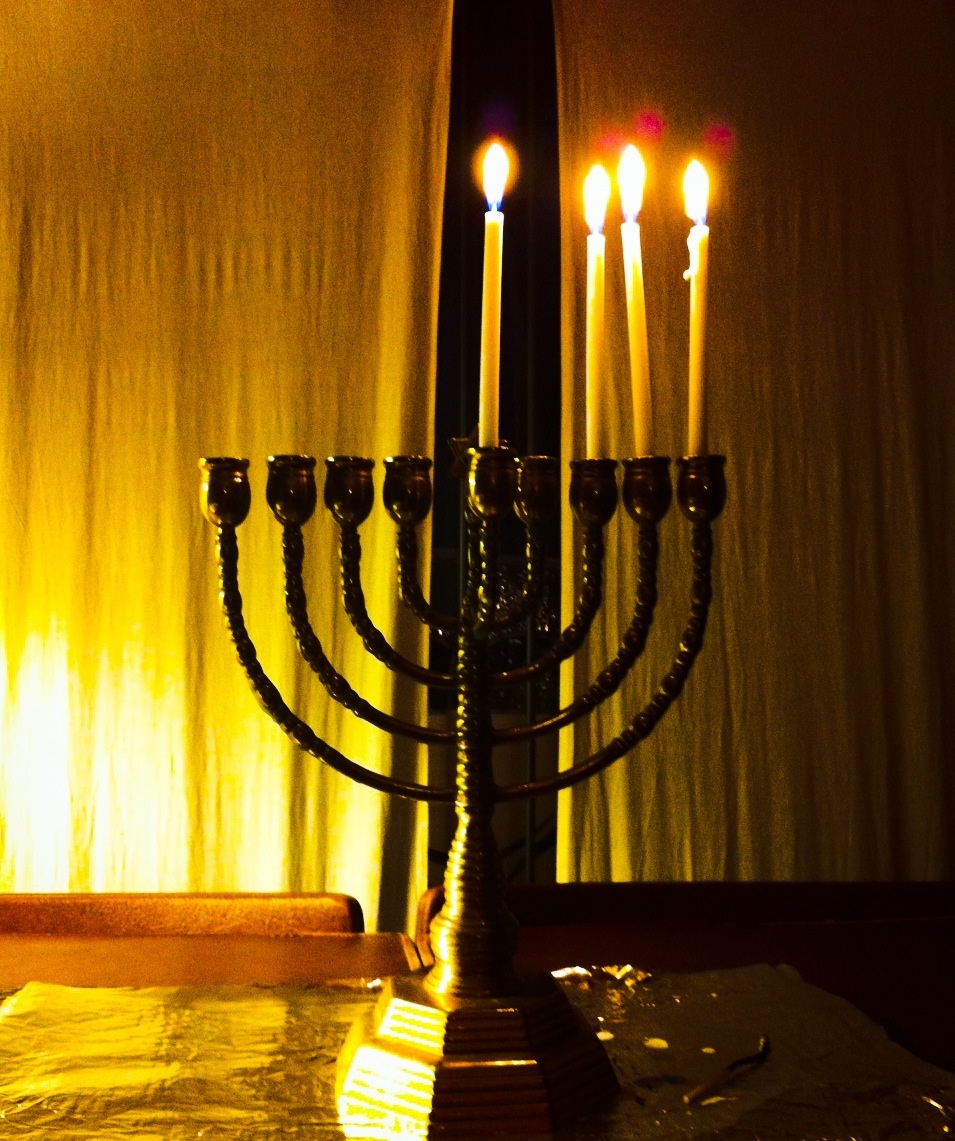
image This is one of our menorahs (more properly a chanukiah, a menorah has seven branches, but nearly everyone calls the eight branch version a menorah) ) that we light on Chanukah, the Jewish ‘Festival of Light’ that Jews around the world celebrate. The festival lasts for eight days, and you start lighting one candle on the first night, and end with lighting eight candles on the last night. The candles are lit by a candle known as the shamas. 

Menorahs come in all shapes, sizes and materials: from the traditional eight branch candelabra plus the shamas candle made in brass or silver, to ultra-modern designs of great ingenuity and beauty. Essentially anything goes as long as the basics are met i.e. eight candles in some form of row plus the shamas candle, and many designers have taken up the challenge.

We have acquired several menorahs over the years. Some were gifts. Some we’ve inherited from parents and grandparents. A few we’ve bought.

(Here are some of the menorahs we’ve acquired, with their stories: Eight Days of Chanukah)

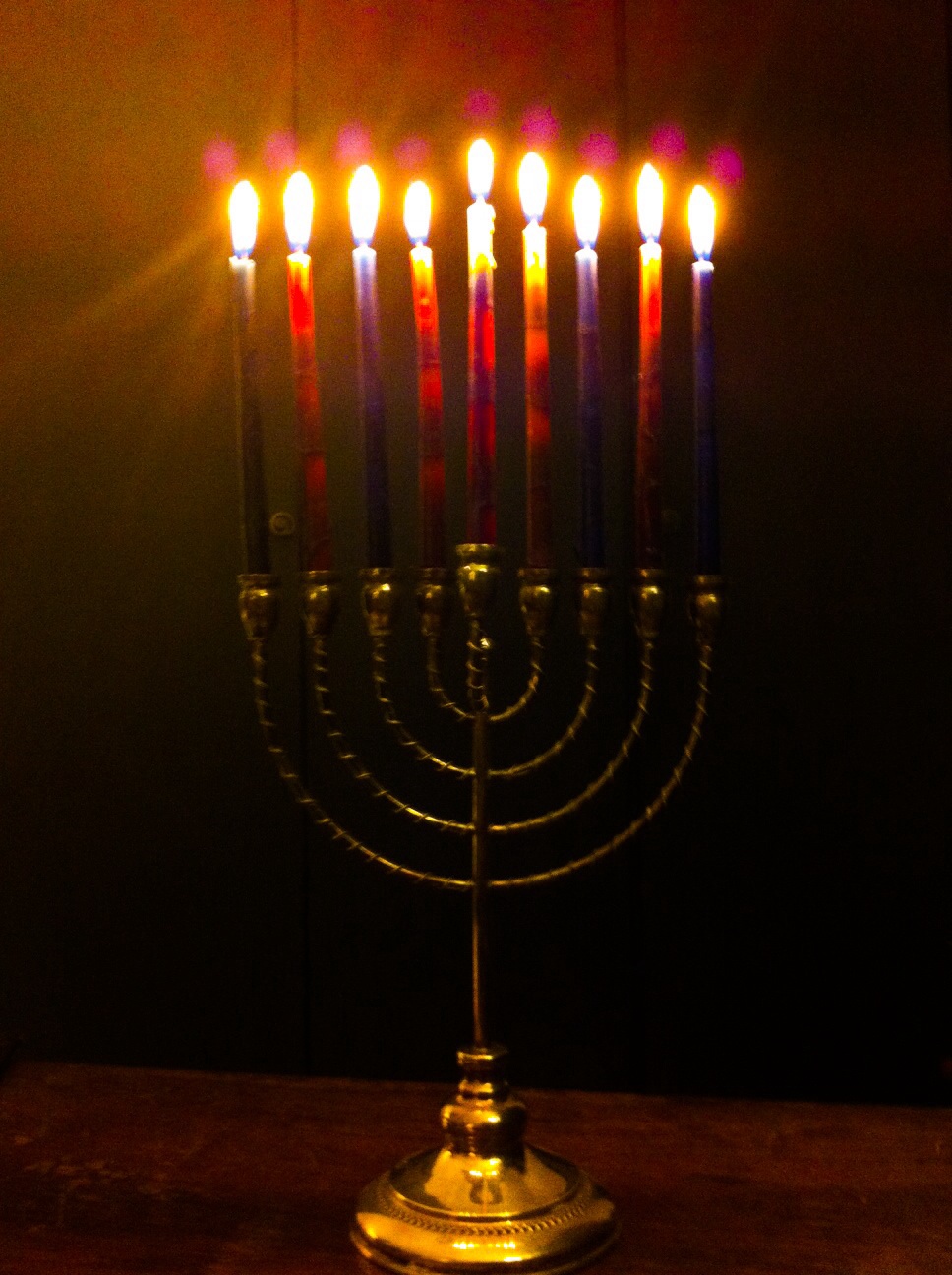
But this menorah,  quite large and made of brass, which we call our ‘Irish menorah’ is my favourite one.

Several years ago, when our now adult children were really just children, we were on holiday in the far south west of Ireland. West Cork to be precise. We were staying on a very small island called Long Island in Roaringwater Bay and, as there were no shops, we had to cross over by boat to the small village of Schull on the mainland to get supplies. I say ‘we’, but I have to admit that it was my partner, Jo, who usually went off to do the shopping while I stayed and supervised – from a very relaxed distance – the children, as they played amongst the rock pools and went off with the small gang of other children also staying on the island.

Among the few shops in the village there an ‘antique shop’, which was actually more of a junk shop. Jo stopped one day, and looked into the shop. And there, amongst the usual bric-a-brac, was a brass menorah. She could see the label which said: ‘8 branch candelabra with extra candle holder’. Amazed, and knowing there were very few if any Jews in that part of Ireland, she asked the shop owner where it had come from. The woman didn’t know, and really didn’t know what it was, despite the Star of David in the centre of the menorah. So Jo bought it, for the ridiculous price of £8.00

When we got it back to our little holiday cottage and looked at it closely we realised that it was designed to come apart. By turning the Star of David, which was attached to a long, thin screw, we could unscrew it from the heavy base, and then everything came apart. It was, of course, designed to be taken apart, and the various parts placed in a case – which had obviously disappeared somewhere along the menorah’s long journey to a junk shop window in West Cork.

We reckoned, after a bit of googling, that it was c. 120 years old, had probably originated in Central Europe, and the chances were that it had belonged to one of the many thousands of families – like our own families – who came to the then British Isles and beyond to escape antisemitism, pogroms and persecution and to seek a new life.

Of course we’ll never really know the real story. But as I watch that old brass menorah glow as the candles burn and flicker, I feel a extraordinary link to the past: a link in a chain that remains – despite the tribulations and tragedies of history – unbroken.

Grief crept up on me on Christmas Eve….unexpectedly.

As a Jewish family, we don’t really do Christmas. Yes, we’ll gather together, have a big meal, play board games, and watch far too much television. But that’s because it’s a holiday, everything is closed, and there’s not much else to do.  Coming up to Christmas that year we’d just had some building work done, and there was still loads of cleaning up, making good, re-decorating to do. So it was looking like a DIY Christmas and new year.

As it happens, the builders had found an old, crumpled newspaper stuffed into the gap between the window and the wall our bedroom. When I first saw it lying on the floor where they had dropped it, I thought they had found a dead bird.

E09A2B69-4E25-468E-B831-7B66BF619E8D

On the afternoon of Christmas Eve I decided to have a go at ‘uncrumpling’ it using our steam iron. It turned out to be the Lancashire Post from 30th September 1943. The paper was very fragile – I suspect they didn’t use the best quality newspaper during the war years – and I became absorbed in the task of slowly but surely flattening the paper one careful centimetre at a time. I wasn’t even aware that the radio was burbling quietly away on the other side of the room.

As each piece revealed its flattened secrets, I read about the Fifth Army’s losses in North Africa, the Russian advances along the Dneiper, a successful bombing raid over Germany (only eight missing in action). I also read about a local woman fined for fiddling ration books, and a Polish aircraft man convicted of drunk driving.

6B36571F-B19A-4FAF-9A7A-0D972EE9726C


There was also a small item about how the German U-boats had failed to sink a single ship in the previous month. 70 years later, on Christmas Eve, the newspapers and television were full of the news about the Royal pardon given to Alan Turing, the man who had ‘cracked’ the German Enigma code used by the U-boats and, by doing so, had in no doubt saved thousands of lives and perhaps helped to end the war. But Turing was gay at a time when it was illegal, and had been found guilty of gross indecency, jailed, chemically castrated, and forbidden to undertake any work linked to national security. He was and should have been hailed as a national hero. Instead, he committed suicide two years later in 1954.

Those U-boat failures, reported on the front page of that 1943 Lancashire Post, were a direct result of the work Turing had undertaken at Bletchley Park.

7D82AF71-CB37-4FD9-91B3-88A0DF5D6033

Absorbed in the task and on this fascinating window on history, I suddenly became aware of a beautiful, solo treble voice filling the room, singing ‘Once in Royal David’s City….”. It was three o’clock in the afternoon and the start of that wonderful, traditional Christmas Eve ‘Festival of Nine Lessons and Carols’ from King’s College Chapel in Cambridge. And as that pure, high voice soared…..I burst into uncontrollable sobs. A veritable tsunami of grief poured over, into and through me; disturbing and disruptive in its power and intensity.

It took me a while to realise what it was.

When my mother died the year before, I cried no more than a couple of times, and that was around the time when it all happened and in response to an individual’s kindness and sympathy. But nothing like this.

Though, obviously, Jewish and very proud of her traditions, my mother also had a deep love for many things that were quintessentially English. Among them she had a particularly high regard for and interest in the great cathedrals and churches of England. After she passed away I discovered, amidst the thousands of documents she left, a neatly stacked pile of guides to virtually all the English cathedrals and some other churches, all neatly annotated with her distinctive handwriting. I always smile when I see those guides as my father did not approve of my mother’s interest in Christianity, and I know he would not step inside a church. So I have a very clear picture of my mother wandering around inside with her guide, no doubt quizzing whoever she could find about the history of the building, while my father is sitting on a park bench nearby doing his Times crossword.

Just before three o’clock in the afternoon on Christmas eve, without fail, and though Jews – on the whole – don’t do Christmas, my mother would sit herself in her favourite chair, turn on the radio, quite loudly, and wait until that beautiful, soaring, solo treble voice filled the room, singing the first verse of the carol, followed by the choir and then the congregation. Earlier in the day she would have called me to remind me NOT to call her between 3pm and 5pm.

As that deep pang of grief and my sobbing subsided, and I was able to collect my thoughts, I wondered how that boy’s voice could trigger such intense emotion. I remembered the reports of how some of Mark Rothko’s last paintings, those gigantic fields of deep colour, have a similar effect on some individuals. I recalled that in some therapeutic contexts music and song are used to enable individuals and groups to confront severe trauma.

In my case, it triggered an intense ‘remembrance of things past’ and a huge sense of both loss and love. I suspect we all have those triggers, those Proustian ‘Madeleine biscuit’ moments, when something – perhaps completely unexpected – plunges us into the deep well of memory, love and loss.

That afternoon, as I ironed that old newspaper (something my mother would have loved – the newspaper not the ironing!) and listened to that young boy singing those famous words, I probably missed her more than I’ve done at any other time.
On the Eight Days of Chanukah….

F1C5B936-A8A1-40E8-80CB-4353F1E2DEEA

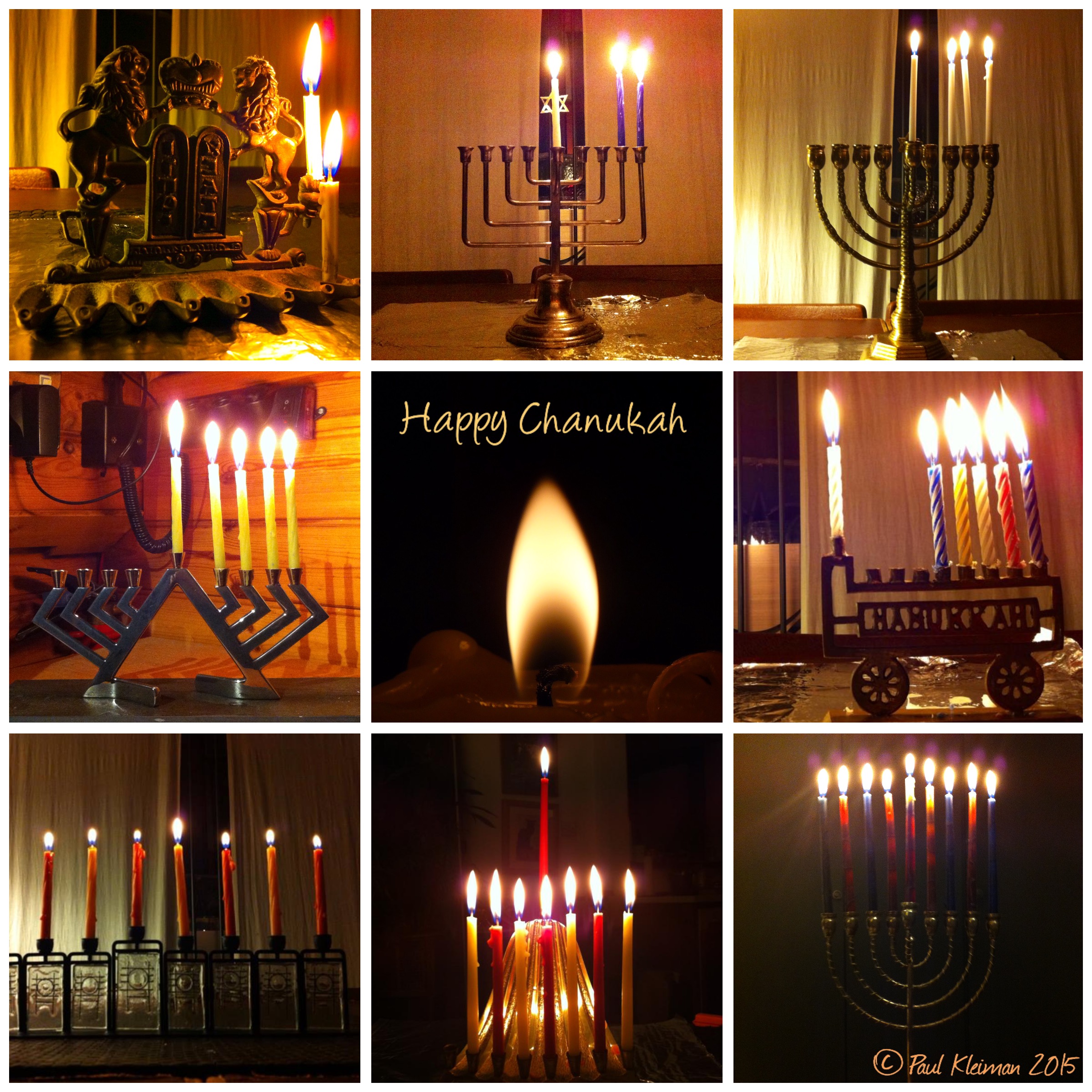
Over the years we’ve acquired a small collection of menorahs (properly called a hannukiah): family heirlooms, gifts, and a couple we’ve bought. It’s become a family tradition to use a different one every night for the eight nights of the festival.

Menorah 1
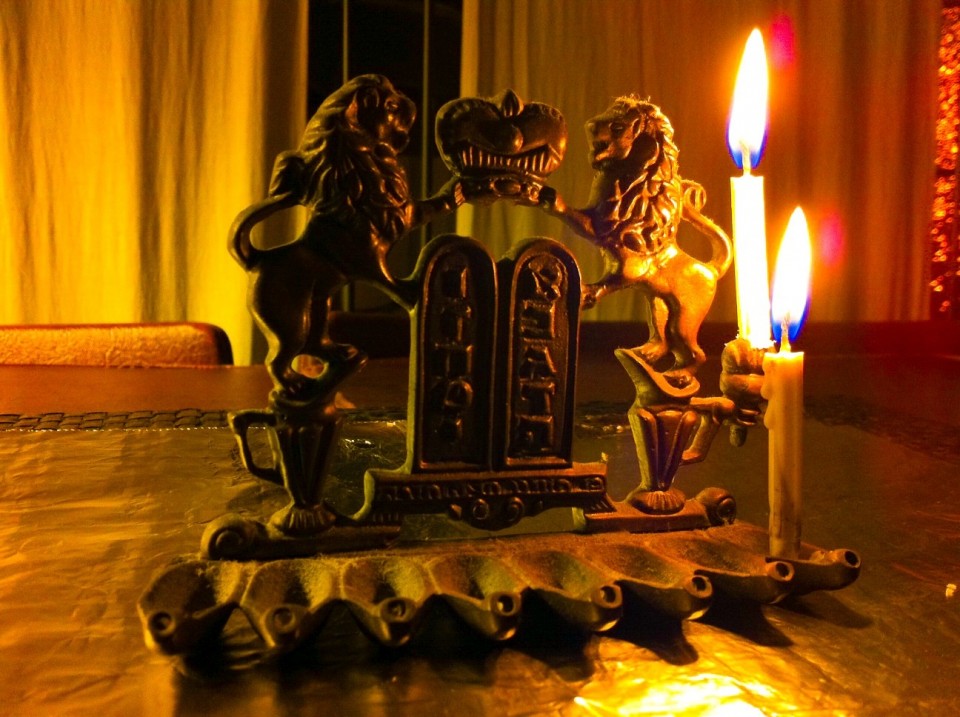
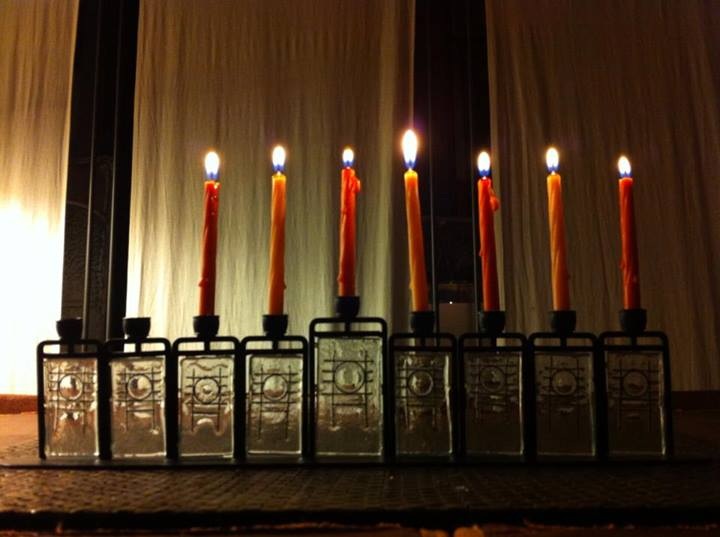
First night of Chanukah – one of my mother’s ‘ancient’ oil-lit menorahs. Using candles instead of oil.
Menorah 2
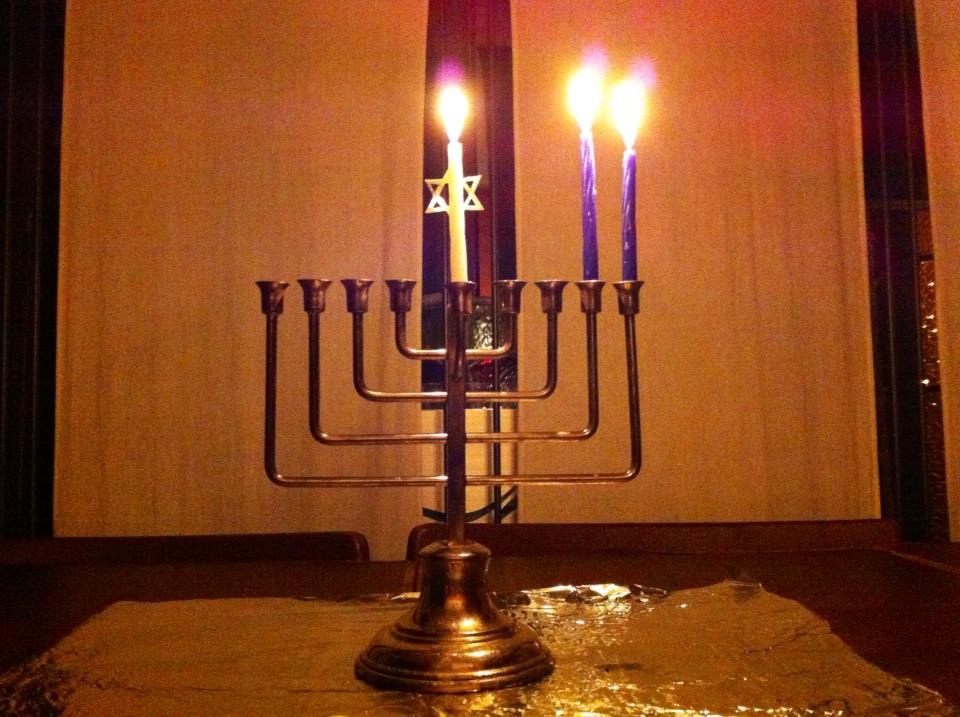
Second Night of Chanukah – my late parents’ menorah.
Menorah 3
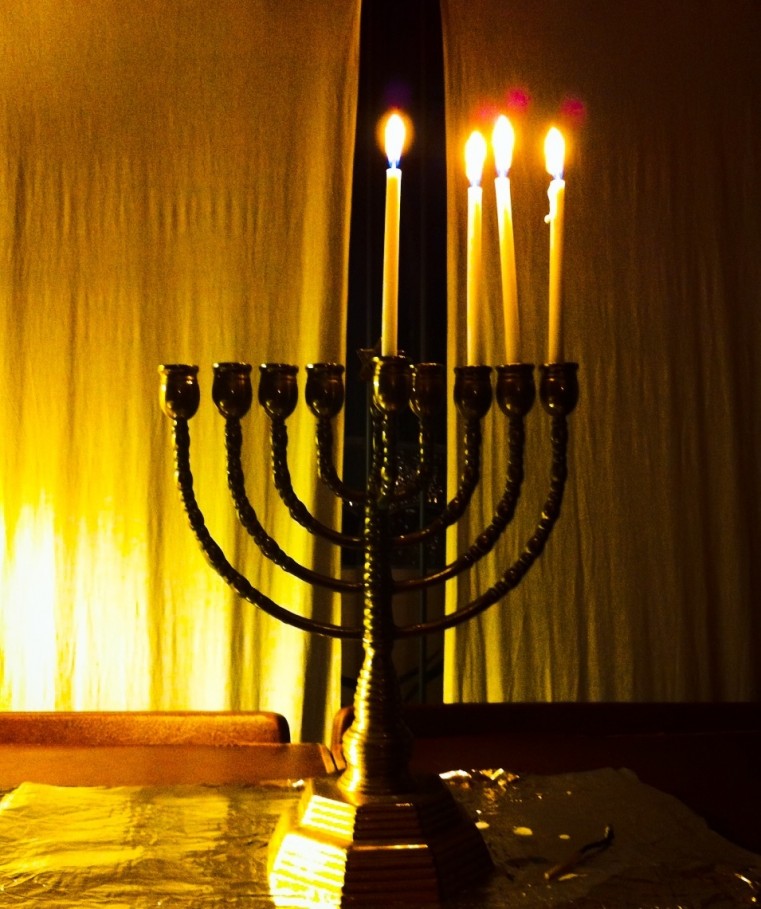
Third Night of Chanukah – the ‘Irish’ menorah

There’s a story behind our ‘Irish’ menorah: http://wp.me/p47zDC-2y

Menorah 4
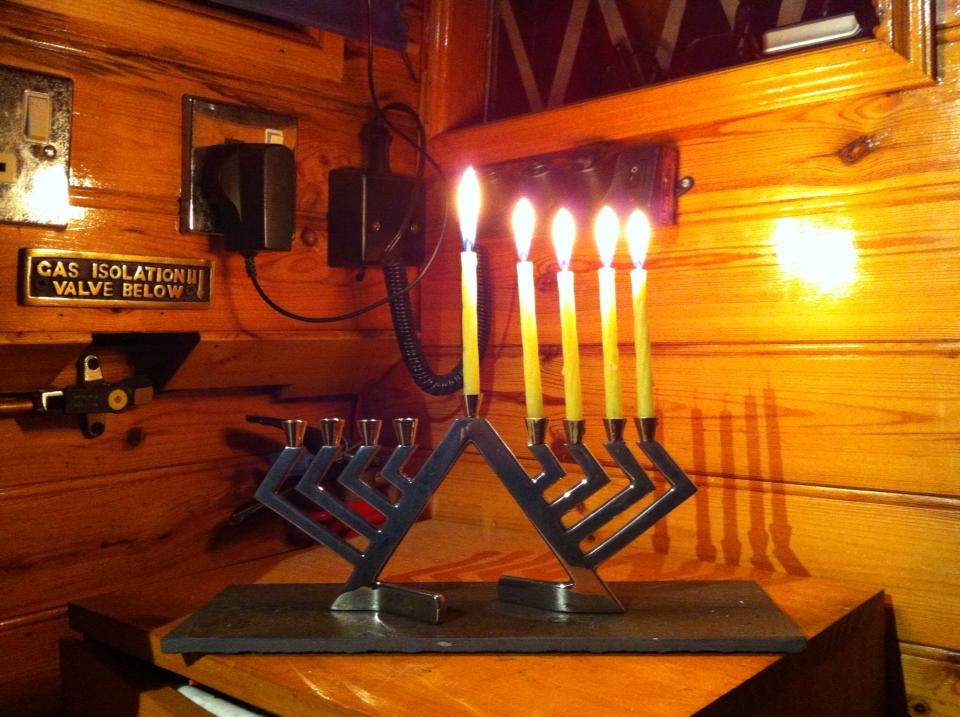
Fourth Night of Chanukah – afloat on our boat.
Menorah 5
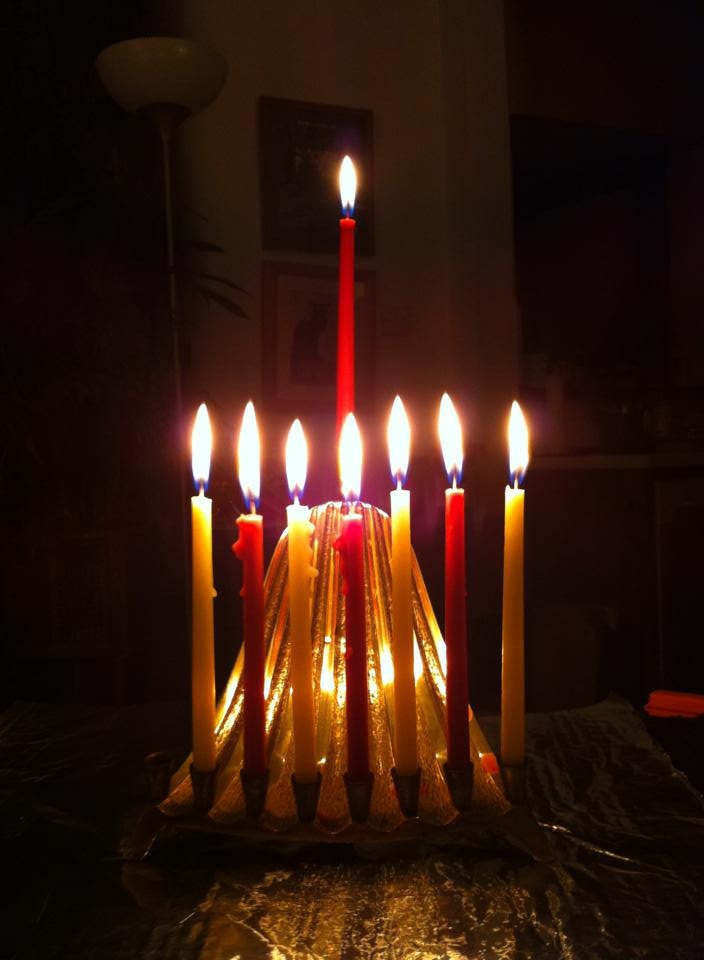
Fifth Night of Chanukah – miniature menorahs given to our kids when they were also miniatures

For the 6th night, we couldn’t decide which menorah to light…so we lit both of them.

Menorah 6
This belonged to Jo’s great-grandmother, and went from England to Canada and is now back again.

Menorah 6 - Jacob
This was given to our son on his barmitzvah.
Menorah 7
This menorah was a wedding present.
Menorah 8
The eighth and last night. Our last menorah for this year, but not our last. Still a few we haven’t used. But there’s always next year!

Selma Connections: A King, a Rabbi and a Caution

image      image

Like many, I’ve been watching the commemorations and celebrations of the 50 years since the momentous ‘Bloody Sunday’ on 7 March 1965 in Selma.

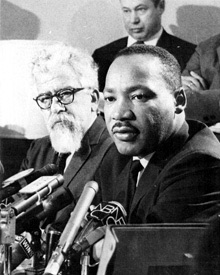
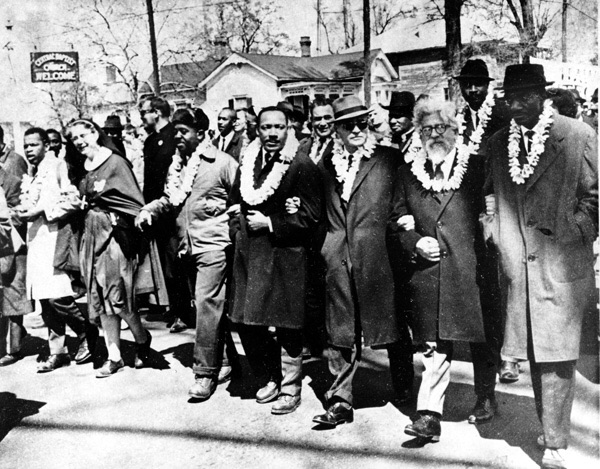
Looking at the various films and photographs from that time and place, you may have noticed that in a number of them, standing or sitting next to Dr. Martin Luther King is an elderly white man, wearing glasses and with a shock of white hair and long beard. His name is Rabbi Abraham Joshua Heschel, which is the anglicised version of his Hebrew name: Avraham Yehoshua Heschel….which was also my father’s Hebrew name. They were both named after a famous 17th century Polish rabbinical mystic.

Rabbi Heschel was a leading figure in American Judaism and also a very active social activist. He believed strongly that one’s spirituality must have legs. At the invitation of Martin Luther King Jr., Heschel participated in the opening day of the 1965 civil rights march from Selma to Montgomery for voting rights. The photograph of Heschel walking alongside King and other religious and political leaders is considered an emblem of the civil rights movement and of Black-Jewish relations of that era.

After the march, Heschel wrote about the experience in a private memo, “I felt my legs were praying.”

Jumping to the present, and the particulars horrors emanating from the so- called Islamic State, with its violent, barbaric intolerance of anyone and anything that does not fit with its particular world view, Heschel’s caution about the dark side of religion has a particular resonance:

“…when religion speaks only in the name of authority rather than with the voice of compassion, its message becomes meaningless.”