

Recently, while the academic world attempts to negotiate its path through the minefield posed by Generative AI, I was looking at some university policies about academic integrity and stumbled across these two statements:
There are few intellectual offences more serious than plagiarism in academic and professional contexts.
To submit a paper or comparable assignment that is not truly the product of your own mind and skill is to commit plagiarism. To put it bluntly, plagiarism is the act of stealing the ideas and/or expression of another and representing them as your own. It is a form of cheating and a kind of scholastic and professional dishonesty which can incur severe penalties. It is important, therefore, that you understand what constitutes plagiarism, so that you will not unwittingly jeopardize your college career.
Reading those dire warnings about academic misconduct took me back to the now seemingly far off days when we obsessed about plagiarism and you couldn’t move for workshops and seminars on topics such as ‘Designing Out Plagiarism From Assessment‘. But it also reminded me that for anyone with an arts background or a knowledge of art, literature or music history, the idea of plagiarism as a black and white issue is an absurd idea. There’s a lot of grey.
Consider this famous engraving of ‘The Judgment of Paris’ by Raphael, created circa 1510-20, and pay particular attention to the group of three figures on the lower right. Do they remind you of anything?
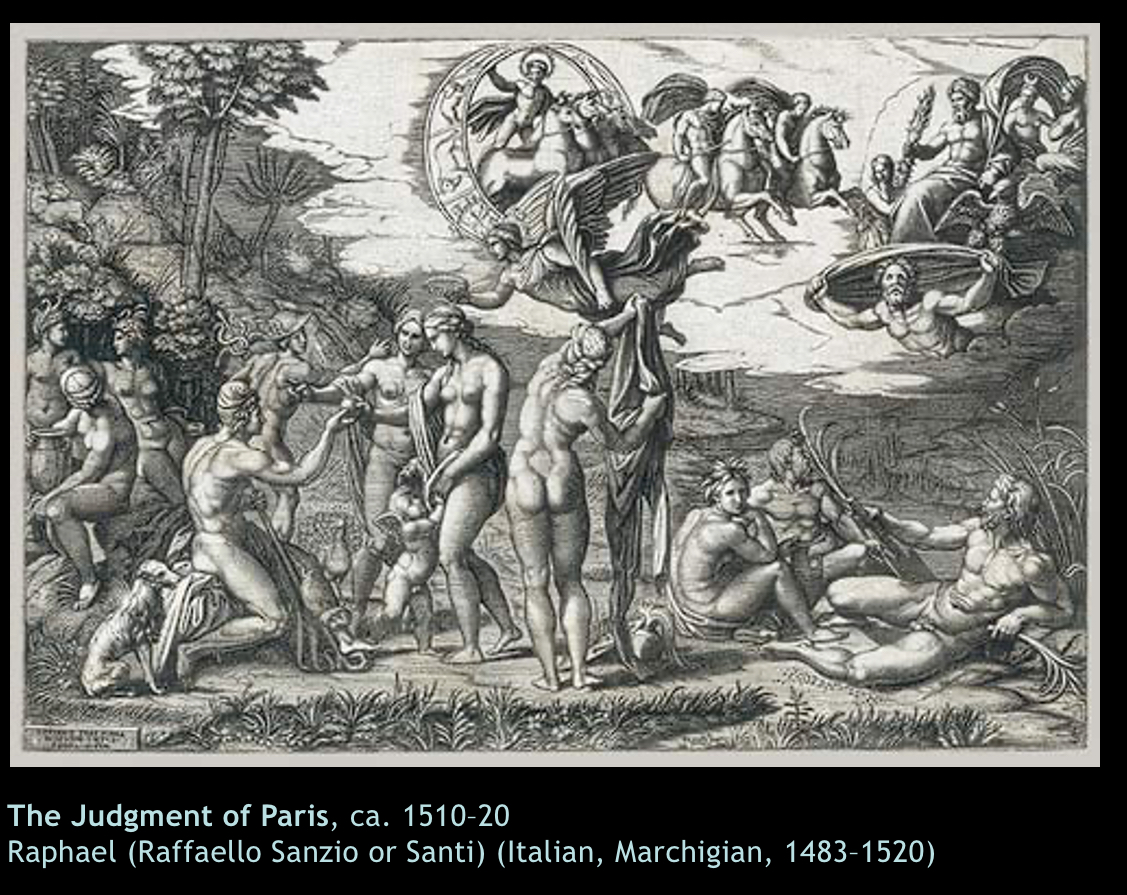
Let’s now skip over the engravings made soon after by Raimondo (left) and Marco Dente da Ravenna (right)….

….and consider this famous painting from the 19th century.

As Manet’s figures are clearly based on the three figures in those engravings is the painting ‘truly the product of his mind and skill’?
But the chain of ‘borrowing’ continues. Picasso sees the Manet painting and creates this, at least acknowledging his immediate source (or at least the Musee Picasso is acknowledging the source)

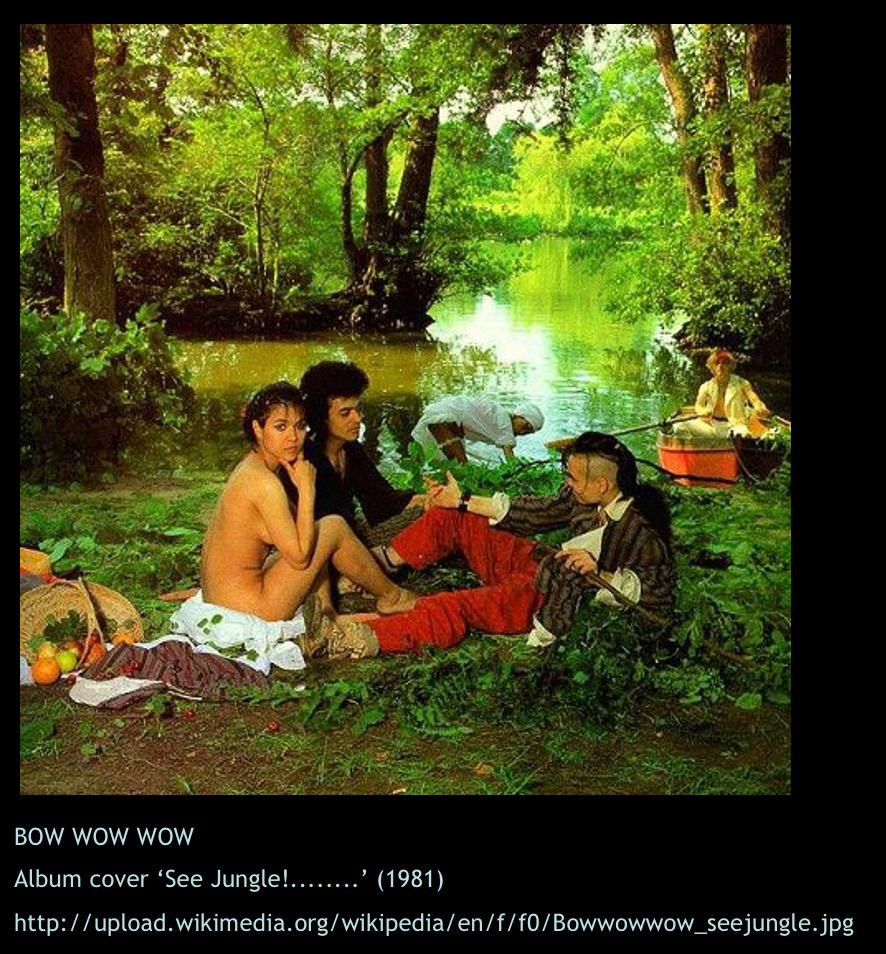
Then, in 1981, this album cover appears:
Or consider these album covers and that university statement about there being ‘few intellectual offences more serious than plagiarism in academic and professional contexts.’
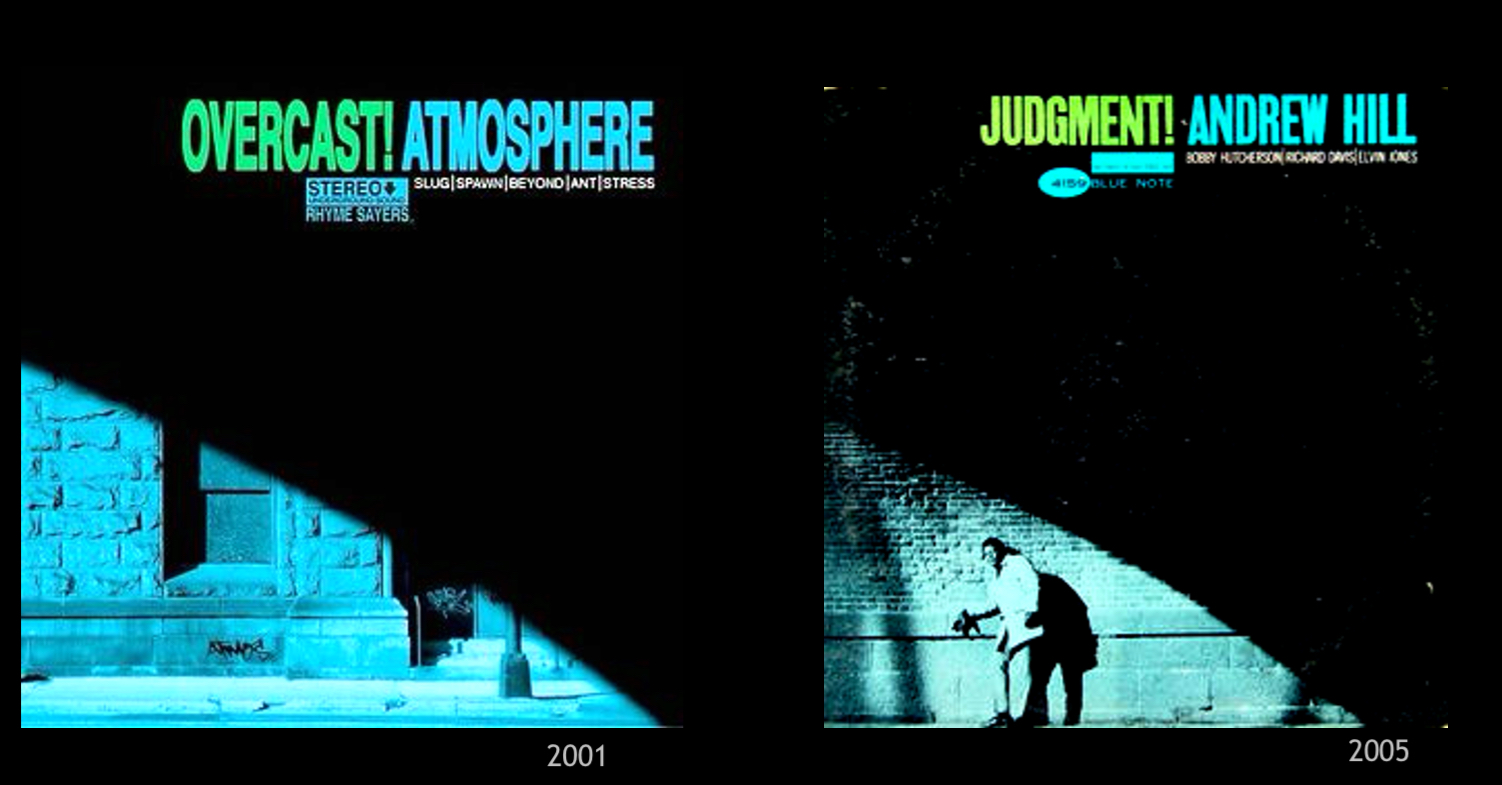
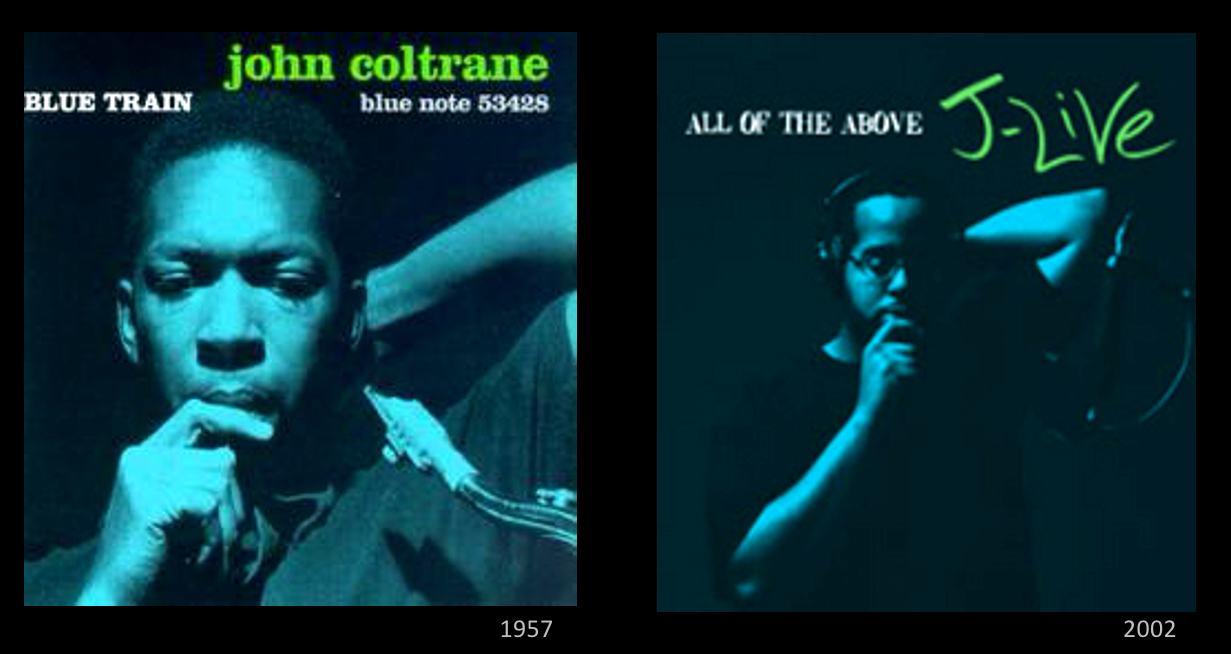
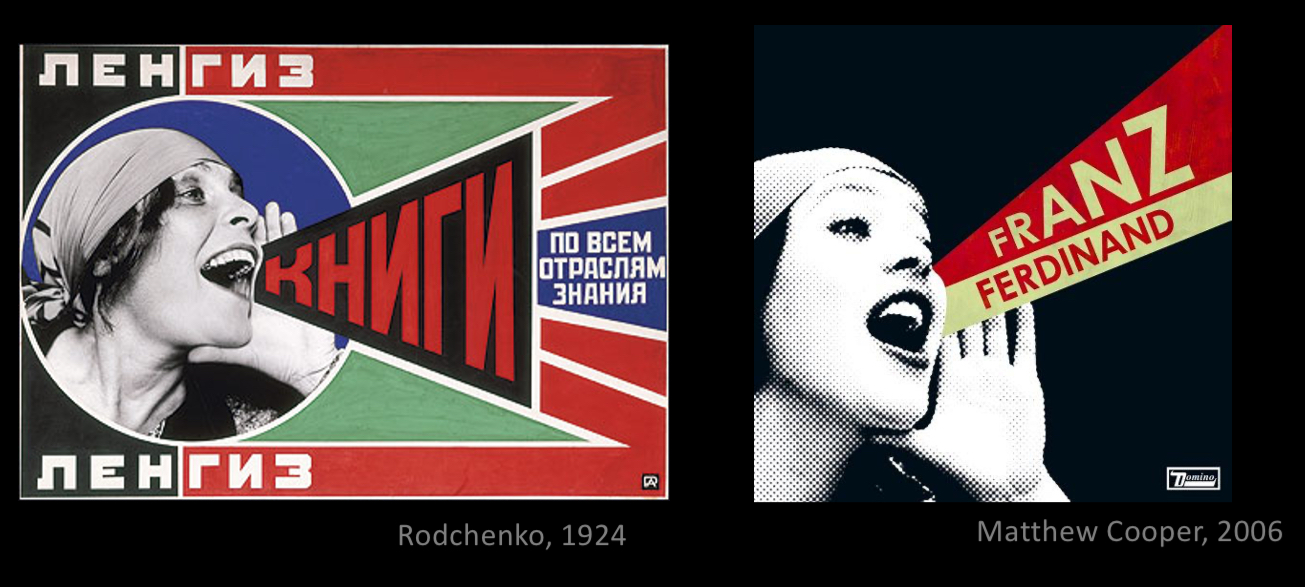
It seems clear, particularly in regard to art works, that a conception of the creative process that imagines that new works are original and autonomous may often be at odds with actual acts of creation that in many instances involve copying, directly referencing, adapting and other uses of existing works.
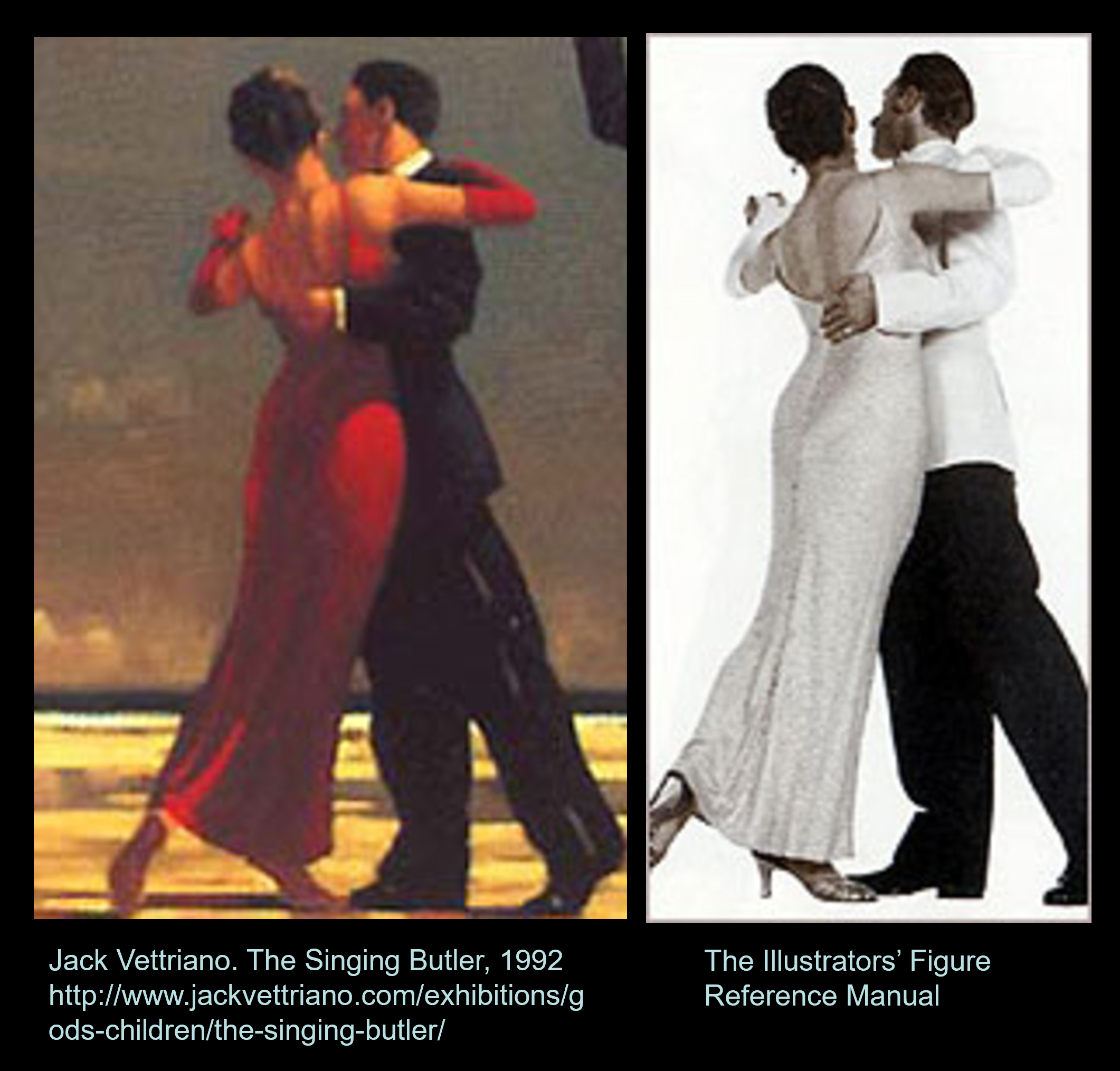
While some artists e.g. Manet and Picasso are lauded for their appropriation of previous art, the popular artist Jack Vettriano, who died recently, was frequently dismissed by the art establishment for being derivative and unoriginal (as well as popular!). The often quoted example is that the two dancing figures in his most famous work ‘The Singing Butler’ (section below) – the most popular art print in the UK – were virtually direct copies of the dancing figures from The Illustrator’s Figure Reference Manual.
In a number of disciplines and fields of study terms such influence, intertextuality, formulaic cultural production, appropriation and borrowing are important parts of the disciplinary discourse. In art and literary criticism, terms such as intertextuality, allusion, quotation, and influence are used, In musicology terms used to discuss relationships between musical texts include borrowing, self-borrowing, transformative imitation, quotation, allusion, homage, modeling, emulation, recomposition, influence, paraphrase, and indebtedness. Brahms, for example, openly admitted the strong influence of Beethoven. His First Symphony is sometimes referred to as ‘Beethoven’s Tenth’ and Brahms famously stated, “You have no idea how it feels to hear his footsteps constantly behind you.” In the context of plagiarism in popular music, the work of the forensic musicologist Joe Bennett is worth reading and listening to. One of the problems with identifying plagiarism is that, if and when it comes to court and as Bennett also makes clear in his work and research, what sounds superficially similar – certainly on first hearing – to a jury of ‘ordinary people’ is actually far more complex. Certain combinations of notes and chords are so ubiquitous across the musical landscape that they have become ‘commonplace’ items and are, in fact, common property.
As examples accumulate it becomes apparent, as Jonathan Lethem wrote in The Ecstasy of Plagiarism (2007) ‘that appropriation, mimicry, quotation, allusion, and sublimated collaboration consist of a kind of sine qua non of the creative act, cutting across all forms and genres in the realm of cultural production.’
The final example, returning to the two images at the start, is the cautionary tale of a book cover from 1974 and a very large painting that was a Turner Prize finalist in 2000. The full story of the plagiarism furore it caused and the law suit that followed can be read here https://artquest.org.uk/artlaw-article/originality/ , but here are the bare bones.
In 1974, Robert Heinlein’s book ‘Double Star’ was published with a cover created by the sci-fi artist Anthony Roberts. In 2000, the artist Glenn Brown’s large painting ‘The Love of Shepherds’ was chosen as a finalist in that year’s Turner Prize. Brown frequently uses the work of other artists in developing his large-scale work and is known for the use of art historical references in his paintings (as did Manet and Picasso). Starting with reproductions from the works of other artists, his biography states that he “transforms the appropriated image by changing its colour, position and size”.
Anthony Roberts was alerted to the similarity with his own painting for the book cover after a visitor to the Turner Prize exhibition noticed the similarity and the story hit the headlines. Roberts sued Brown and eventually the case was settled out of court. The painting is now titled ‘The Love of Shepherds’ (after ‘Doublestar’ by Anthony Roberts).
When a university states that students must “understand what constitutes plagiarism, so that you will not unwittingly jeopardize your college career” perhaps they should clarify precisely what they mean. If they are referrring to plagiarism in a purely academic context i.e. writing essay, dissertations etc. then what is and is not plagiarism is, or should be clear. But beyond that, particularly in the areas of creative practices, we enter the ‘Grey Zone’, and we should be ensuring that understanding plagiarism also means enabkling students successfully and effectively to understand, appreciate and negotiate their way through that grey zone.


 Stumbling with Confidence