
6 problems and developing creative confidence in students
LIPA (Liverpool Institute for Performing Arts) welcomed its first students in 1996. In those early days, as a very rare brand new higher education institution, LIPA had many of the typical characteristics of a ‘start-up’: exciting, risk-taking, a bit of a roller-coaster. Looking back at that time, we were certainly operating on the edge of chaos.
I was Head of Performance Design and had designed and written most of the Performance Design curriculum. One of the things I was really keen on was the idea of ‘de-schooling’: getting the new first year students out of the more creativity inhibiting habits and expectations they had arrived with.
So, during induction week, alongside the usual introductory sessions, the handing out of timetables, module handbooks, etc., we set the students six visual ‘problems’ that they had to solve before the end of that first semester.
There were some interesting strings attached to that assignment:
- the students were on their own, they could not discuss the problems with their fellow students or with any of their tutors
- their work would not be assessed
- all their ‘solutions’ would be shown in an exhibition at the end of the semester which would have a proper opening and an invited guest list.
A number of colleagues, when they heard about this, thought we were mad, confident that the students would never do it as it wasn’t being assessed.
The six problems included the following:
- Create a self-portrait in any medium.
- Create a map of how you get from your bed to the studio in the morning
- Take three matchboxes and create an object or objects using all the contents and the boxes themselves
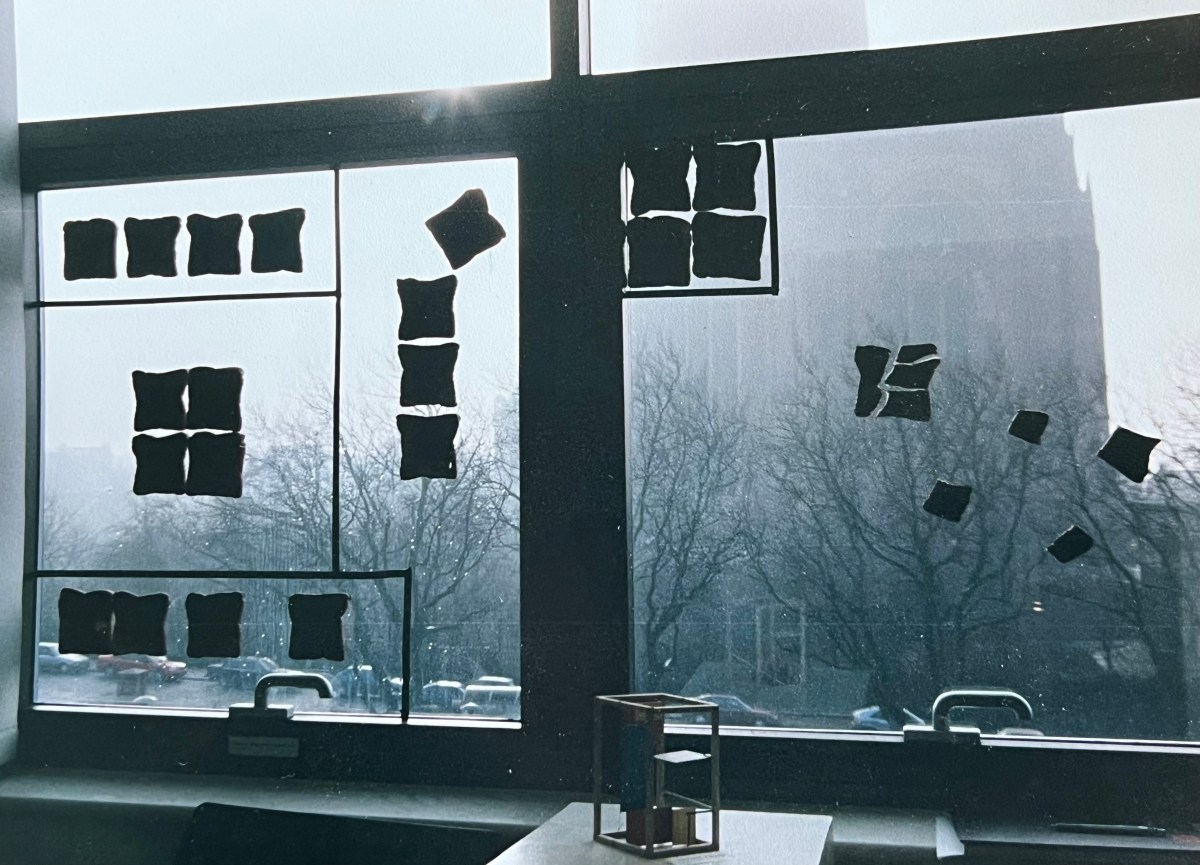
- The Black Square Problem: using six black squares against a white ground illustrate a series of words e.g. chaos, love, kindness, growth etc.
(To be honest, nearly thirty years on, I can’t remember the other two problems! One, I think, was something to do with delineating space, and I have no idea what the sixth one was. I was hoping it might come to me as I was writing this).
The day the students came in to set up the exhibition was an extraordinary day. As each student brought in their work, their peers gathered round to see and discuss what was before them. The sense of collegiality and excitement was palpable as was the sense of creativity and imagination at play.
Some of those solutions remain clear in my mind to this day. Here are just three:
J., a German student who had grown up in East Germany before unification, had taken the three matchboxes. She had flattened out the three drawers and stuck them together to make a flat sheet. On the sheet, she had drawn three musical staves (five lines each) using the ends of some burnt matches. Then, using the matches as musical notes, she stuck them along the staves in such a way as to create the opening bars of Beethoven’s ‘Ode to Joy’. The remaining matches were stuck around the sheet to make a frame. Two of the outer matchbox containers were used as labels for the work. But where was the third? It was stuck on the back of the sheet and used to hang the sheet onto a hook on the wall.
(I know I have a photograph of it somewhere!)
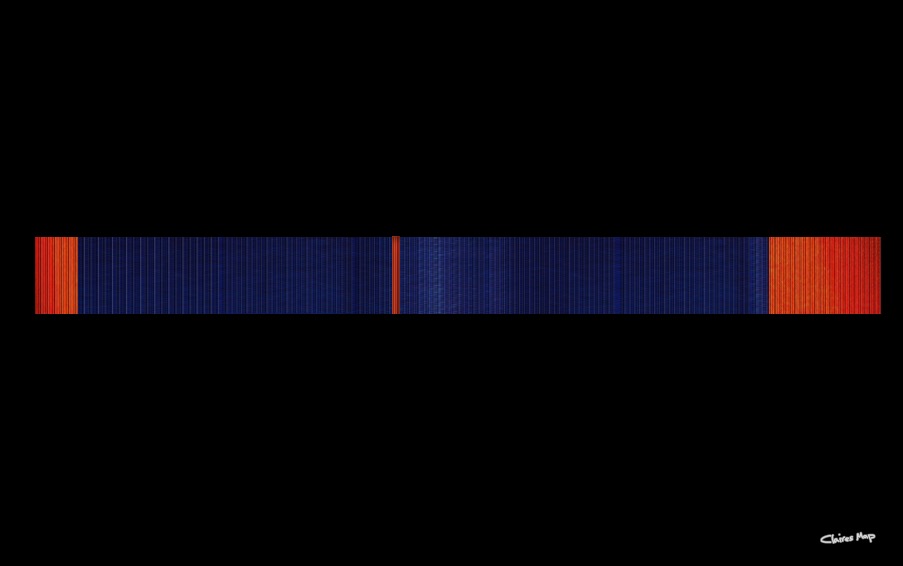
C. had attached a very large, rectangle of black card on the wall. It was in landscape format and across the middle, horizontally, ran a c.4cm strip of paper which was covered in dozens of identical, narrow vertical stripes of red, orange, light blue and dark blue. It looked like a beautiful spectrogram. In the bottom right hand corner was written ‘C’s map’. I remember staring at this with a colleague and wondering what did this map represent. Eventually, we called C. over and asked her to explain. It turned out that she lived about 2 miles from LIPA and it was a very cold day when she started making the map. What she had done was to walk from her warm bedroom, through the cold streets to LIPA taking a temperature reading every 20m or so. The different colours represented different temperatures. Red/Orange = warm, Light Blue/Dark Blue=cool/cold. When we asked what the warm strip right in the centre was, C. answered that her measured steps had taken to her to a hot air outlet of a shop.
T. had really struggled with the Black Square problem. Just couldn’t get his head around it. Sitting at breakfast a day or so before the exhibition opening, he was pondering the problem to the extent that he forgot he’d put a slice of bread in the toaster. Suddenly out popped a square of blackened toast. It was one of those Eureka moments. T. had found his solution to the black square problem. His solution consisted of illustrating the words using a series of four pieces of square black toast stuck to the windows of the exhibition space.
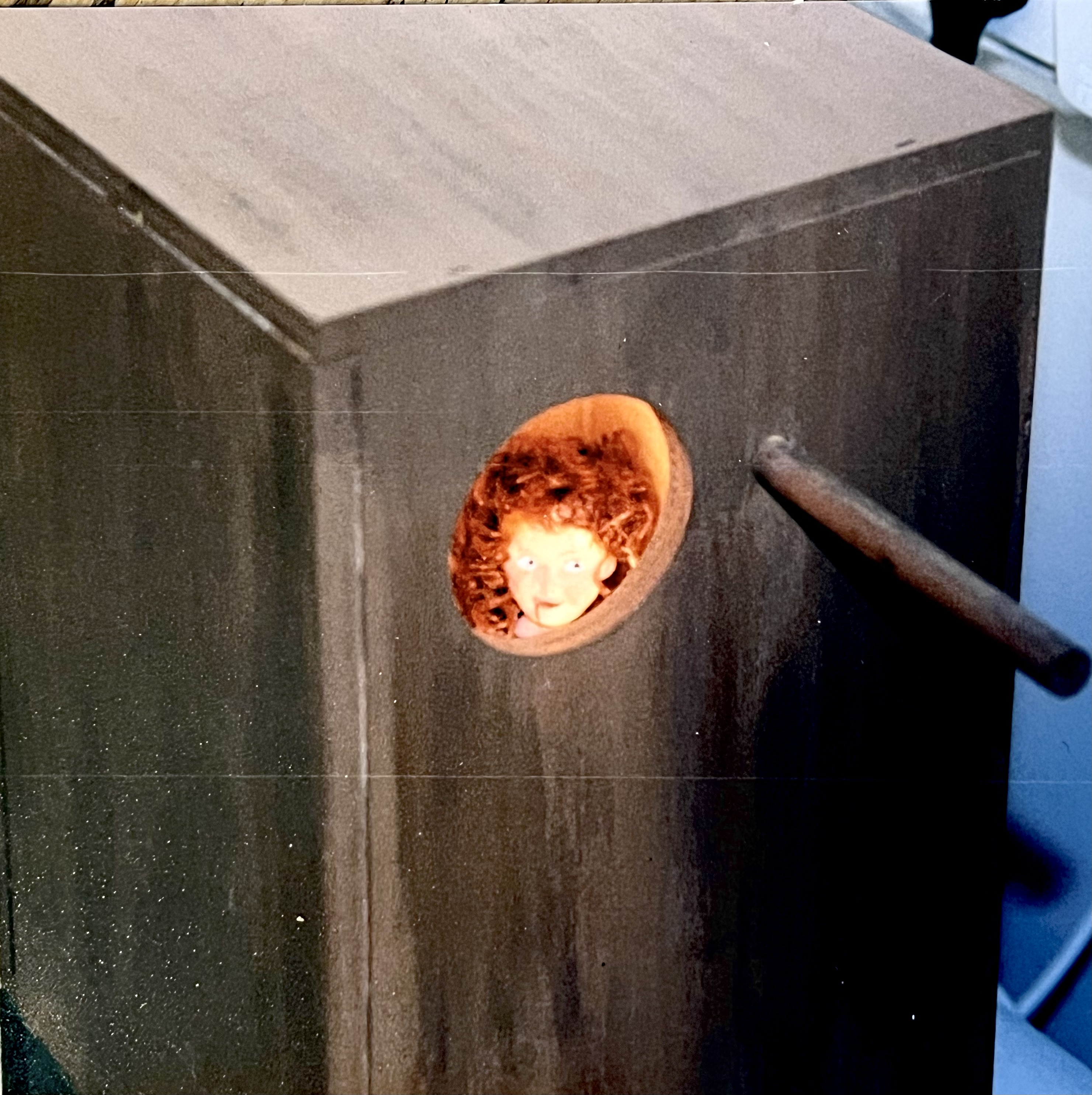
The exhibition opening was a great success. All the students managed to produce a creative solution to each of the problems…some of them truly extraordinary. There were 2D works, 3D works, video, audio, animation. Some made one laugh. Others, particularly some of the self-portraits, were rather disturbing. The strange, bloodied doll in the box which had a peep hole haunts me still!
All the art works were presented and lit beautifully. The purpose of the whole enterprise was, of course, nothing to do with the actual problems or the exhibition of work. It was all about confidence, enabling the students to realise that not only did they have some wonderful creative ideas but they could work on their own and create and produce wonder-full work.
The offer of the exhibition was key to getting the students motivated and committed to the project despite there being no assessment. The exhibition made it clear that we valued their ideas and the work they produced. Too often, work into which students have poured their heart and soul is simply handed in or submitted electronically without even a ‘thank you’. I recall one department in another institution where essays and dissertations were simply posted into a box fixed to the wall near the departmental office.
The six visual problems project demonstrated that if you create interesting assignments and make it clear that you really care about the work students produce, assessment isn’t a given. In recent decades, higher education has developed to the point where the culture is one of ‘if it moves, assess it!’. The solving and exhibiting of the six visual problems proved that need not, necessarily, always be the case.
Could we get away with it now?

 Stumbling with Confidence