On the IFS ‘let’s bash HE creative arts’ report on graduate earnings

‘See me. Feel me. Touch me.’ (Pt. 1)

Object lessons and reflections on the HEA Arts & Humanities conference 2016

Brighton-HEA3

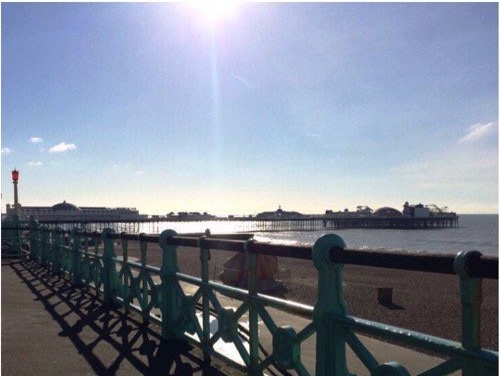
Early March. Brighton is an alluring place, despite the chill in the air.  The sun is shining, the sea is blue, the promenade and beach lie temptingly just across the road from the conference venue, and the esoteric shops, cafés and bars of The Lanes are just a couple of minute’s walk away. So it was a testament to the commitment of the participants and the quality of the many and varied sessions on offer that so many were able to resist the temptation to ‘skip school’.

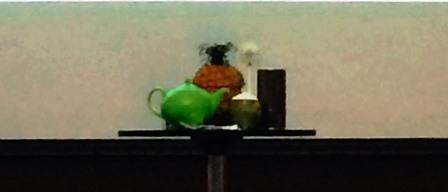
While, in some sessions and in Jonathan Worth’s fascinating keynote on the second day, there was an inevitable and valuable focus on the digital and the virtual, the most powerful message – for me – was the extraordinary pedagogic power of the physical, tangible object. From Kirsten Hardie’s opening keynote with accompanying green plastic teapot, pineapple ice bucket and toilet brush, to the Lego sessions of Contemplative Pedagogies, by way of Simon Heath’s wonderful drawings (see image below) that captured the essences of the whole event, it was the object that held centre stage. And there were plenty more sessions that focused on making and doing as a pedagogic activity, not just a practical or physical one.

Photo left: Hannah Cobb @ArchaeoCobb


I have written elsewhere (‘On history and all that’ ) on the power of objects to engage the imagination, to generate stories and lines of enquiry, to provoke philosophical, political, ethical debates, and to provide learning experiences that really ‘stick’. I still recall clearly the ‘History of Decoration’ seminars from my art student days when ‘Simi’ (Ms. Simeon the lecturer) would enliven her lectures on, say, Ancient Egypt, by taking a vase or piece of jewellery or some other artefact out of the cardboard box she always brought. She would casually hand the object to someone to examine and then pass around the room with the words ‘Do try to be careful, dear, that’s three and half thousand years’ old’. This would be repeated every session, whether the topic was Ancient Rome (jewellery), Medieval Europe (a crucifix) or Tudor England (a lace ruff). I only realised what we had been passing round  when I heard that, on her death , Simi’s large collection of “just something to look at while I’m talking” had been bequeathed to and enthusiastically accepted by the V&A museum.

What also became clear during the conference, is that ‘object lessons’ are not just the preserve of the creative arts community. Every discipline clearly has its associated artefacts which can be used not only to enhance the teaching of an ‘academic’ subject, but to act as foci for the characteristics and qualities of the sort of learning that Kirsten Hardie talked about: learning that engages, amazes, provokes, exhilarates, takes risk, liberates.

imageOne of the things I remember from those, now distant, art history sessions is something I frequently refer to in my work on curriculum design and assessment. In one her first seminars, Simi passed round an Ancient Greek vase that was covered head to foot in decoration. The reason, she said, for filling every possible square inch was ‘horor vacui’ – fear of open space – because it was through open space that the ‘Evil Eye’ enters the world. That might well be one of the reasons (though I would avoid mentioning the ‘Evil Eye’ or the Devil in module specifications and handbooks) why we insist on filling our curricula with content: ‘Idle hands make the devil’s workshop’ and all that. But we also know that deep learning, creativity and innovation require time and space to incubate and develop.
Objects, importantly, enable us to slow down time: to observe, to really look, to touch, to feel, to explore. Simon Piasecki, at the conference, talked about how he gets his performance students to slow right down and focus on the minutiae of what they are doing, and the artist Marina Abramovich – one of whose concerns is the fact that we don’t stop to really look any more –  has a number of exercises she uses with those who come to view her work to achieve the same slowing down. When I worked at the Liverpool Institute of Performing Arts (LIPA), one of the first year ‘options’ that I established – open to any student – was a traditional life-drawing class. All the students that participated in that quiet, contemplative two hours on a Wednesday evening, amidst an extraordinarily hectic timetable (‘horor vacui’!), reported that they understood that it wasn’t about being able to draw. It was about having the time and space to slow down and really observe not only the ‘object’ (usually another student) but also themselves….and to ‘take a line for a walk’ in Paul Klee’s famous phrase.

Ken Robinson, in his now famous TEDTalk on creativity and education, jokes about academics generally seeing their bodies as a form of transportation to get them to meetings. He, among others, stresses the importance of mind and body, the intellectual and the emotional, the psychological and the physiological. What came through so strongly at the HEA Arts and Humanities conference was that objects – in all their glorious variety – and our close interactions with them, provide a means to engage powerfully in deep, meaningful learning experiences.  Objects both inhabit space and create space. We just need the space,  the time and, impotently, the confidence to engage in our own object lessons.

Brighton- HEA2

Photos by Paul Kleiman unless otherwise stated
Conference Twitter hashtag: #HEAArts16

On the loss of a child and the kindness of strangers

Twenty nine years ago, on a bright, blue, cold winter’s morning, I walked out of the maternity hospital in the city where we live, and headed towards the registry office in the centre of town. I went there to register the birth, and death, of our first child, a baby boy who had been born and who had died a few hours previously. I had to be there in order to complete the paperwork that would allow us to bury him within 24 hours according to Jewish custom.

I remember, in that rather dark, forbidding wood-panelled waiting room, sitting next to a happy young couple who had come to register the birth of their new baby, who lay sleeping happily in his mother’s arms, and opposite a family, all dressed in black, grieving for a close and dear relative. I also remember, with immense gratitude, the kindness of the official who carefully and sympathetically took down all the necessary details. She was only doing her job but doing it in a way which make me feel – for the moment at least – a little bit easier with myself and with the world.

Now, twenty nine years later, though the number of years is wholly immaterial, amidst the hurly burly and complex logistics of daily life – juggling home, work, family, friends – rarely does a day go by without something or someone causing me to think back to that cold, blue morning.

The death of our child made me acutely aware of just how thin and fragile is the surface covering everyday normality, and how easily the fabric of that covering can be torn and ruptured…sometimes in seconds.

In particular I’ve come to understand the real importance of small acts of kindness. Those spontaneous, generous, unselfish acts that help to maintain that fragile fabric. I’ve learned – though sometimes it’s still a struggle – to give people the benefit of the doubt, to try and be more tolerant, to try and listen more. I’ve learned that others, too, may have large cracks and holes in their lives, and they – like me sometimes – are relying on that fabric not being torn in order to just get them through the day. The smile, the greeting, the welcome, the thank you, the helping hand, the small talk before getting down to business are all, in their way, small acts of kindness that bind us together and strengthen the fabric of our lives.

But before I am accused, in the face of a harsh and sometimes brutal world, of a utopian let’s-just-all-be-nice-to-each-other idealism, our baby’s death, conversely, made me less tolerant…of arrogance, ignorance, triviality and sheer stupidity. If there’s one quality we need, sometimes desperately, to develop, it is an active, rigorous tolerance, which is not the same as prejudiced silence or passive indifference. Understanding and respect for others grows out of a willingness to engage actively with the world. But it also means knowing, recognising and, importantly, doing something positive about not only those things that will make the world a better, happier place but acting to prevent those things that make it worse.

May the support of friends and family, and the kindness of strangers bring some comfort to you at this sad time.

(This is an adaptation of a piece written for BBC Radio and first broadcast in 2000. At the time we received wonderful support from Sands – the UK charity that provides support for bereaved parents and their families, which we now, in turn, support.)


Arts Education: banished beyond the Debatable Hills?

We have replaced wonder with tick-box excellence, and mystery with an impact case study.

If you collect the many dozens of articles written in the last few years about the state and future of the arts in education and place them on a pair of positive/negative scales, there’d be very little – if anything – on the positive side.

Thinking about this I was reminded of a book I read years ago, which remains one of my favourite books (it’s also on Neil Gaiman’s list of all-time favourites, so I’m in good company). The book is called Lud-in-the-Mist, written in 1926 by Hope Mirrlees. Mirrlees was a classicist, and much of her work dealt with the contested boundaries of Art and Life.

In Lud-in-the-Mist there are two countries. There is the land of Dorimare, a nation of stolid burghers, merchants and artisans. A rather prim and very proper place, where everyone knows their place, where the motto is essentially, ‘it’s the economy, stupid’ , and where the arts are relegated to activities such as needlework and country dancing: pursuits for the refinement of gentlewomen and gentlemen.

On the border of Dorimare, however, on the other side of the Debatable Hills, lies the land of Faerie, a strange, dark land full of mysteries and wonders…not all of them pleasant. The upright citizens of Dorimare so fear the land that lies beyond those dread hills, that the word ‘Faerie’ is never to be uttered.

Dorimare’s main city of Lud-in-the-Mist lies at the confluence of two rivers: the Dapple and the Dawl. The Dawl is like any other commercial river, but the Dapple happens to  flow out of the land of Faerie, and brings with it fairy fruit, that is smuggled into Dorimare.  Eating fairy fruit has a terrible effect: it causes people to start singing strange songs, to spout poetry, to dance with abandon. In other words, it turns them mad.

The plot revolves around the disappearance of a group of young ladies and the Mayor’s son who have been kidnapped and taken to the land of Faerie, and the attempt of the Mayor, a bumbling, self-important, rather fatuous man to rescue them.  As a consequence of that quest, fundamental changes are wrought – to the Mayor and to Dorimare itself.

In Lud-in-the-Mist, Mirrlees is dealing with the division of the world into Apollonian and Dionysian aspects: the homely and the wild. There is also the long battle between Classicism and Romanticism, and Freud’s theories of the conscious and unconscious mind, and the relationship between terror and beauty.

The actor Mark Rylance, in an interview, said that the arts are essentially  ‘mysterious’ which is why they frighten  politicians and policy-makers, because they can’t control them, they can’t measure them.

I imagine the educational curriculum in Dorimare’s schools is very much what like the one demanded by  Gradgrind in Dickens’ Hard Times;

“Now, what I want is Facts. Teach these boys and girls nothing but Facts. Facts alone are wanted in life. Plant nothing else, and root out everything else. You can only form the mind of reasoning animals upon Facts: nothing else will ever be of any service to them.

And if you think that’s rather extreme, consider this – handed to parents at a primary school in London in 2015:

‘The new programme of study in English is knowledge-based, this means its focus is on knowing facts rather than developing skills and understanding. It is also characterised by an increased emphasis on the technical aspects of language and less on the creative aspects.”

I was once asked, by the then German Federal Minister of Education as it happens, as we stood together in the queue for coffee at a conference on the future of Arts Education in Europe, what it was that had made the UK such a world leader in art, design, fashion, music , theatre, etc.  He was comparing the UK  with his own country and the fact that, with a few notable exceptions, Germany – with a relatively successful economy compared to the UK –  had demonstrated nothing like that level of consistent creative output over the years.

I didn’t have a rigorously researched, evidence-based answer to give him, but I did say that I thought it had something to do with our long history and tradition of non-conformity, of sticking two fingers up to authority, and our high and genuine tolerance of eccentricity. Neither of which, I suggested humbly, were common attributes in his own country.

The Minister said ‘Ah, that’s very interesting’…and moved on.

I was thinking about Lud-in-the-Mist because it seems to me we are increasingly living in a country which is becoming more Dorimare-like by the day, where the arts are increasingly banished to the equivalent of the land of Faerie, where creativity is associated with the creation of goods and wealth, where any hint of an artistic or genuinely creative spirit is dismissed as bad influence, and to be actively discouraged and eliminated.

In our education system there is now a very real danger of replacing genuine creativity with skills acquisition, wonder with tick-box excellence, and mystery with an impact case study.

So, how might we truly embrace the arts and our creative non-conformists, eccentrics and mavericks, or are we fated to banish them, their works and deeds, to that strange, mysterious, wonderful land beyond the Debatable Hills?

The final, celebratory chapter of Lud-in-the-Mist provides the answer.

The death of a baby, the kindness of strangers, and a seasonal message

As the year ends and as families gather together to celebrate, amidst the good cheer and good will there is often sadness and grief at the loss and absence of a loved one. Recent events have brought back a lot of memories and thoughts about the death at birth of our own baby boy – known to all and sundry as ‘Rocky’ (real name Alexander) – in January 1990.

In 2000, as a complement or counterpoint to the traditional Queen’s Christmas Message, BBC Radio 4 offered a listener an opportunity to deliver their own seasonal message to the nation. It was coming up to the anniversary of Rocky’s death, and it was also one the rare years when the festivals of Christmas, Chanukah, and Eid coincided.

So I wrote something down and emailed it off, thinking that’d be the end of it.

A couple of weeks later, just before Christmas, I got a phone call to say my piece had been selected. So I recorded it in what seemed like a broom cupboard at BBC Manchester on Oxford Road,and it went out, and seemed to have had some impact.

Here is that recording:

The Kindness of Strangers

http://youtu.be/m3pqCtqGaSAahttp://www.youtube.com/watch?v=m3pqCtqGaSA