There has been a slew of recent journal articles, blogs, podcasts etc. on the challenges posed by Generative AI in higher education and, particularly, the threat GenAI poses to assessment integrity and security along with possible approaches to mitigate the threat.
The picture that emerges is one in which none (perhaps bar one: the viva?) of the traditional forms of assessment are secure – were they ever? It seems clear that not only does a new assessment paradigm need to emerge but also a new paradigm for learning and teaching. As Gramsci wrote in the 1930s: ‘The old is dying and the new is yet to born: in the interregnum, all kinds of morbid symptoms appear’.
The challenge we face in regard to somehow ensuring or at least maximising assessment integrity and security in the face of GenAI is that, essentially, assessment – in the age of mass higher education – has become an economic and logistical issue, not a pedagogical one. An industrialised process of mass production that relies on the production-line workers (lecturers) doing much of the quality control i.e. assessment and marking, in their spare time in order to meet the production deadlines
What has largely disappeared from the way we assess students is the idea of assessment, inherent in its Latin root ’assidere’ (to sit together or sit beside), as a dialogic process. What hasn’t disappeared, though somewhat diminished, is the dominance of the teacher-centred, curriculum-focused paradigm rather than a student-centred, learning-focused paradigm.
In a recent and worth reading GenAI and assessment-focused journal article by Guy J. Curtis*, he wrote: ‘Students can reasonably expect to have their learning assessed on what they have been taught.’ He’s right but, just as important, students should also expect to be assessed on, or at least have an intensive discussion about, what they have learned. This may well (and should) extend beyond disciplinary specificity as they head towards an increasingly complex and uncertain future in which, whether we like it or not, AI will play an integral role.
So, while we struggle to find ways to make assessment secure without resorting to unacceptable and detrimental levels of surveillance, we might usefully attempt to answer the question: how might we best assess students in ways that reveal what they actually know, what they have learned and what they can do? The pedagogical answer may well be by sitting beside them and questioning them rigorously and systemically. But that begs another question: is higher education willing and able to shift to a new assessment paradigm?
I am an independent higher education consultant and co-founder of the educational consultancy Ciel Associates specialising in organisational and transformational change and enhancing learning, teaching and assessment. I have over thirty years experience in a wide range of higher education providers both as a consultant and, before that, in a number of management, leadership and strategic roles. My work is informed by my belief in the transformational power of education and a commitment to enabling institutions to create meaningful and sustainable change. Contact me at Ciel Associates .
Academics, eh? We may be great teachers. We may be great researchers. We may even be great managers and administrators. But that does not make us great educational designers….and I write this as someone who trained and worked as a designer before I stumbled into teaching design and some other subjects in higher education. Once inside academia I was immediately struck by the fact that a great number of things just didn’t seem to work very well. I was surrounded by talented, skilful, intelligent, committed and passionate colleagues who appeared to spend an inordinate amount of time and energy just getting things to work for them and their students.
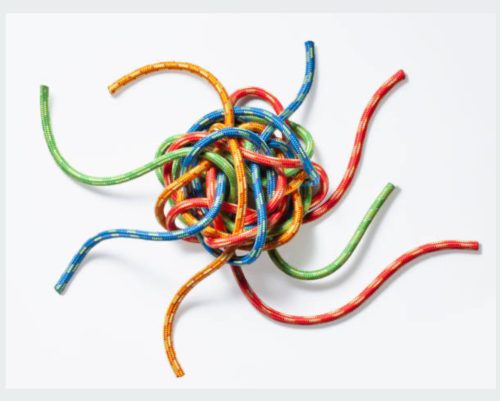
It didn’t take me long to work out that one of the primary causes of all this inefficiency and waste and the bang-head-on-desk frustration that resulted, was frequently and simply a tangle of poor design. The plethora of complex systems, labyrinthine processes and perplexing protocols that extend to every corner of our educational endeavours all too often have been created by individuals and groups who – with the best will in the world – are not well acquainted, if at all, with the basic principles of good design.
An awareness and appreciation of concepts such as ‘good design enhances the users’ experience’, or ‘good design is logical e.g. form follows function’, or ‘good design is minimal design e.g. as little as possible and only as much as absolutely necessary’, or ‘good design is consistent right down to the fine details’ was and is often entirely lacking.
There is also an aesthetic quality to good design, but I’ve yet to hear or read that word, or anything similar, when it comes to discussing the crucially important task of designing the educational experiences of students.
If we are to be architects of educational experiences, then we must accept that not only do we need to embrace the principles and practices of good design, but – crucially – we either need to become skilled educational architects and designers ourselves or ensure that at least some of us have or develop those skills so that we can help our colleagues and institutions not only detangle the knots that bind us but also, and more importantly, to create and support the wonderful educational experiences that our students truly deserve.
I am an independent higher education consultant and co-founder of the educational consultancy Ciel Associates specialising in organisational and transformational change and enhancing learning, teaching and assessment. I have over thirty years experience in a wide range of higher education providers both as a consultant and, before that, in a number of management, leadership and strategic roles. My work is informed by my belief in the transformational power of education and a commitment to enabling institutions to create meaningful and sustainable change. Contact me at Ciel Associates .
I aim to play the piano most days, if I am near one. I work from home a great deal of the time, and I do a lot of writing. The work often involves some complex problems – large and small – that need to be addressed. When I am stuck, simply fed-up and frustrated or just need a break, I’ll go to the room with the piano and play for 10, 20, maybe 30 minutes. When I sit at the piano, I might choose to run through one or two of the classical pieces I’ve learned to play reasonably well over the years. Or I might choose a jazz or popular standard that I’ve picked up by ear, which involves a bit of improvisation in that sense of working relatively loosely within a recognised framework. I never play the same tune in exactly same way: but then, who does?
Usually I just place my hands on or over the keys, and I wait to see what happens. I have no idea of what is going to happen before it takes place. Something stirs. Something starts. A note or a chord is played. And off I go. Or off ‘it’ goes, because I feel I’m not in conscious control of my fingers. I am, of course, but it doesn’t feel that way.
David Sudnow, in his now classic work Ways of the Hand (1978) which is a remarkable insider’s account of learning to improvise jazz piano that was based mostly on his own introspection, describes having the most vivid impression of his hands making music by themselves. Sometimes, for me, it feels a bit awkward, as I travel down some musical cul-de-sac or find myself in a particular and sometimes too-familiar groove. Other times it just flows, I’m ‘in the zone’, and I know, especially when it really flows, that it clears and refreshes not only my mind but also my spirit.
In relation to ‘flow’ and Czikszentmihalyi’s influential work on that topic, we know that performances that combine flow states with a degree of risk taking might hold the key to achieving optimal levels of musical communication in improvisation. Being in the flow or ‘groove’ sometimes enables experienced improvisers to move beyond or extend their previous cognitive limits.
Sudnow uncovered many principles about learning, and particularly, what we might call embodied learning. His analysis and observations resonate powerfully with the work and research around creativity in learning and teaching, and what might be referred to as learning or teaching at the ‘edge of chaos’.
Recently, while the academic world attempts to negotiate its path through the minefield posed by Generative AI, I was looking at some university policies about academic integrity and stumbled across these two statements:
There are few intellectual offences more serious than plagiarism in academic and professional contexts.
To submit a paper or comparable assignment that is not truly the product of your own mind and skill is to commit plagiarism. To put it bluntly, plagiarism is the act of stealing the ideas and/or expression of another and representing them as your own. It is a form of cheating and a kind of scholastic and professional dishonesty which can incur severe penalties. It is important, therefore, that you understand what constitutes plagiarism, so that you will not unwittingly jeopardize your college career.
Reading those dire warnings about academic misconduct took me back to the now seemingly far off days when we obsessed about plagiarism and you couldn’t move for workshops and seminars on topics such as ‘Designing Out Plagiarism From Assessment‘. But it also reminded me that for anyone with an arts background or a knowledge of art, literature or music history, the idea of plagiarism as a black and white issue is an absurd idea. There’s a lot of grey.
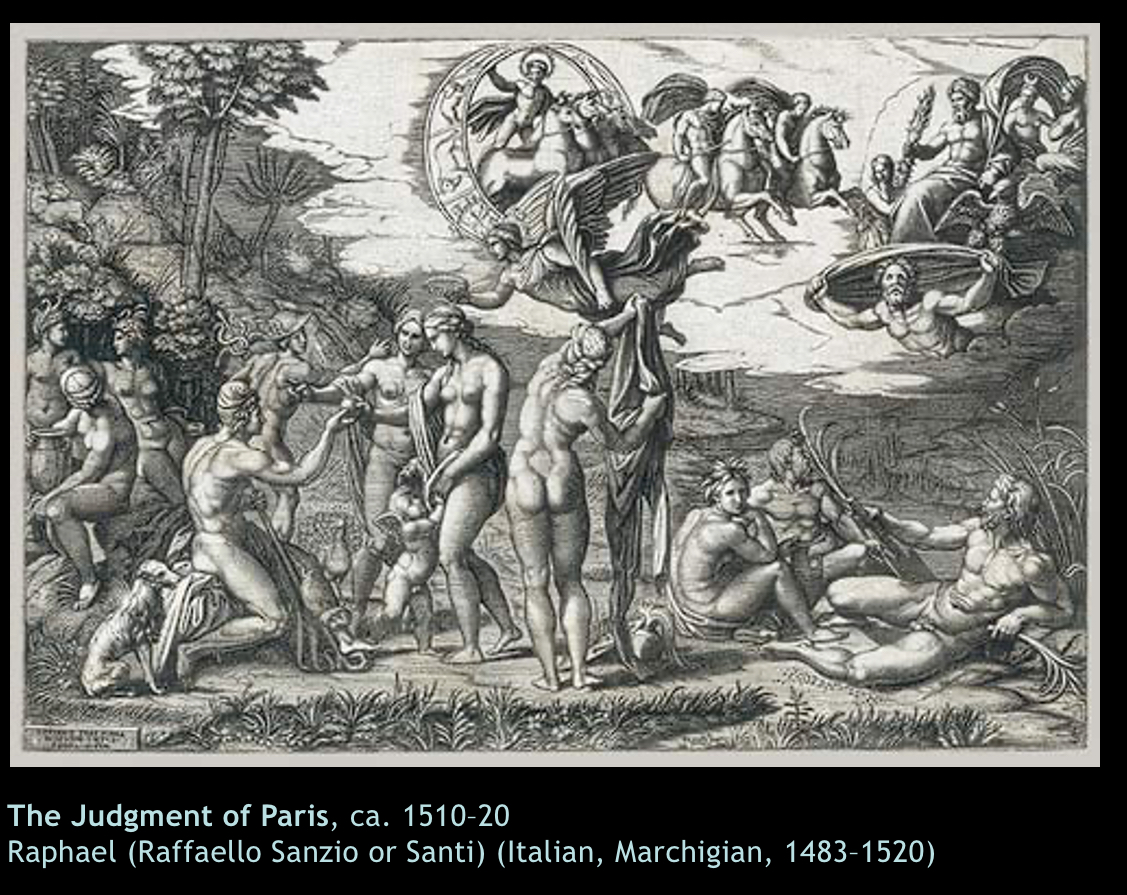
Consider this famous engraving of ‘The Judgment of Paris’ by Raphael, created circa 1510-20, and pay particular attention to the group of three figures on the lower right. Do they remind you of anything?
Let’s now skip over the engravings made soon after by Raimondo (left) and Marco Dente da Ravenna (right)….
….and consider this famous painting from the 19th century.
As Manet’s figures are clearly based on the three figures in those engravings is the painting ‘truly the product of his mind and skill’?
But the chain of ‘borrowing’ continues. Picasso sees the Manet painting and creates this, at least acknowledging his immediate source (or at least the Musee Picasso is acknowledging the source)
Then, in 1981, this album cover appears:
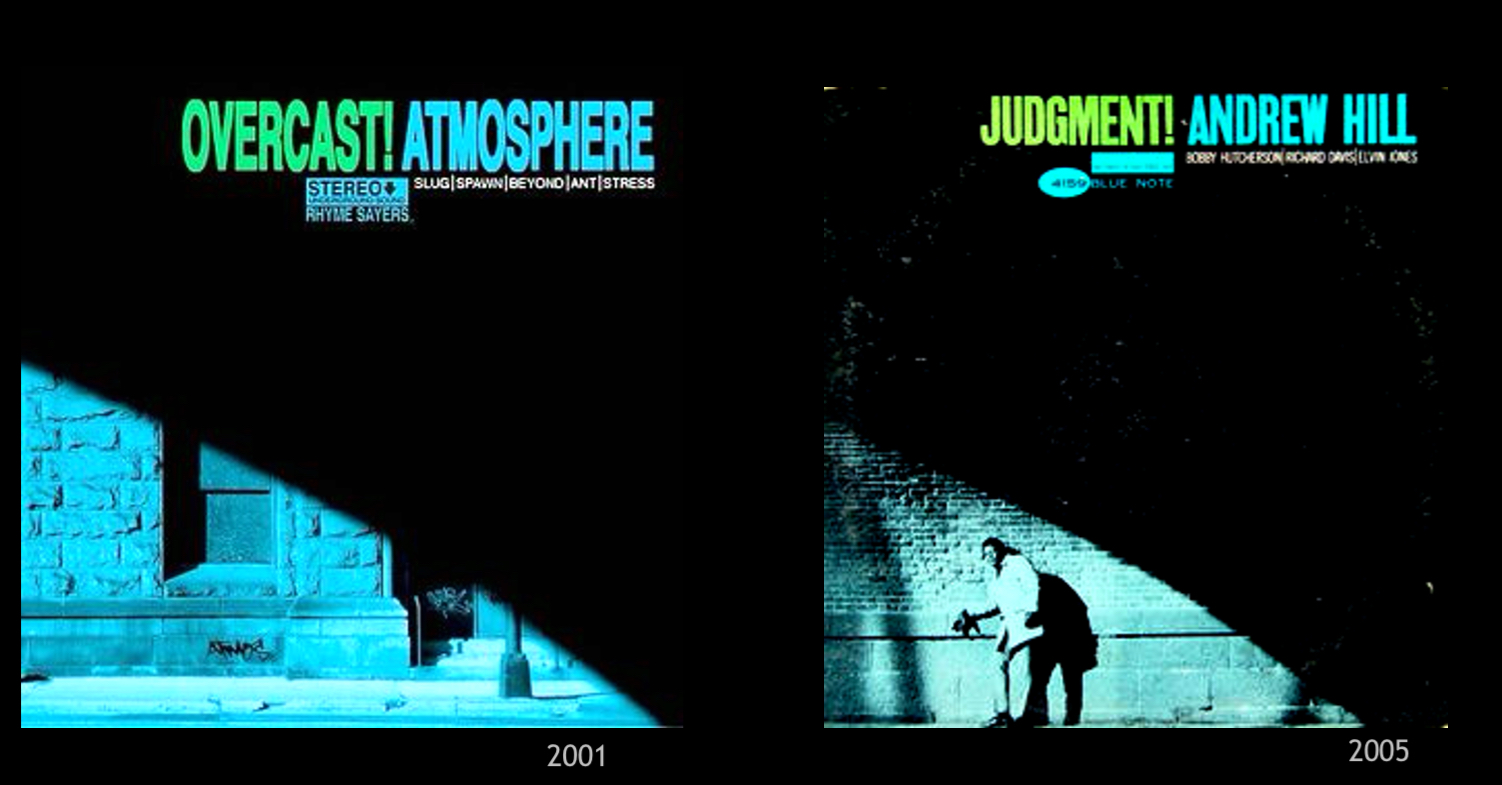
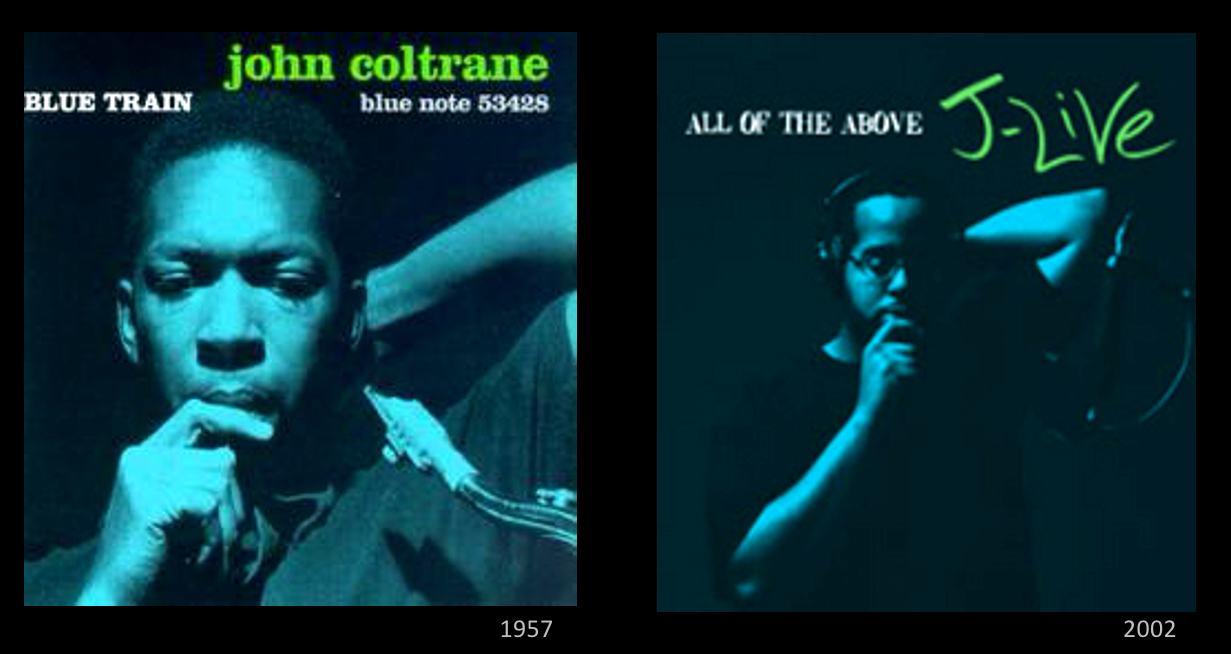
Or consider these album covers and that university statement about there being ‘few intellectual offences more serious than plagiarism in academic and professional contexts.’
It seems clear, particularly in regard to art works, that a conception of the creative process that imagines that new works are original and autonomous may often be at odds with actual acts of creation that in many instances involve copying, directly referencing, adapting and other uses of existing works.
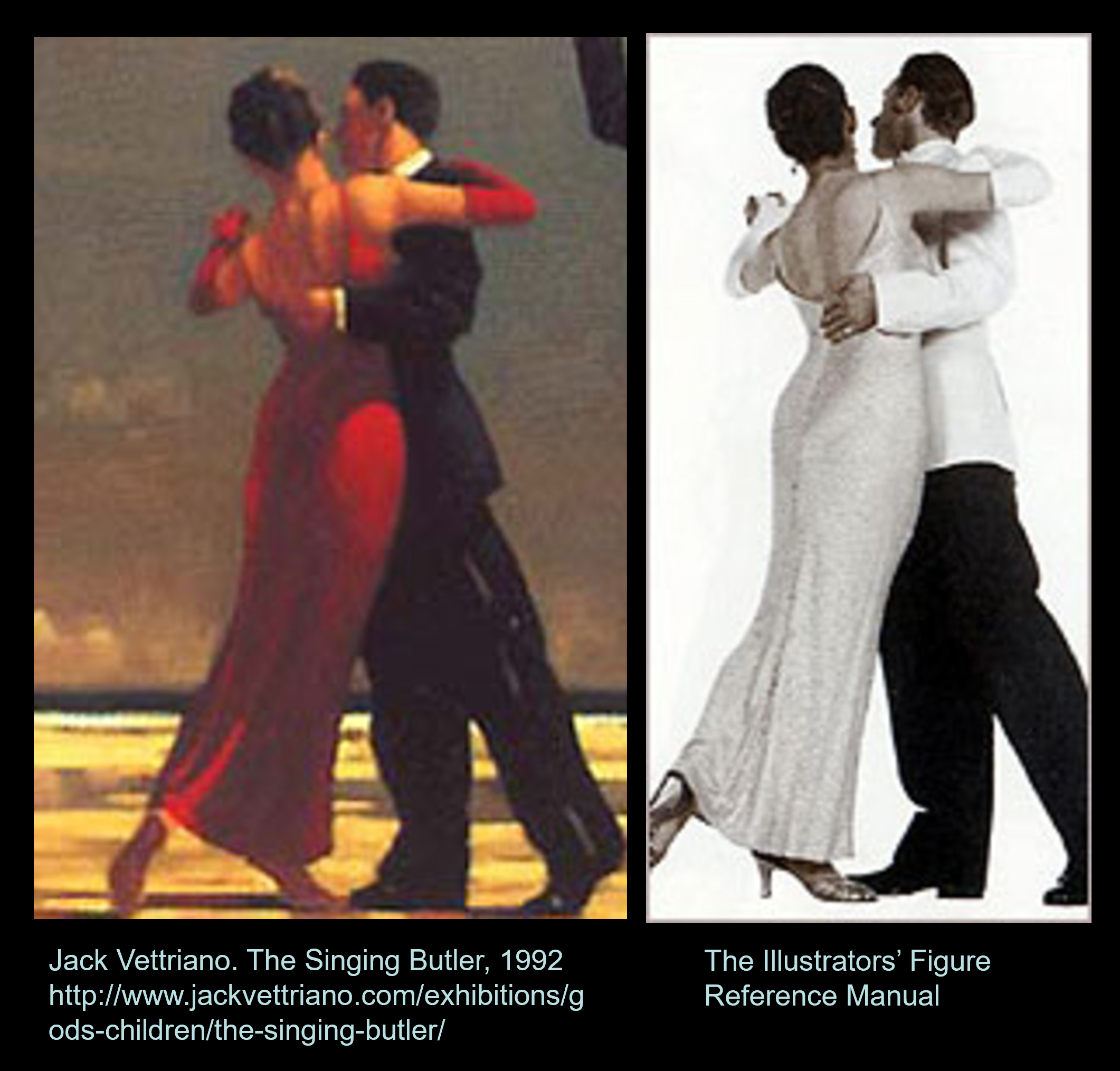
While some artists e.g. Manet and Picasso are lauded for their appropriation of previous art, the popular artist Jack Vettriano, who died recently, was frequently dismissed by the art establishment for being derivative and unoriginal (as well as popular!). The often quoted example is that the two dancing figures in his most famous work ‘The Singing Butler’ (section below) – the most popular art print in the UK – were virtually direct copies of the dancing figures from The Illustrator’s Figure Reference Manual.
In a number of disciplines and fields of study terms such influence, intertextuality, formulaic cultural production, appropriation and borrowing are important parts of the disciplinary discourse. In art and literary criticism, terms such as intertextuality, allusion, quotation, and influence are used, In musicology terms used to discuss relationships between musical texts include borrowing, self-borrowing, transformative imitation, quotation, allusion, homage, modeling, emulation, recomposition, influence, paraphrase, and indebtedness. Brahms, for example, openly admitted the strong influence of Beethoven. His First Symphony is sometimes referred to as ‘Beethoven’s Tenth’ and Brahms famously stated, “You have no idea how it feels to hear his footsteps constantly behind you.” In the context of plagiarism in popular music, the work of the forensic musicologist Joe Bennett is worth reading and listening to. One of the problems with identifying plagiarism is that, if and when it comes to court and as Bennett also makes clear in his work and research, what sounds superficially similar – certainly on first hearing – to a jury of ‘ordinary people’ is actually far more complex. Certain combinations of notes and chords are so ubiquitous across the musical landscape that they have become ‘commonplace’ items and are, in fact, common property.
As examples accumulate it becomes apparent, as Jonathan Lethem wrote in The Ecstasy of Plagiarism (2007) ‘that appropriation, mimicry, quotation, allusion, and sublimated collaboration consist of a kind of sine qua non of the creative act, cutting across all forms and genres in the realm of cultural production.’
The final example, returning to the two images at the start, is the cautionary tale of a book cover from 1974 and a very large painting that was a Turner Prize finalist in 2000. The full story of the plagiarism furore it caused and the law suit that followed can be read here https://artquest.org.uk/artlaw-article/originality/ , but here are the bare bones.
In 1974, Robert Heinlein’s book ‘Double Star’ was published with a cover created by the sci-fi artist Anthony Roberts. In 2000, the artist Glenn Brown’s large painting ‘The Love of Shepherds’ was chosen as a finalist in that year’s Turner Prize. Brown frequently uses the work of other artists in developing his large-scale work and is known for the use of art historical references in his paintings (as did Manet and Picasso). Starting with reproductions from the works of other artists, his biography states that he “transforms the appropriated image by changing its colour, position and size”.
Anthony Roberts was alerted to the similarity with his own painting for the book cover after a visitor to the Turner Prize exhibition noticed the similarity and the story hit the headlines. Roberts sued Brown and eventually the case was settled out of court. The painting is now titled ‘The Love of Shepherds’ (after ‘Doublestar’ by Anthony Roberts).
When a university states that students must “understand what constitutes plagiarism, so that you will not unwittingly jeopardize your college career” perhaps they should clarify precisely what they mean. If they are referrring to plagiarism in a purely academic context i.e. writing essay, dissertations etc. then what is and is not plagiarism is, or should be clear. But beyond that, particularly in the areas of creative practices, we enter the ‘Grey Zone’, and we should be ensuring that understanding plagiarism also means enabkling students successfully and effectively to understand, appreciate and negotiate their way through that grey zone.
I was once helping to run a ‘New to Teaching’ workshop for new/early career lecturers in languages and linguistics. I was one of several presenters during the day, and I was chatting with one of them – a Head of (a very large) Department – over the rather basic and disappointing sandwich lunch which the host university’s catering service had deemed suitable for academic consumption.
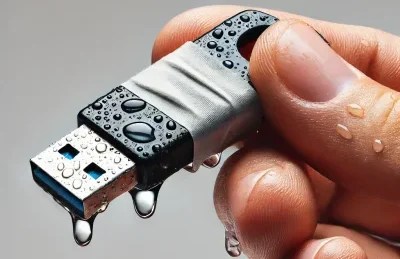
We talked, inevitably, about the current parlous state of higher education (plus ça change!), and I mentioned that I had done some work and research around complexity and chaos in learning and teaching. At which point his eyes suddenly lit up and he exclaimed: “I know who you are! Must have been at least 10 years ago. You gave a presentation which started with you holding up your taped together memory stick and telling us that it had been through the full hot wash cycle and tumble dryer and, after drying it out, it was STILL WORKING. I always remember that, and I remember your presentation about working at the edge of chaos- a notion which I still use and often rely onto this day. Thank you!”
Now, OK, it’s very nice to know one’s work has had at least some impact, but it did make me wonder about the obvious but frequently overlooked power of image, metaphor and narrative in education.
We live, communicate, interact through stories. We experience the world through stories. We are storytelling organisms who, individually and socially, lead storied lives. We construct and reconstruct our personal and social stories and, in education, learners, teachers, and researchers are storytellers and characters in their own and other’s stories.
The phrase ‘telling tales’ usually has negative associations, but – surely – great learning and teaching is inextricably bound up with the expert telling of wonderful and genuinely telling tales.
It’s a human need to be told stories. The more we’re governed by idiots and have no control over our destinies, the more we need to tell stories to each other about who we are, why we are, where we come from, and what might be possible. – Alan Rickman
“I thought about the magic that happens when you tell a story right, and everybody who hears it not only loves the story, but they love you a little bit, too, for telling it so well. – Katherine Hannigan








 Stumbling with Confidence