‘See me. Feel me. Touch me.’ (Pt. 1)

Object lessons and reflections on the HEA Arts & Humanities conference 2016
Brighton-HEA3

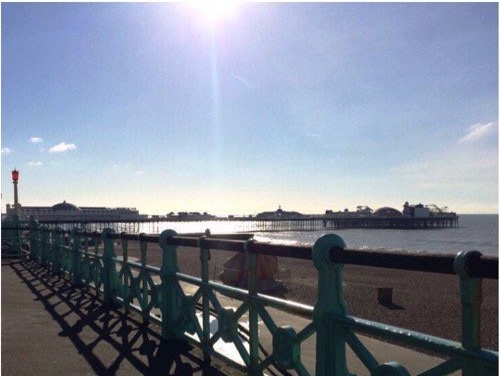
Early March. Brighton is an alluring place, despite the chill in the air.  The sun is shining, the sea is blue, the promenade and beach lie temptingly just across the road from the conference venue, and the esoteric shops, cafés and bars of The Lanes are just a couple of minute’s walk away. So it was a testament to the commitment of the participants and the quality of the many and varied sessions on offer that so many were able to resist the temptation to ‘skip school’.

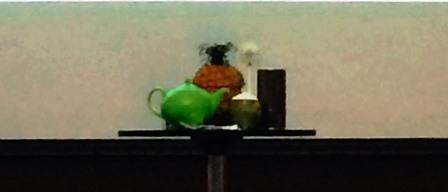
While, in some sessions and in Jonathan Worth’s fascinating keynote on the second day, there was an inevitable and valuable focus on the digital and the virtual, the most powerful message – for me – was the extraordinary pedagogic power of the physical, tangible object. From Kirsten Hardie’s opening keynote with accompanying green plastic teapot, pineapple ice bucket and toilet brush, to the Lego sessions of Contemplative Pedagogies, by way of Simon Heath’s wonderful drawings (see image below) that captured the essences of the whole event, it was the object that held centre stage. And there were plenty more sessions that focused on making and doing as a pedagogic activity, not just a practical or physical one.

Photo left: Hannah Cobb @ArchaeoCobb


I have written elsewhere (‘On history and all that’ ) on the power of objects to engage the imagination, to generate stories and lines of enquiry, to provoke philosophical, political, ethical debates, and to provide learning experiences that really ‘stick’. I still recall clearly the ‘History of Decoration’ seminars from my art student days when ‘Simi’ (Ms. Simeon the lecturer) would enliven her lectures on, say, Ancient Egypt, by taking a vase or piece of jewellery or some other artefact out of the cardboard box she always brought. She would casually hand the object to someone to examine and then pass around the room with the words ‘Do try to be careful, dear, that’s three and half thousand years’ old’. This would be repeated every session, whether the topic was Ancient Rome (jewellery), Medieval Europe (a crucifix) or Tudor England (a lace ruff). I only realised what we had been passing round  when I heard that, on her death , Simi’s large collection of “just something to look at while I’m talking” had been bequeathed to and enthusiastically accepted by the V&A museum.

What also became clear during the conference, is that ‘object lessons’ are not just the preserve of the creative arts community. Every discipline clearly has its associated artefacts which can be used not only to enhance the teaching of an ‘academic’ subject, but to act as foci for the characteristics and qualities of the sort of learning that Kirsten Hardie talked about: learning that engages, amazes, provokes, exhilarates, takes risk, liberates.

imageOne of the things I remember from those, now distant, art history sessions is something I frequently refer to in my work on curriculum design and assessment. In one her first seminars, Simi passed round an Ancient Greek vase that was covered head to foot in decoration. The reason, she said, for filling every possible square inch was ‘horor vacui’ – fear of open space – because it was through open space that the ‘Evil Eye’ enters the world. That might well be one of the reasons (though I would avoid mentioning the ‘Evil Eye’ or the Devil in module specifications and handbooks) why we insist on filling our curricula with content: ‘Idle hands make the devil’s workshop’ and all that. But we also know that deep learning, creativity and innovation require time and space to incubate and develop.

Objects, importantly, enable us to slow down time: to observe, to really look, to touch, to feel, to explore. Simon Piasecki, at the conference, talked about how he gets his performance students to slow right down and focus on the minutiae of what they are doing, and the artist Marina Abramovich – one of whose concerns is the fact that we don’t stop to really look any more –  has a number of exercises she uses with those who come to view her work to achieve the same slowing down. When I worked at the Liverpool Institute of Performing Arts (LIPA), one of the first year ‘options’ that I established – open to any student – was a traditional life-drawing class. All the students that participated in that quiet, contemplative two hours on a Wednesday evening, amidst an extraordinarily hectic timetable (‘horor vacui’!), reported that they understood that it wasn’t about being able to draw. It was about having the time and space to slow down and really observe not only the ‘object’ (usually another student) but also themselves….and to ‘take a line for a walk’ in Paul Klee’s famous phrase.

Ken Robinson, in his now famous TEDTalk on creativity and education, jokes about academics generally seeing their bodies as a form of transportation to get them to meetings. He, among others, stresses the importance of mind and body, the intellectual and the emotional, the psychological and the physiological. What came through so strongly at the HEA Arts and Humanities conference was that objects – in all their glorious variety – and our close interactions with them, provide a means to engage powerfully in deep, meaningful learning experiences.  Objects both inhabit space and create space. We just need the space,  the time and, impotently, the confidence to engage in our own object lessons.
Brighton- HEA2

Photos by Paul Kleiman unless otherwise stated
Conference Twitter hashtag: #HEAArts16

Arts Education: banished beyond the Debatable Hills?

We have replaced wonder with tick-box excellence, and mystery with an impact case study.

If you collect the many dozens of articles written in the last few years about the state and future of the arts in education and place them on a pair of positive/negative scales, there’d be very little – if anything – on the positive side.

Thinking about this I was reminded of a book I read years ago, which remains one of my favourite books (it’s also on Neil Gaiman’s list of all-time favourites, so I’m in good company). The book is called Lud-in-the-Mist, written in 1926 by Hope Mirrlees. Mirrlees was a classicist, and much of her work dealt with the contested boundaries of Art and Life.

In Lud-in-the-Mist there are two countries. There is the land of Dorimare, a nation of stolid burghers, merchants and artisans. A rather prim and very proper place, where everyone knows their place, where the motto is essentially, ‘it’s the economy, stupid’ , and where the arts are relegated to activities such as needlework and country dancing: pursuits for the refinement of gentlewomen and gentlemen.

On the border of Dorimare, however, on the other side of the Debatable Hills, lies the land of Faerie, a strange, dark land full of mysteries and wonders…not all of them pleasant. The upright citizens of Dorimare so fear the land that lies beyond those dread hills, that the word ‘Faerie’ is never to be uttered.

Dorimare’s main city of Lud-in-the-Mist lies at the confluence of two rivers: the Dapple and the Dawl. The Dawl is like any other commercial river, but the Dapple happens to  flow out of the land of Faerie, and brings with it fairy fruit, that is smuggled into Dorimare.  Eating fairy fruit has a terrible effect: it causes people to start singing strange songs, to spout poetry, to dance with abandon. In other words, it turns them mad.

The plot revolves around the disappearance of a group of young ladies and the Mayor’s son who have been kidnapped and taken to the land of Faerie, and the attempt of the Mayor, a bumbling, self-important, rather fatuous man to rescue them.  As a consequence of that quest, fundamental changes are wrought – to the Mayor and to Dorimare itself.

In Lud-in-the-Mist, Mirrlees is dealing with the division of the world into Apollonian and Dionysian aspects: the homely and the wild. There is also the long battle between Classicism and Romanticism, and Freud’s theories of the conscious and unconscious mind, and the relationship between terror and beauty.

The actor Mark Rylance, in an interview, said that the arts are essentially  ‘mysterious’ which is why they frighten  politicians and policy-makers, because they can’t control them, they can’t measure them.

I imagine the educational curriculum in Dorimare’s schools is very much what like the one demanded by  Gradgrind in Dickens’ Hard Times;

“Now, what I want is Facts. Teach these boys and girls nothing but Facts. Facts alone are wanted in life. Plant nothing else, and root out everything else. You can only form the mind of reasoning animals upon Facts: nothing else will ever be of any service to them.

And if you think that’s rather extreme, consider this – handed to parents at a primary school in London in 2015:

‘The new programme of study in English is knowledge-based, this means its focus is on knowing facts rather than developing skills and understanding. It is also characterised by an increased emphasis on the technical aspects of language and less on the creative aspects.”

I was once asked, by the then German Federal Minister of Education as it happens, as we stood together in the queue for coffee at a conference on the future of Arts Education in Europe, what it was that had made the UK such a world leader in art, design, fashion, music , theatre, etc.  He was comparing the UK  with his own country and the fact that, with a few notable exceptions, Germany – with a relatively successful economy compared to the UK –  had demonstrated nothing like that level of consistent creative output over the years.

I didn’t have a rigorously researched, evidence-based answer to give him, but I did say that I thought it had something to do with our long history and tradition of non-conformity, of sticking two fingers up to authority, and our high and genuine tolerance of eccentricity. Neither of which, I suggested humbly, were common attributes in his own country.

The Minister said ‘Ah, that’s very interesting’…and moved on.

I was thinking about Lud-in-the-Mist because it seems to me we are increasingly living in a country which is becoming more Dorimare-like by the day, where the arts are increasingly banished to the equivalent of the land of Faerie, where creativity is associated with the creation of goods and wealth, where any hint of an artistic or genuinely creative spirit is dismissed as bad influence, and to be actively discouraged and eliminated.

In our education system there is now a very real danger of replacing genuine creativity with skills acquisition, wonder with tick-box excellence, and mystery with an impact case study.

So, how might we truly embrace the arts and our creative non-conformists, eccentrics and mavericks, or are we fated to banish them, their works and deeds, to that strange, mysterious, wonderful land beyond the Debatable Hills?

The final, celebratory chapter of Lud-in-the-Mist provides the answer.

Eccentricity, conformity and arts education

Some years ago I happened to be standing and chatting to the then German Federal Minister for Education. We were in the (long) coffee queue during a break at an ELIA (European League of Institutes of Art) conference, the theme of which was the future of arts higher education in Europe in the light of Bologna, and he had just given a keynote address.

I had thanked him for his keynote, and he asked me my name and where I was from, and what what I did. When I said I was from the UK and worked in higher education performing arts, he smiled and said “Ah, the UK….”

There was a pause.

Then said, as we shuffled down towards the coffee and pastries: “Let’s put our differences to one side for moment. I have have a serious question for the UK. For the past 40 years or so, your economy has not always been in the best shape – to put it mildly. Yet during that period you managed to lead the world in areas such art, design, fashion, music, etc. Over the same period, until relatively recently [i.e. re-unification], we have had a relatively successful economy but, with a few exceptions, have produced nothing like that sort of creative output. So, my question is, what are you doing, or perhaps NOT doing, in your education system that enables that sort of creativity to flourish?

Standing there, eyeing from afar the rapidly diminishing plate of pastries, I did not have a clear, rigorously-argued, well-researched, evidence-based answer to give him. But a thought did occur, and I said to him: “I do think it may have something to do with our long tradition of non-conformity, of sticking two fingers up to authority, and also our high tolerance of eccentricity, neither of which – in my limited experience – you have in Germany”.

At which point we had reached the coffee and the few remaining pastries.

The minister simply said: “Ah, interesting” and we went our separate ways.

I often think about that conversation as I witness the virulent spread and baleful effects of compliance, conformity and standardisation throughout our systems of learning and teaching. Of course, given our traditions, many do stick two-fingers in the air and manage to develop and provide wonderful, creative learning experiences. But so often that is done despite not because of the systems in place. And while eccentricity and creativity still survive and occasionally thrive, we keep quiet about it, hoping that ‘they’ won’t notice while they obsess about ticking the quality assurance boxes, and obtaining the data to put in the institutional KIS (Key Information Set) data. It’s worth remembering that KIS also means Keep It Simple!

Forget Excellence…we need wonder!

Paul Kleiman

(First published in the Higher Education Academy’s EXCHANGE MAGAZINE, Issue 7, 2008)

Excellence! Everyone is writing, talking, researching, obsessing about it. But what is it?

Some years ago PALATINE, the Subject Centre for Dance, Drama and Music, undertook an enquiry into the use of the full range of marks in assessing the performing arts in higher education. As well as provoking the centre’s biggest and most heated electronic postbag, a number of respondents described the distinct discomfort they experienced when considering the assessment of work at the very top of the range. One memorably wrote: “I feel the increasingly heavy pull of gravity on my pen as I get to 75%.”

The response supported research that found that the extremities of the percentage scale are perceived as insecure territory for the assessors of qualitative subject matter. There is a strong sense, in the arts and humanities, that nothing can be that good or, for that matter, that bad, and the research revealed that most marking in the arts and humanities ranged between c. 35% to 75% which, in the eccentric and esoteric honours grading system we use in the UK, still manages to cover everything from a Fail to a First!

Undoubtedly one of the assessment challenges we have set for ourselves in performing arts disciplines is requiring students to demonstrate achievement in a wide range of practical, scholarly and creative modes. High achievement in one is rarely sustained across the breadth of an assessment régime in our disciplines, and we have to work to ensure that ‘excellent’ achievement is reflected in the aggregated marks at module and degree level. This is a pedagogic challenge which is not shared by other, more traditional arts and humanities subjects.

So what does excellence mean in this context?

Going by the result of the debate on excellence at an academic conference, there is a clear majority who feel that the term has lost credibility and value. When all institutions are either ‘excellent’ or, at the very least, ‘striving for excellence’ then we are witnessing a lot of sound (but hopefully not fury) signifying nothing. Excellence has become ‘de-referentialised’. Turning to the dictionary provides little assistance. In the Concise Oxford ‘to excel’ is defined as to surpass or to be pre-eminent (i.e. to be better than the majority), whereas ‘excellence’ is defined as ‘very good’.

Whatever meaning ‘excellence’ once had has become lost in a blizzard of hyperbole. The fate of excellence follows in the tradition of other terms such as ‘community’ and, more recently, ‘creativity’, whose meaning has become devalued and decontextualised through over- and inappropriate use.

In the arts, the term excellence is rarely if ever used as a descriptor except – and this may be relevant in considering educational achievement – in relation to the application or demonstration of skill or craft. Academics, students and arts practitioners tend to avoid the ‘E’ word. The theatrical cliché has never been: “You were excellent, darling”. ‘Wonderful’ is truly a much better word than ‘excellent’ to describe high artistic achievement. Rather than excellent’s rather hard-edged, triumphalist implication of being better than others, ‘wonderful’, i.e. full of wonder, has a sense of the remarkable, the extraordinary, the truly successful that is the mark of the highest quality work.

Excellence, it must be said, is much favoured by arts politicians and bureaucrats who use it both aspirationally and as a justification for funding. Excellence attracts rewards and prizes. But the use of the term has more to do with product branding (as it has in higher education) than with a real concern with the subtle complexities of quality and value.

Here is a typical example: one of our leading UK arts funding bodies, in its mission statement, states: “We believe the arts to be the foundation of a confident and cultured society. They challenge and inspire us. They bring beauty, excitement and happiness into our lives. They help us to express our identity as individuals, as communities and as a nation”.

Wonderful! But then they go and ruin it by reverting to corporate-speak and saying they are going to “serve the people … by fostering arts of excellence through funding, development, research and advocacy”. An external examiner I knew, having seen what was – by general consensus – a remarkable, successful, extraordinary, inspiring … yes, wonderful piece of final-year practical work was dismayed to find that the two internal examiners, who also thought the work was remarkable, successful etc had agreed a mark of 75%. He asked them to start at 100%, and argue persuasively for marks to be deducted. With the assessment criteria in their hands they struggled to get below 95%. To describe that work as merely ‘excellent’ would have been insufficient. It was beyond excellence.

That is perhaps what we should be striving for and, in doing so, we need to look beyond our obsession with trying to define, achieve, assess and reward excellence.

As the old saying goes: education is, or ought to be, a wonderful thing.