Lessons from the Garden

There’s a corner of our garden where I keep a number of pots and containers that have nothing in them except some earth or compost and the occasional weed. It’s a sort of limbo for plants that once bloomed but have now have departed this horticultural coil. Some have been there since we moved into our new home a couple of years ago. Others have been emptied, cleaned, re-potted and moved to another area of the garden.

When out in the garden during the spring, I’d wander over to this somewhat desolate corner to see if, by chance, there might be a sign of some growth that is not a weed (though I always bear in mind that weeds are simply plants in their natural environment!). I’d even water the barren earth, just in case. The particular pot I am thinking about was a relatively small terracotta pot, full of earth, that had shown no sign of life for nearly two years. The only reason I hadn’t repotted it is that it is a bit too small for the plants I have bought or acquired.

I had got to the point where I thought I’d just empty, clean it and repot it and plant something small that would fit. But when I went to pick it up, lo and behold, I saw a tiny shoot that had broken through the surface. I had no idea what it might be, so I left it. As is the way with plants, it grew slowly and eventually began to form leaves. It was then that I was able to identify that it was a begonia….so I left it to carry on.

Now, several weeks later here it is, gracing our garden with beautiful yellow flowers.

And the lesson?

You know that student who you have sort of ‘written off’. They appear to be in educational limbo, they don’t seem engaged, they don’t contribute much, their work is just passable…or not even that. Well, don’t write them off too soon. They may well be, like my begonia, a very late developer with a lot going on under the surface, needing only the right conditions – and a bit a ‘watering’/nurturing to break through to the surface and bloom.

Separate grading from learning!

One of our engrooved or deep-seated beliefs in higher education is that grades are important because they motivate students to do the work. Take them away, and students won’t do anything.
 
But oddly, for a discipline that says it relies on evidence-based research, there is little to no evidence or research that demonstrates that grades make students learn more or work harder. In fact, there is ample evidence that grades actually do the opposite: They hurt academic motivation and inhibit learning.

We’ve known for a long time, well before Covid, that the way we do assessment is damaged and creaking at the seams. Perhaps Covid and now GenerativeAI can finally provide the impetus we need to let go of outdated, obsolete practices that are well past their sell-by date, and embrace those that are fit for purpose to meet the challenges we and our students face.

What we do know is that students  – and we are all students, lifelong learners – work harder, learn more and are much more likely to thrive and achieve when we are intrinsically motivated. When we have some real autonomy, real choices. When we feel we are in control of our learning. It means being given meaningful choices and engaging, authentic tasks to choose from. It means feeling empowered to choose, as students, where to invest our time and energy. It also means feeling encouraged and supported even if that means, receiving feedback that is uncomfortable but honest and that comes from a good place.

Autonomy also means that our own autonomy, our own academic identity has to shift, from the keepers and transmitters of knowledge to facilitators of learning.

Also, as students we like to feel we’re continually growing, improving, developing new skills and understandings. Our own students are no different, so the question for us as teachers and assessors is how best can we focus both our and our students skills, time and energy on helping them build the skills they are motivated to learn?

A sense of relatedness, a sense of genuine belonging is also critical. Somehow we need to find ways of enabling our students to understand they are not just a number, not just cogs in a vast machine but valued as individuals and as part of a larger community… that they matter more than their grades. And they will respond and realise they don’t need the carrot and stick of grades to care about their learning.

So…let’s leave grading to recede in the rear-view mirror, and focus on the road ahead and where that might lead.

‘See me. Feel me. Touch me.’

From virtual to visceral learning

After I wrote a piece on inspiring learning through objects and artefacts, I began to think a bit more about what makes that form of learning so powerful. I was walking the dog (I use it as a form of idea-generation therapy) wondering what might be the opposite or complementary term to ‘virtual learning’. Suddenly, as I walked past the butcher’s shop in the shopping precinct, the word ‘visceral’ fell into my head. Passers-by must have wondered at this figure muttering to himself and repeating the phrase ‘virtual learning, visceral learning’.

I began to like the idea of visceral learning, with its connotations of strong emotions and physical experiences (not to mention unmentionable bodily functions).  I suspect, however, that we won’t be seeing the phrase ‘ visceral learning’ in our institutional mission statements and learning and teaching strategy documents. ‘Immersive’ is much safer, but doesn’t have the visceral heft.

Why visceral?

There is a phenomenon that has been occurring in the last few decades, particular in the arts and popular culture. Essentially it consists of a reaction to a world that, increasingly, is viewed and experienced via gazing at a screen – whether a TV screen or a computer monitor or laptop/tablet/phone screen. Once, audiences used to flock to the theatre to watch the ‘well-made play’. They would sit in the dark, in silence, watching the action on stage. Then TV came along. Similarly  people used to flock to Working Men’s Clubs for a ‘good night out’. Then TV came along. Then computers came along, and now we’ve reached the point where a virtually infinite universe of entertainment and information can be accessed at the click of a mouse or, more recently, by tapping the screen or simply by asking Siri or Alexa or your favourite AI ‘friend’.

But there was a reaction to this sitting in front of a screen; and that reaction was to make performances more visceral. No longer was it sufficient to sit passively and watch. The relationship between the performer, the ‘text’, the audience and the environment became blurred, mutable, transactional. The veritable explosion of site-specific, immersive, interactive performances and performance experiences can be seen, in part, as a reaction to the relative passivity of just watching a screen. Audiences were engaged and involved: physically as well as emotionally. And that pattern can be seen in many fields beyond theatre.

Higher education has, perhaps, been a bit late to the visceral learning party. Perhaps it’s got something to do with the innate distrust of anything that is not focused on the mind and the intellect. If you want to put this to the test, try doing a simple, short physical warm-up exercise with a group of colleagues or students from non-performance based disciplines. The looks and expressions tell you that you might as well be asking them to stick needles in their eyes!

But there’s clearly a shift happening, though currently it tends to occur predominantly amongst the creative, educational  ‘outliers’. But slowly, as in Wenger’s notion of legitimate peripheral participation, as more individuals and groups within that community of practice adopt and adapt the ideas, discourses and – importantly – the new or certainly different practices, the activity moves gradually from the periphery towards the centre of a particular community of practice.

The virtual and the visceral are the ying and yang of learning and teaching. It’s not either/or, but both/and. The more institutions focus on enhancing (and investing) in digital and virtual learning experiences, the more that needs to be complemented by enhancing (and investing in)  visceral learning experiences. No longer should students be required to sit passively in the (lecture) theatre, listening to and watching the action on the stage. They can usually get that via clicking a mouse or tapping  the screen and watching the video of the lecture on YouTube (or via the VLE). Visceral learning goes beyond ‘engaged’ learning. It involves immersing oneself intellectually, emotionally, physically and kinaesthetically in the learning experience. That learning experience needs to be designed skilfully to enable that immersion to occur, and it needs skill and confidence on the part of the teacher, who acts not as a transmitter of knowledge but as a guide, mentor and partner through the visceral learning journey.

Tell me and I forget.

Teach me and I remember.

Involve me and I learn.

(Benjamin Franklin)

Revealing assessment through drawing

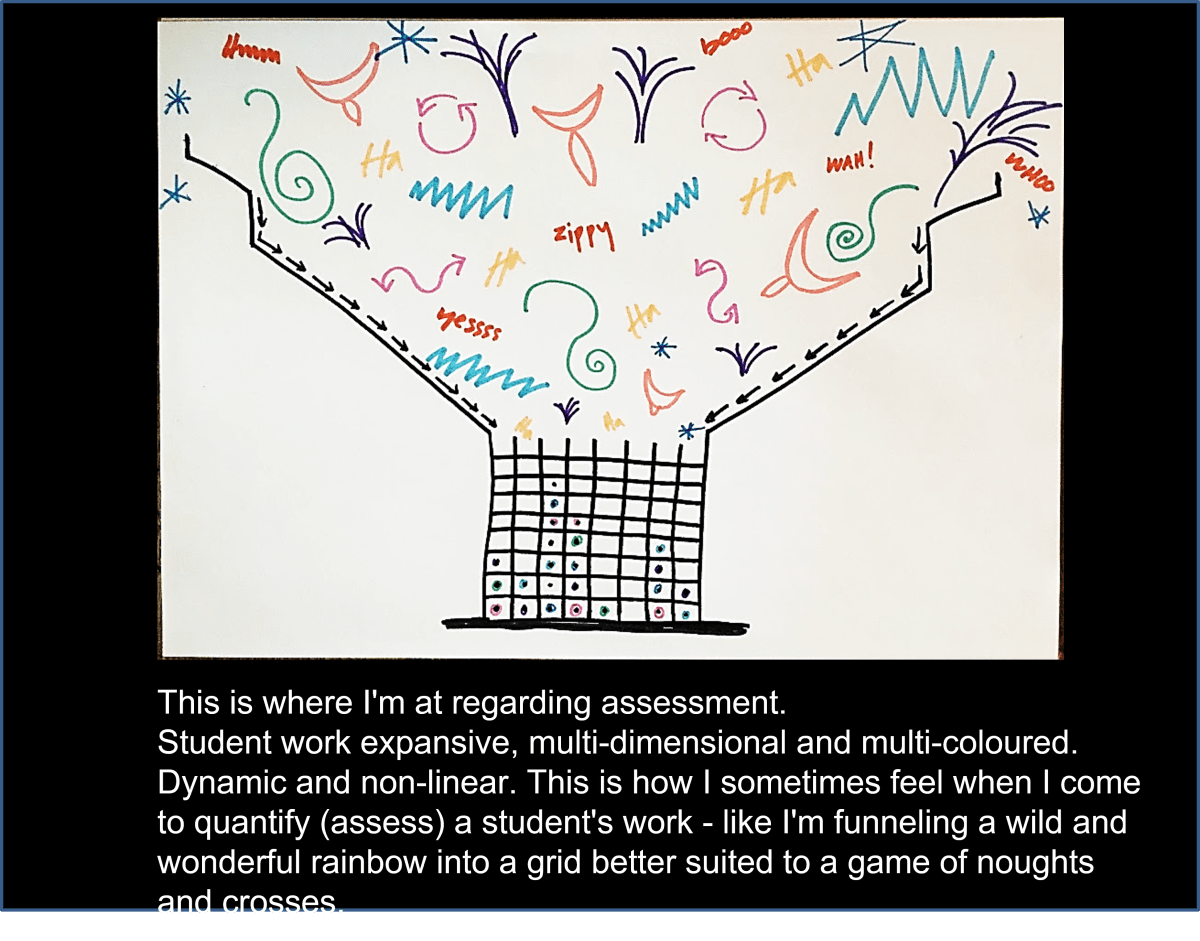
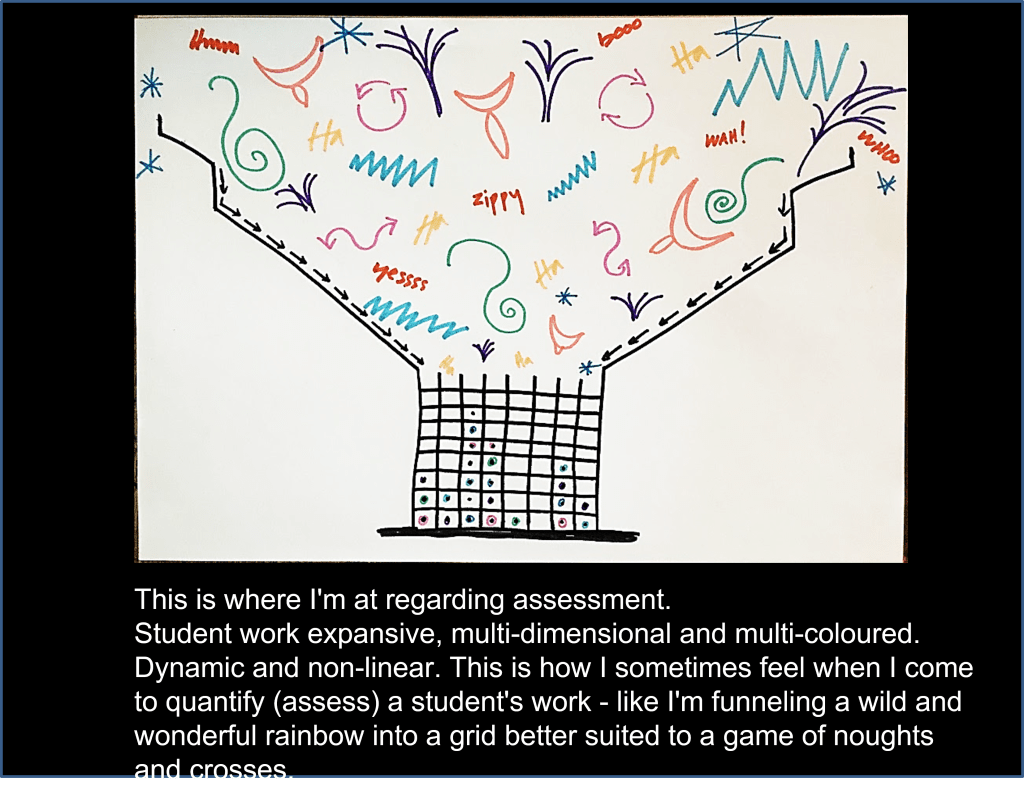
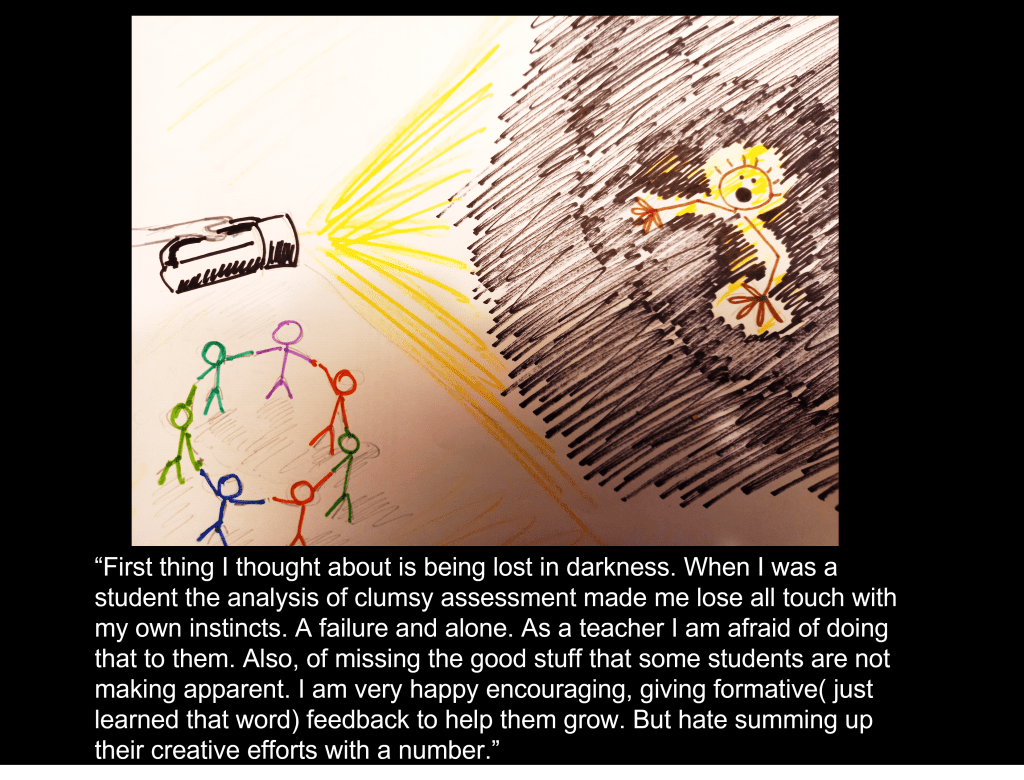
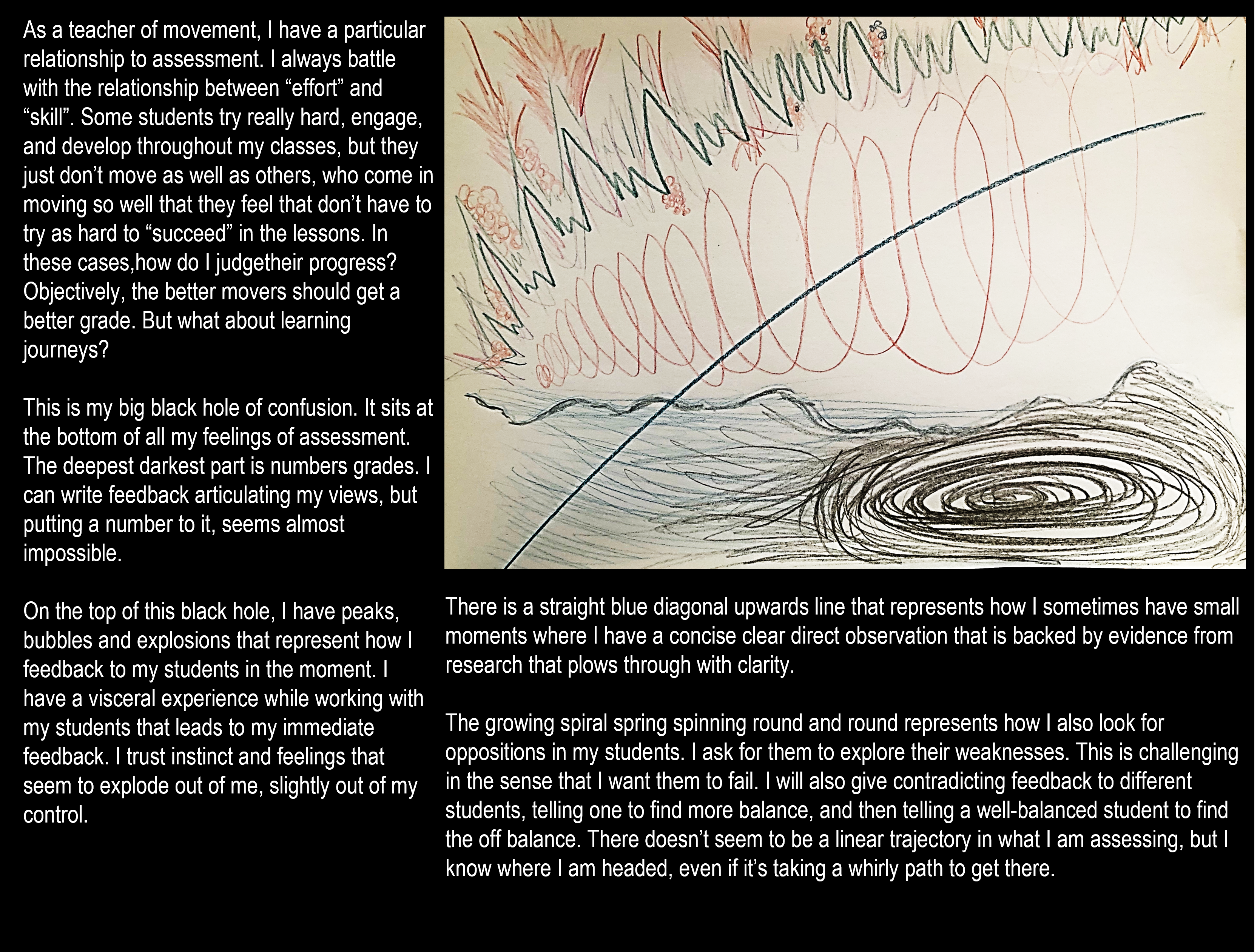
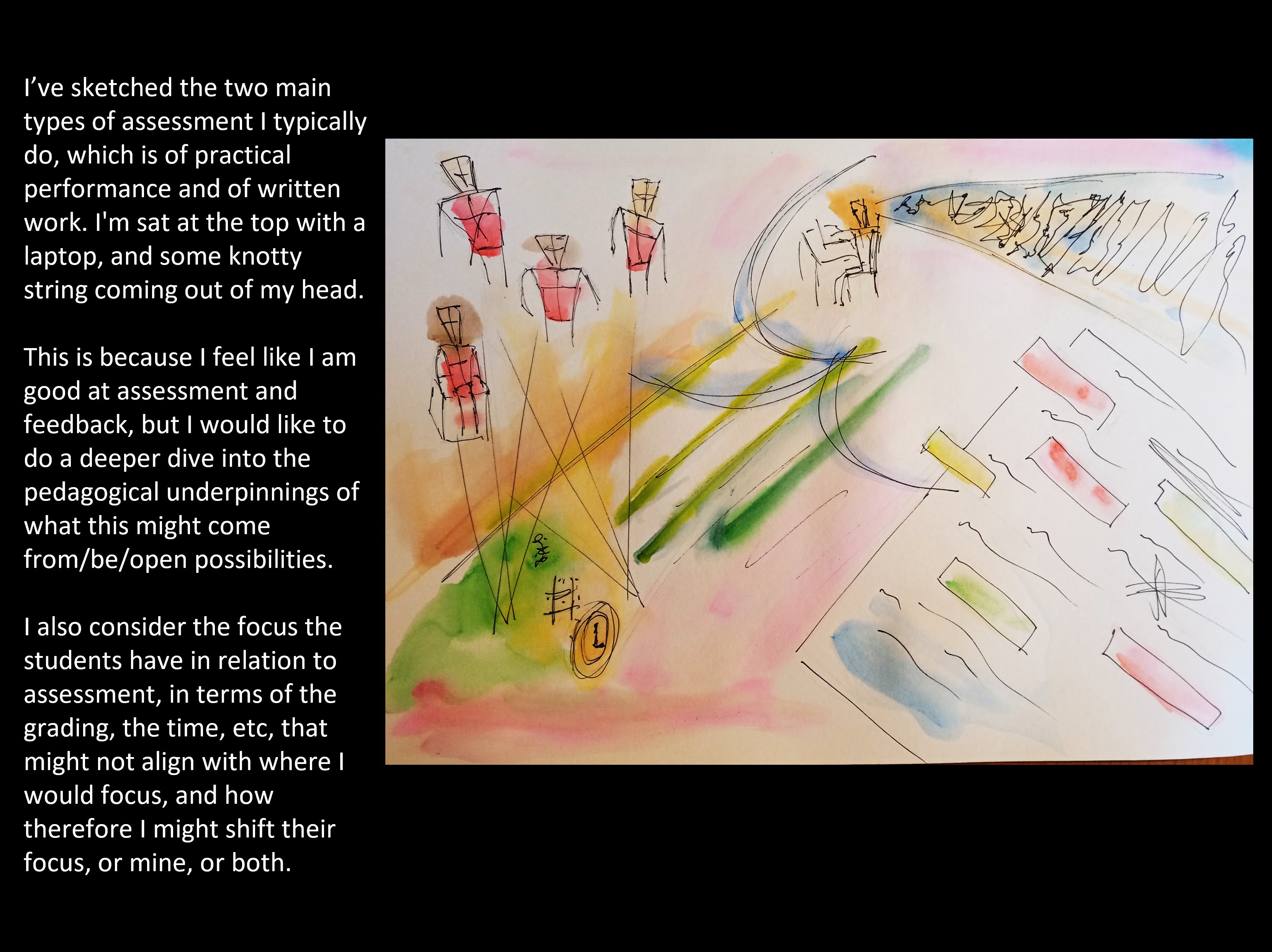
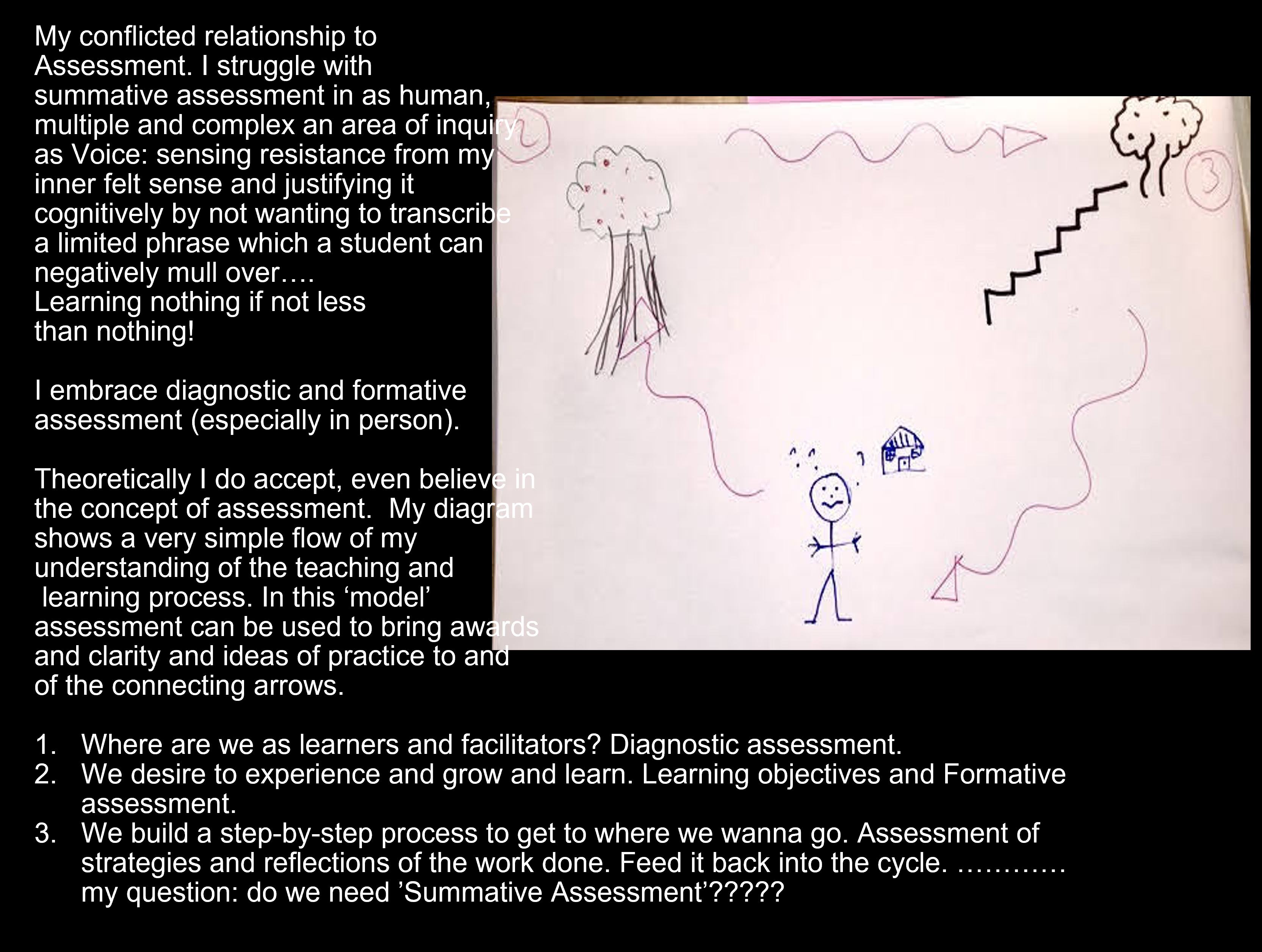
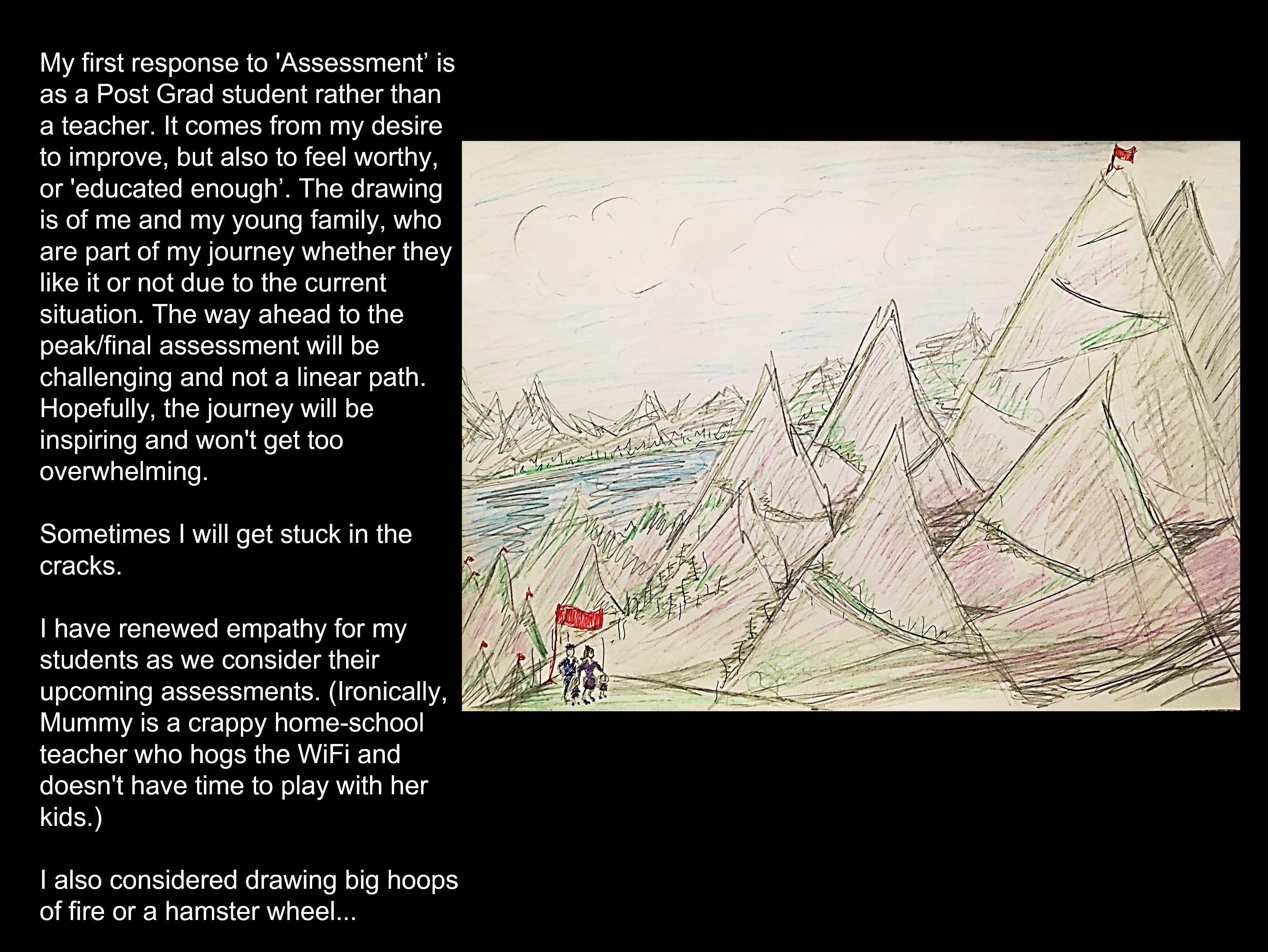
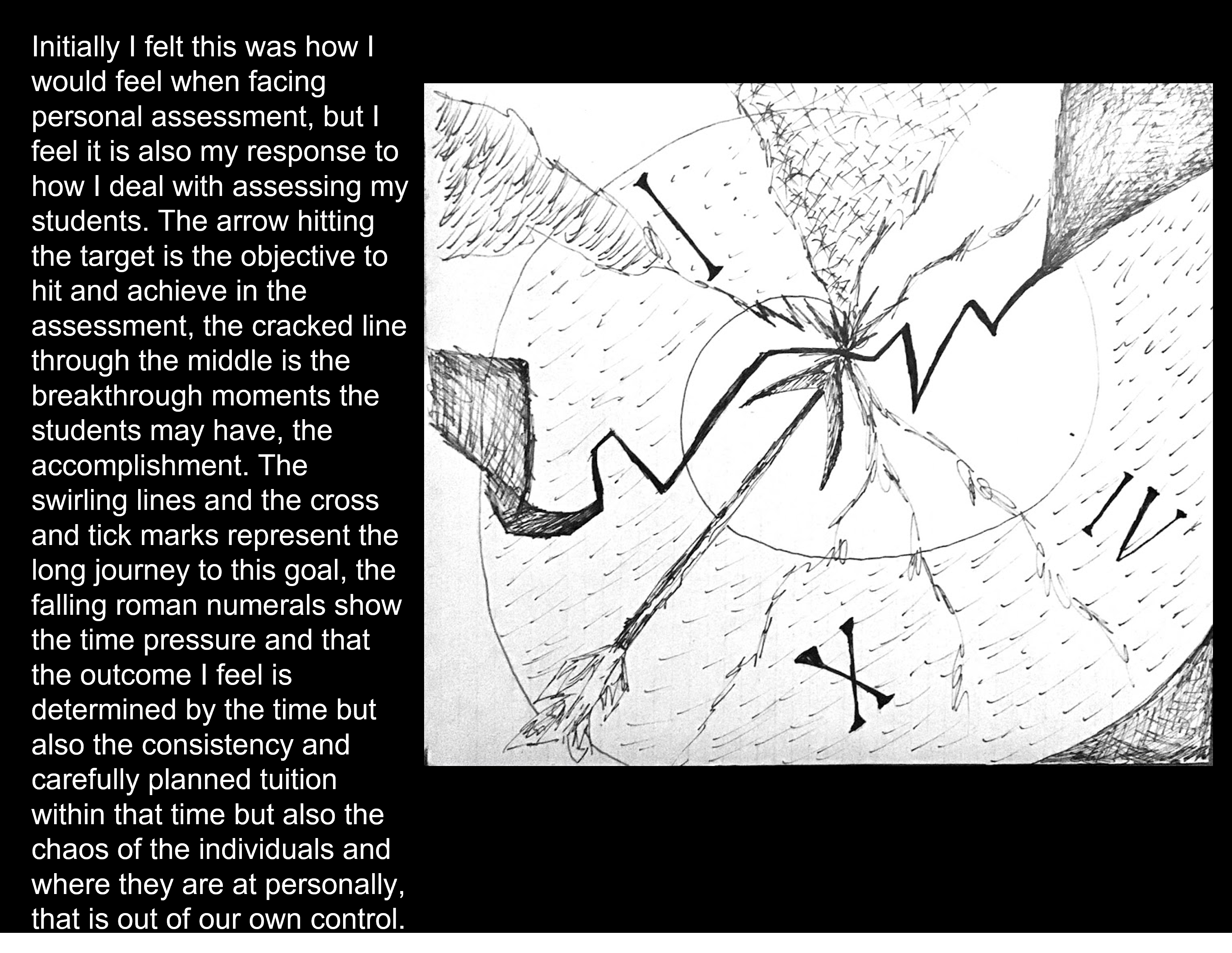
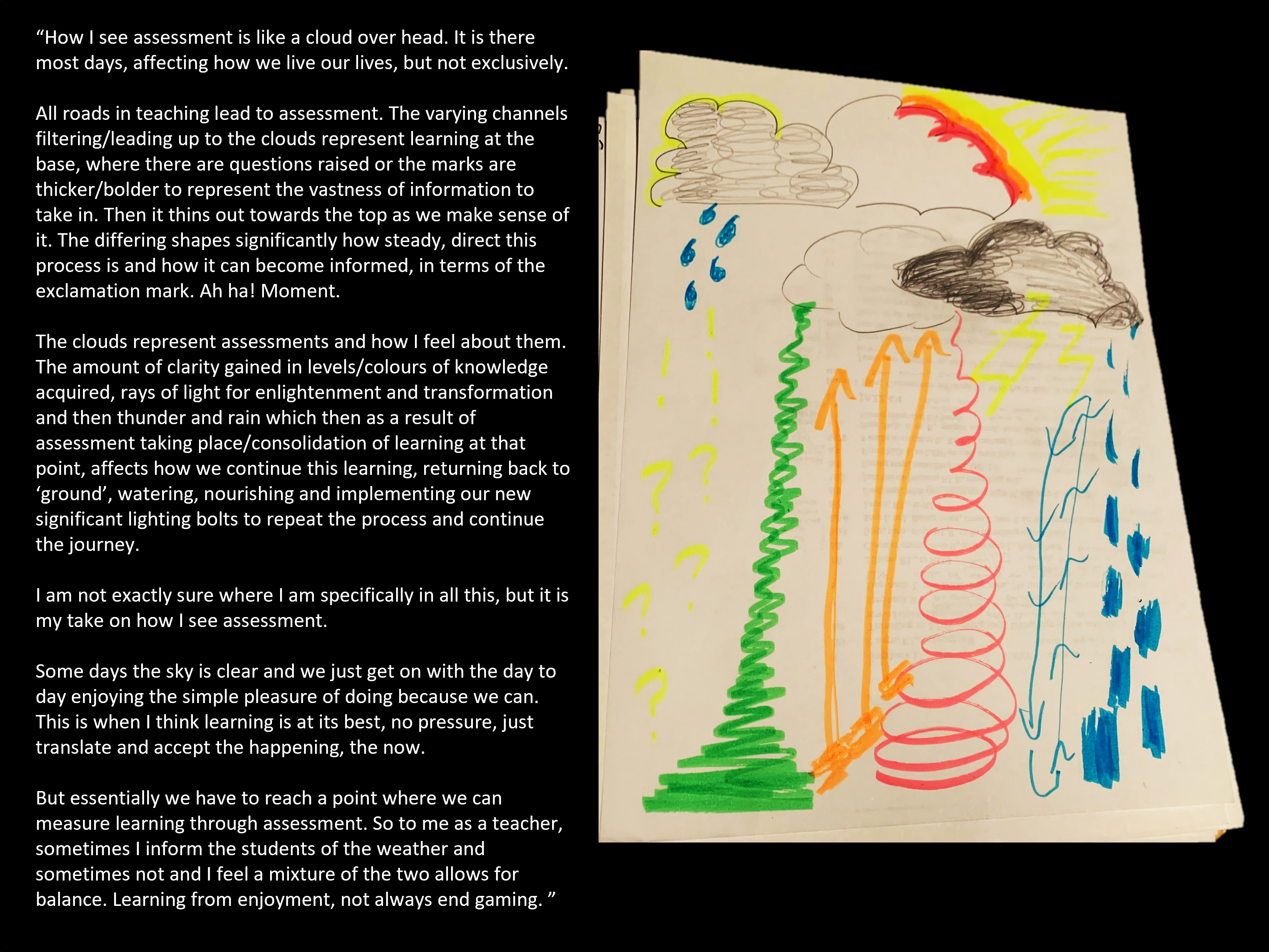
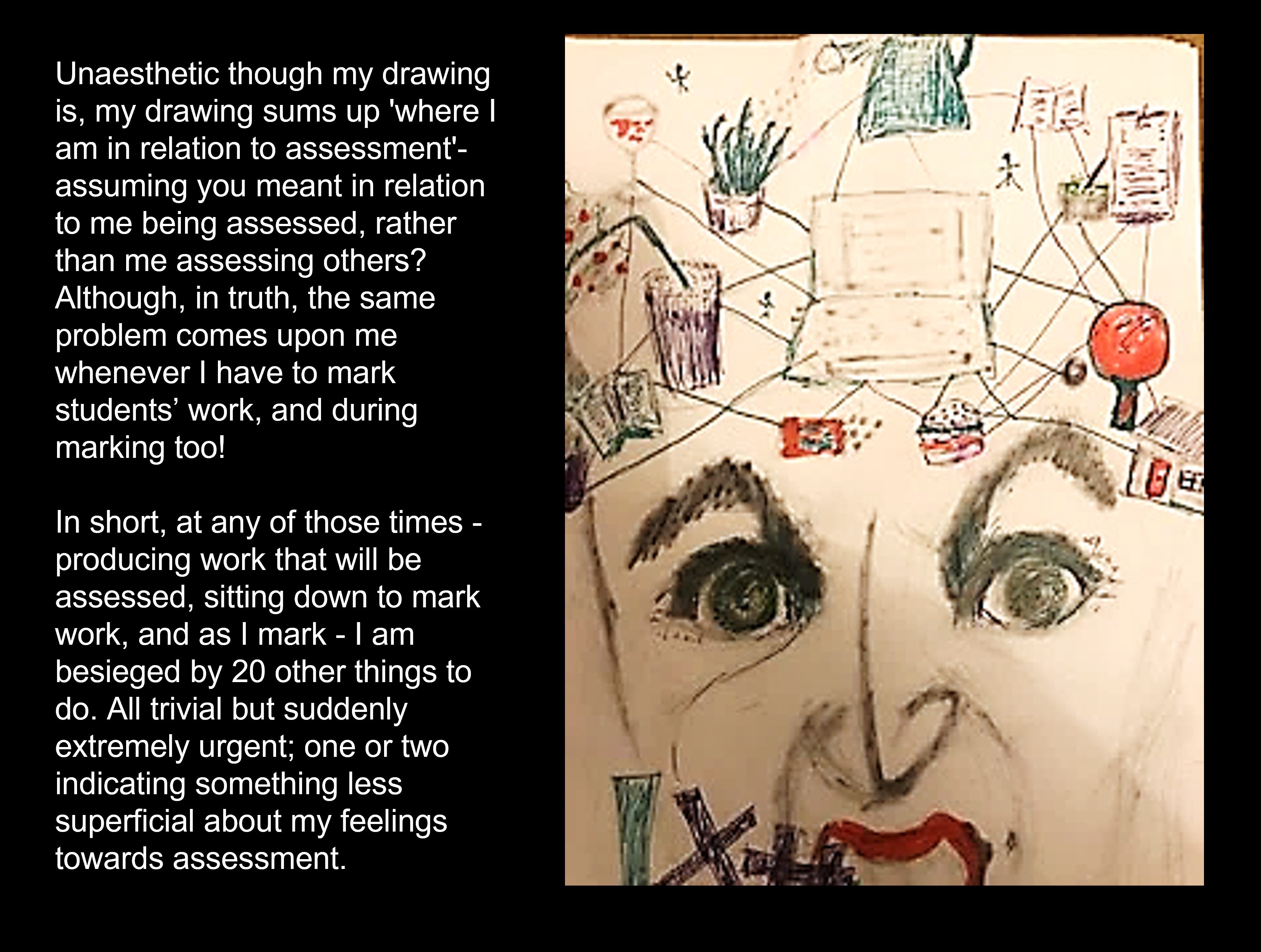
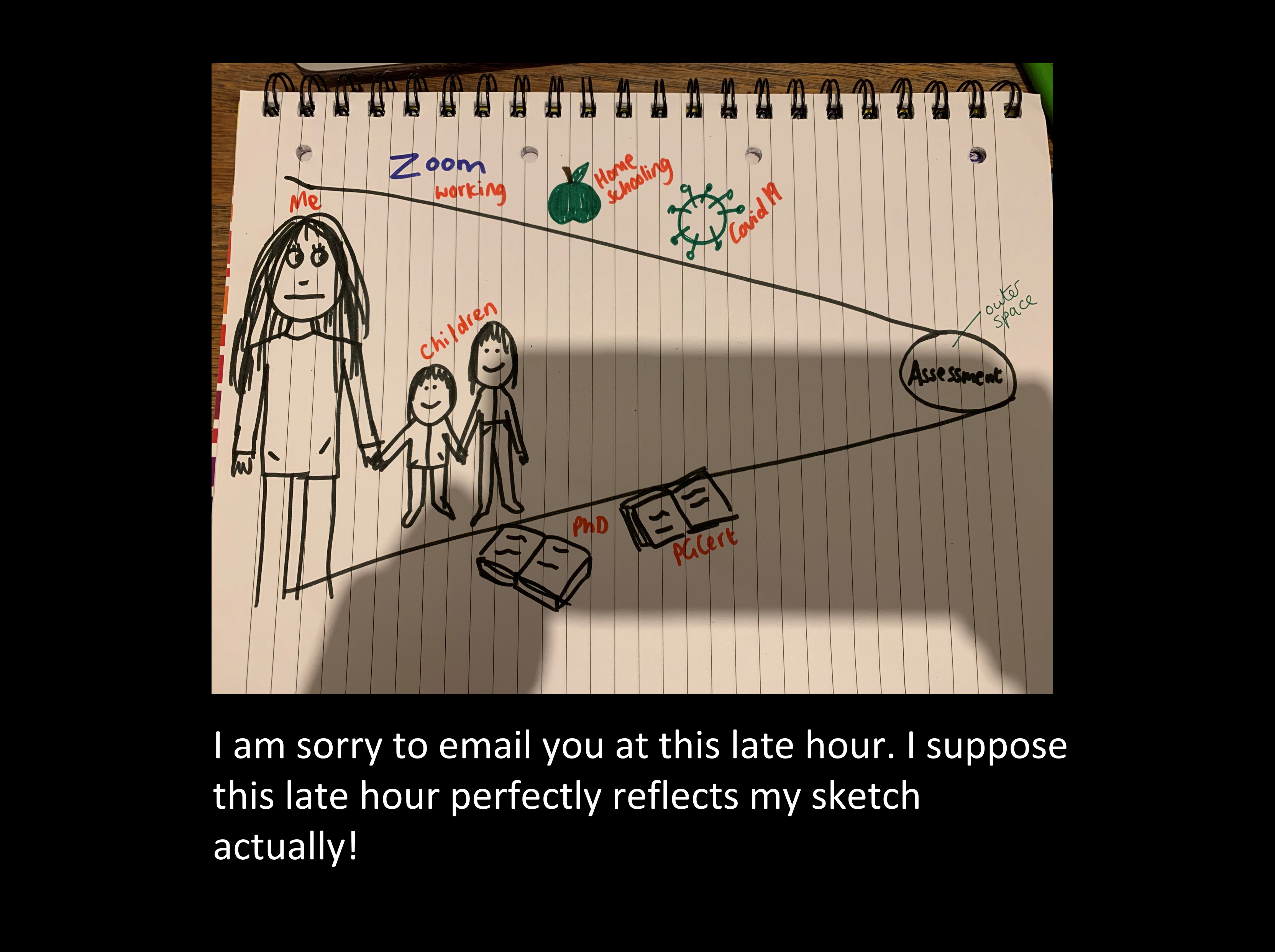
When leading workshops on assessment I often start with a ’warm-up’ exercise in which the participants, supplied with sheets of paper and plenty of coloured pens, are asked to draw/make marks on paper about how they feel in relation to assessment: as assessors or being assessed or both. They then share their work with the rest of the group and are given 30 seconds to describe/explain their drawing.

The task not only energises the room at the start of an intense few hours but is also very revealing about attitudes towards and feelings about assessment. It also puts paid to the idea that only some people are creative or can draw. No matter which disciplines are represented by the participants, there is always an interesting, revealing and creative response.

During Covid, the workshops went online and participants were asked to create their drawings then upload them together with their short commentary. These are just a few, published with permission, of the responses to the task.

Thinking, Making, Doing, Solving, Dreaming: reflections on completing a PhD thesis on creativity in higher education

Recently, I undertook a PhD viva as external examiner at the university department where I did my own PhD. The viva took place in a room the shelves of which contain copies of every completed PhD. And there it was!

I finally completed it in 2007 at the end of a long four years during which I stopped work completely on researching and writing for over a year due to the long illness and death of my father. I eventually and successfully finished it due, in no small part, to the feeling that I wanted to honour his memory.  I took it off the shelf and as I started to read it, a whole lot of memories and emotions came flooding back, particularly reading the short final section where I reflected on my own learning journey. Here is that reflective section, which I hope may be of some use or interest.


Epilogue

Wanderer, there is no path;
The path forms itself as you walk it.
                                       (Machado)

Amongst the more significant of the research outcomes to emerge from this study of the different ways that a group of university teachers experience creativity in learning and teaching is the complexity and richness in the way academics perceive their experience of creativity in learning and teaching, and their enthusiasm for and interest in it.  The centrality of creativity-as-transformation in relation to learning and teaching, and the importance of creativity in relation to personal and/or professional fulfilment, poses a series of challenges to the current focus on creativity in higher education.  The outcomes suggest that there is much more to the experience of creativity in learning and teaching than simply ‘being creative’. Furthermore, the outcomes indicate that a focus on academics’ experience of creativity separated from their larger experience of being a teacher may encourage over simplification of the phenomenon of creativity, particularly in relation to their underlying intentions when engaged in creative activity.

The significance in these research outcomes is that academics need to be perceived and involved as agents in their own and their students creativity rather than as objects of, or more pertinently, deliverers of a particular ‘creativity agenda’.  The transformational power of creativity poses a clear challenge to organisational systems and institutional frameworks that rely, often necessarily, on compliance and constraint, and it also poses a challenge to approaches to learning, teaching and assessment that promote or pander to strategic or surface approaches learning.

The studies into conceptions of learning and teaching demonstrate that, at its best, learning and teaching is about transformation. This study suggests that whilst for higher education institutions (and even the government) creativity is seen as the means to an essentially more productive and profitable end, for university teachers, creativity is essentially about transformation.

A personal reflection

This study is a product of an abiding interest in creativity, and it is interesting to reflect – at the end of a long and arduous period of research and writing –  on my own categories of stasis, process, and transformation in relation to this study. Though it was always clear that I wanted and intended to undertake a study into conceptions of creativity, it took a lengthy period of thinking, reading and discussion to opt finally for a single methodology approach i.e. phenomenography.

My original intention was to use a mixed methods approach that would utilise phenomenography and activity theory. However, after careful consideration of a whole set of factors including the nature of the study, time and resources, it was clear that utilising a single methodological lens was by far the best option.

The appeal of phenomenography lay both in its utility i.e. the right tool for the job, and its methods. My professional arts practice and a great deal of my pedagogic practice is focused on the construction, deconstruction and reconstruction of narratives.  In the course of understanding – certainly to a much greater extent than I did before – what phenomenography is and how it works, I was attracted to the way in which it creates an holistic relational structure of meaning through the purposeful and rigorous deconstruction and reconstruction of experiential narratives.  The gradual comprehension of what phenomenographic praxis entailed was characterised by a series of surges forward and leaps backward (the retrograde movement often greater than the forward movement), interspersed with periods of stasis that were of varying length.

A significant ‘threshold’ moment was when I was able to make the link between being a phenomenographic researcher and being a designer. A well-designed research study needs to fulfil the principles of what characterises good design generally e.g. it is  innovative, logical, honest, it requires attention to detail, it is focused on enhancing the users’ (in this case the readers’) experience, it is elegant and minimal.  This study certainly aimed to meet those criteria and display those qualities.

The understanding that the outcomes of phenomenographic research are constituted by the researcher in direct relationship with the data led me to undertake all the interviews and the consequent transcription myself. It never occurred to me to do otherwise, though the practicalities of dealing with a much larger sample than that involved in this study may well have induced some pragmatism.  I enjoyed undertaking the interviews though I was always cognisant of the need to achieve and maintain the important but delicate balance between empathy and bracketing.

Though undertaking the task of transcribing the interviews could not be described as particularly enjoyable, there was a great deal of satisfaction derived from listening to the richness and detail of what was said, and ensuring that it was written down as accurately as possible. There was a strong sense, amongst the sheer grind of the transcription process, that what had been said in the interviews and what I was listening to through the headphones was important and valuable – not only to me as the researcher, but also to those speaking the words. That sense of the value of what I had obtained made me determined to ensure that the data was considered, at all stages, with the utmost integrity and rigour.

I had underestimated significantly the time required to undertake the interviews and the transcriptions, which included – as is the case with most if not all participants in the doctoral programme – fitting the work on this study in and around significant work and domestic commitments. However, that underestimation paled into insignificance compared to the time it took to undertake the analysis of the approximately sixty thousand words that constituted the data. Whilst the interview and the transcription processes were relatively straightforward, the process of analysis coincided with my long and difficult journey into understanding phenomenography. As the Machado poem quoted at the front of this study says: the path was unfolding as I was walking it.

There were a number of personal attributes and dispositions that assisted me in the rather daunting quest to seek out the structure of variation across the transcripts, and to undertake the intense iterative process of constituting, re-constituting and distilling the categories of description and the structural and referential aspects of variation. Amongst them was a dogged determination to undertake the task properly allied to a genuine enthusiasm for solving complex puzzles. It may seem a rather trite comparison, but the capacity to sit for an extended amount of time considering, categorising and attempting to piece together the hundreds of pieces of a complex jigsaw was a useful attribute in tackling the analysis stage of this study.

The mock viva proved to be another significant influence on the course of this study. I approached it with serious misgivings and feelings of doubt. But I appreciated greatly that it provided a relatively safe and supportive environment in which to test, in front of my peers on the course, not only the appropriateness of my approach but also the wider knowledge and understanding that I had acquired. The probing questions and constructively critical comments provided me not only with a crucial sense of confidence and encouragement that I was ‘on the right track’, but also provided me with useful insights into the gaps that I needed to fill and the pitfalls I needed to avoid. I must admit to being somewhat surprised not only at the depth and breadth of my own understanding of the subject, but also my ability to articulate that understanding in a relatively coherent fashion.  It also made me reflect, in relation to learning and teaching, on the enormous amount of tacit understanding that individuals acquire, and the importance of creating opportunities for at least some of that understanding to be made explicit.

Finally, to return to the quote from Machado at the beginning of this study, I have certainly walked, occasionally stumbled, and for some considerable time actually stopped – along the path of this study as it has formed itself.  While the path continues in terms of further research, this document represents the end-point of a long, complex and fulfilling stage of that journey, and marks my own thinking, making, doing, solving…..and dreaming.