Grief crept up on me, unexpectedly: a story of Christmas Eve.

As a Jewish family, we don’t really do Christmas. Yes, we’ll gather together, have a big meal, play board games, and watch far too much television. But that’s because it’s a holiday, everything is closed, and there’s not much else to do.  Coming up to Christmas that year we’d just had some building work done, and there was still loads of cleaning up, making good, re-decorating to do. So it was looking like a DIY Christmas and new year.

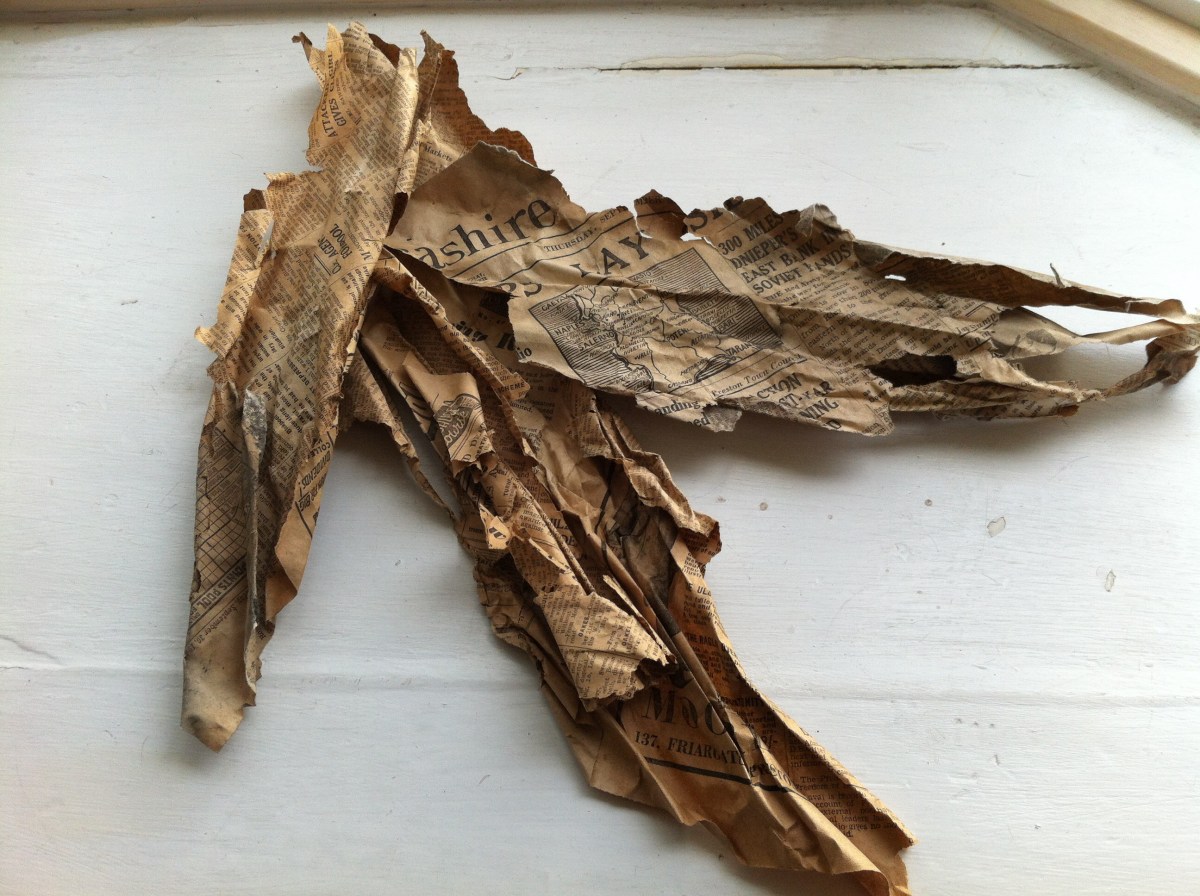
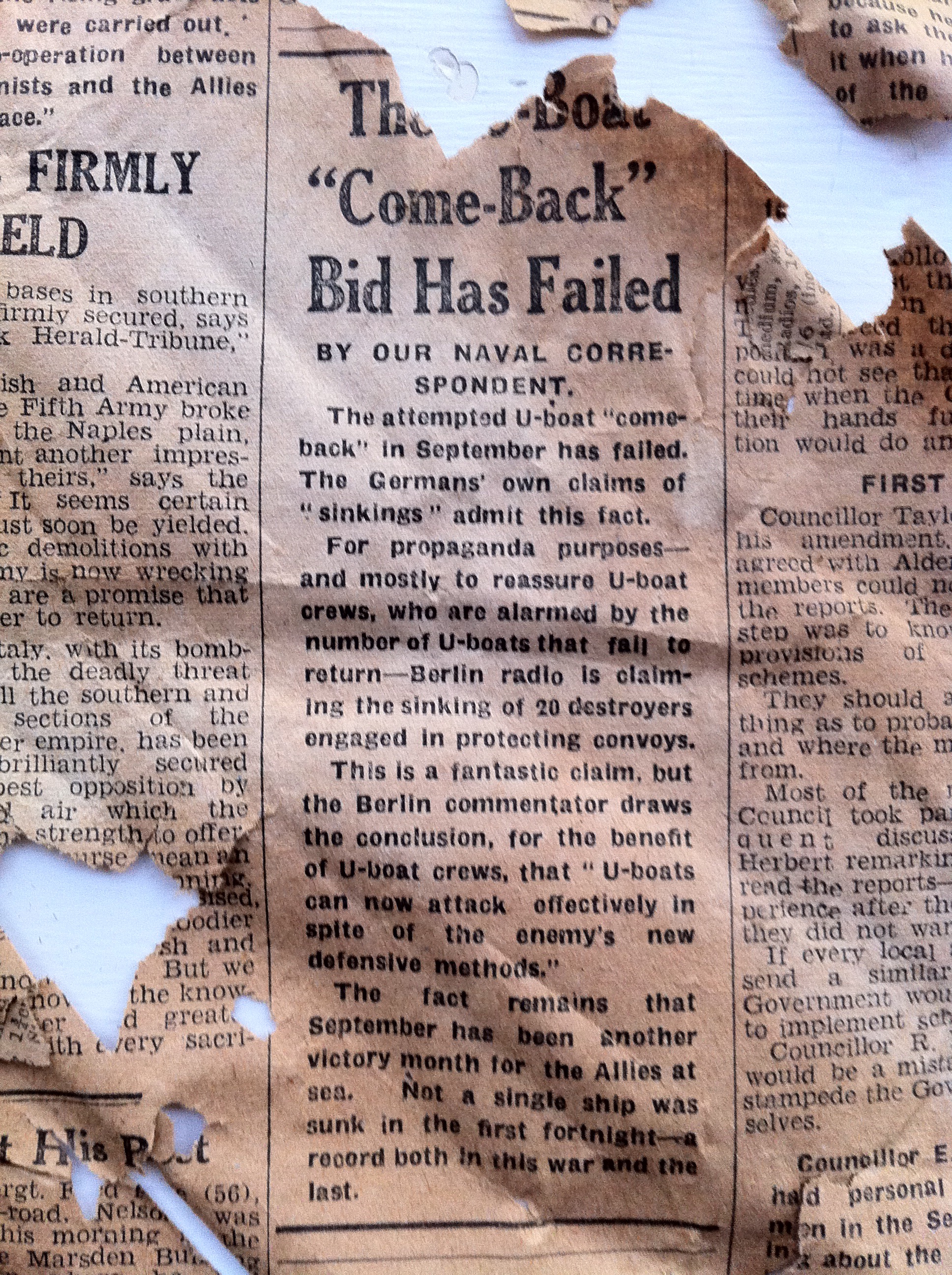
As it happens, the builders had found an old, crumpled newspaper stuffed into the gap between the window and the wall our bedroom. When they first found it, it reminded me of a dead bird.

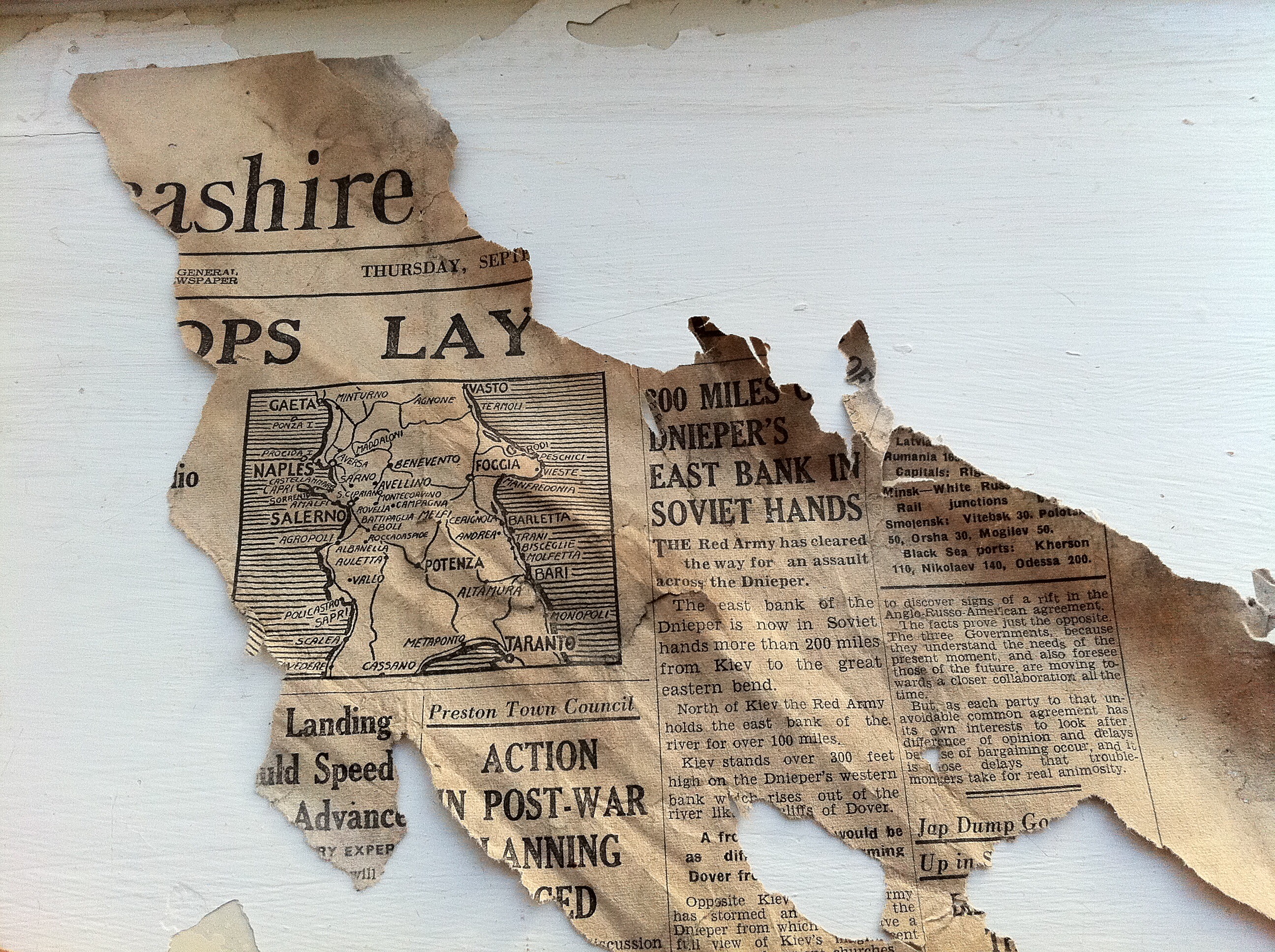
On the afternoon of Christmas Eve I decided to have a go at ‘uncrumpling’ it using our steam iron. It turned out to be the Lancashire Post from 30th September 1943. The paper was very fragile – I suspect they didn’t use the best quality newspaper during the war years – and I became absorbed in the task of slowly but surely flattening the paper one careful centimetre at a time. I wasn’t even aware that the radio was burbling quietly away on the other side of the room.

As each piece revealed its flattened secrets, I read about the Fifth Army’s losses in North Africa, the Russian advances along the Dneiper, a successful bombing raid over Germany (only eight missing in action). I also read about a local woman fined for fiddling ration books, and a Polish aircraft man convicted of drunk driving.

6B36571F-B19A-4FAF-9A7A-0D972EE9726C

There was also a small item about how the German U-boats had failed to sink a single ship in the previous month. 70 years later, on Christmas Eve, the newspapers and television were full of the news about the Royal pardon given to Alan Turing, the man who had ‘cracked’ the German Enigma code used by the U-boats and, by doing so, had in no doubt saved thousands of lives and perhaps helped to end the war. But Turing was gay at a time when it was illegal, and had been found guilty of gross indecency, jailed, chemically castrated, and forbidden to undertake any work linked to national security. He was and should have been hailed as a national hero. Instead, he committed suicide two years later in 1954, and full recognition has only come very recently.

Those U-boat failures, reported on the front page of that 1943 Lancashire Post, were a direct result of the work Turing had undertaken at Bletchley Park.

7D82AF71-CB37-4FD9-91B3-88A0DF5D6033

Absorbed in the task and on this fascinating window on history, I suddenly became aware of a beautiful, solo treble voice filling the room, singing “Once in Royal David’s City….”. It was three o’clock in the afternoon and the start of that wonderful, traditional Christmas Eve ‘Festival of Nine Lessons and Carols’ from King’s College Chapel in Cambridge. And as that pure, high voice soared…..I burst into uncontrollable sobs. A veritable tsunami of grief poured over, into and through me: disturbing and disruptive in its power and intensity.

It took me a while to realise what it was.

When my mother died, I cried no more than a couple of times, and that was around the time when it all happened and usually  in response to an individual’s kindness and sympathy. But nothing like this.

Though, obviously, Jewish and very proud of her traditions, my mother also had a deep love for many things that were quintessentially English. Among them she had a particularly high regard for and interest in the great cathedrals and churches of England. After she passed away I discovered, amidst the thousands of documents she left, a neatly stacked pile of guides to virtually all the English cathedrals and some other churches, all annotated with her distinctive handwriting. I always smile when I see those guides as my father did not approve of my mother’s interest in Christianity, and I know he would not step inside a church. So I have a very clear picture of my mother wandering around inside with her guide, no doubt quizzing whoever she could find about the history of the building and making notes, while my father sat patiently on a nearby bench doing his Times crossword.

Just before three o’clock in the afternoon on Christmas eve, without fail, and though Jews – on the whole – don’t do Christmas, my mother would sit herself in her favourite chair, turn on the radio, quite loudly, and wait until that beautiful, soaring, solo treble voice filled the room, singing the first verse of the carol, followed by the choir and then the congregation. Earlier in the day she would have called me to remind me NOT to call her between 3pm and 5pm.

As that deep pang of grief and my sobbing subsided, and I was able to collect my thoughts, I wondered how that boy’s voice could trigger such intense emotion. I remembered how some of Mark Rothko’s last paintings, those gigantic fields of deep colour, have a similar effect on some individuals, and I recalled that in some therapeutic contexts music and song are used to enable individuals and groups to confront severe trauma.

In my case, that moment triggered an intense ‘remembrance of things past’ and a huge sense of both loss and love. I suspect we all have those triggers, those Proustian ‘Madeleine biscuit’ moments, when something – perhaps completely unexpected – plunges us into the deep well of memory, love and loss.

That afternoon, as I ironed that old newspaper (something my mother would have loved – the newspaper not the ironing!) and listened to that young boy singing those famous words, I probably missed her more than I’ve done at any other time.

A brush, with silence and solitude

I really enjoy painting. Not the sort of thing one might frame and hang on a wall, but the actual walls one might hang them on. The larger the better. And I’m trying to work out why I like it so much.

The rather dark and now somewhat battered walls of our hallway, stairs and upper landing need re-decorating. This time the normally angst-ridden process of choosing a colour was reduced to a simple choice: brilliant white. None of that, “oh, but should it be a ‘cool white’ or a’warm white’ or one with hint of blue/green/yellow/pink?”. Preparation consisted of looking at the walls and deciding that the paint could go straight on, requiring at least two coats. So, with paint, brushes and roller, at the ready, I changed in to my painting clothes (old T-shirt and jeans) and started.

The house is very quiet. My partner is away for the week, so it’s just me, the dog, who is old and sleeps most of the day, and the cat who comes and goes as he pleases. I’m tempted to put on some music, but can’t decide what I want to listen to, so I don’t bother. I turn on the radio instead. Again it doesn’t feel right, so I turn it off.

I am left with silence, except, of course, there’s no such thing. The distant sound of traffic, the odd creaks of an old house, the excited chatter of the kids next door as they arrive home. But gradually, as I start to paint, my face no more than a couple of feet from the wall, I sense everything focusing down to exclude everything except me, the paint tin, the brush and the wall.

One of things I remember particularly from my theatre education and teaching was Stanislavski’s ‘Circle of Concentration’. As an actor you can choose where to draw the circle. You can draw it so closely around yourself that you are aware of nothing except your own mind and body (not that useful for an actor). You can choose to widen it to include the actors on the stage but not the audience. You can choose to include just the (expensive) front rows of the audience or you can choose the include the whole audience. In the case of my painting, the circle is drawn tightly around me, and I immerse myself in the rhythms of the job at hand. Being so close to the wall I notice the small differences in the surface: a hairline crack here, a slight pitting there, a small bubble in the lining paper. The paint is quite thick, and I watch as the rather obvious brushmarks disappear as gravity (I’m supposing) allows the paint to settle in the micro-troughs and render the surface smooth. I have a steady hand and can hold a line, so I don’t use masking tape but I use a narrow brush that I’ve had for many years. I know precisely how this brush works, how much paint to use, how much pressure, in order to achieve a solid, accurate straight line. I’ve tried using another, similar brush, but it’s not the same. I have a relationship with this brush.

And so the hours pass, and the white colour field extends before my eyes. Eventually I stop. I have no idea whether it’s been one hour or five until I look at my watch, which has been on my wrist the whole time, but I haven’t looked at it since I started painting. I’m aware that my body feels tired, and a few muscles are complaining that they haven’t been used in a while. But my mind feels particularly clear and not filled with the usual fog of too many things to do.

There is one of those zen things about the benefits of ‘sitting quietly, doing nothing’. I’d certainly recommend ‘standing quietly, doing painting’.

“It is really a matter of ending this silence and solitude, of breathing and stretching one’s arms again.” ― Mark Rothko

Thinking, Making, Doing, Solving, Dreaming: reflections on completing a PhD thesis on creativity in higher education

Recently, I undertook a PhD viva as external examiner at the university department where I did my own PhD. The viva took place in a room the shelves of which contain copies of every completed PhD. And there it was!

I finally completed it in 2007 at the end of a long four years during which I stopped work completely on researching and writing for over a year due to the long illness and death of my father. I eventually and successfully finished it due, in no small part, to the feeling that I wanted to honour his memory.  I took it off the shelf and as I started to read it, a whole lot of memories and emotions came flooding back, particularly reading the short final section where I reflected on my own learning journey. Here is that reflective section, which I hope may be of some use or interest.


Epilogue

Wanderer, there is no path;
The path forms itself as you walk it.
                                       (Machado)

Amongst the more significant of the research outcomes to emerge from this study of the different ways that a group of university teachers experience creativity in learning and teaching is the complexity and richness in the way academics perceive their experience of creativity in learning and teaching, and their enthusiasm for and interest in it.  The centrality of creativity-as-transformation in relation to learning and teaching, and the importance of creativity in relation to personal and/or professional fulfilment, poses a series of challenges to the current focus on creativity in higher education.  The outcomes suggest that there is much more to the experience of creativity in learning and teaching than simply ‘being creative’. Furthermore, the outcomes indicate that a focus on academics’ experience of creativity separated from their larger experience of being a teacher may encourage over simplification of the phenomenon of creativity, particularly in relation to their underlying intentions when engaged in creative activity.

The significance in these research outcomes is that academics need to be perceived and involved as agents in their own and their students creativity rather than as objects of, or more pertinently, deliverers of a particular ‘creativity agenda’.  The transformational power of creativity poses a clear challenge to organisational systems and institutional frameworks that rely, often necessarily, on compliance and constraint, and it also poses a challenge to approaches to learning, teaching and assessment that promote or pander to strategic or surface approaches learning.

The studies into conceptions of learning and teaching demonstrate that, at its best, learning and teaching is about transformation. This study suggests that whilst for higher education institutions (and even the government) creativity is seen as the means to an essentially more productive and profitable end, for university teachers, creativity is essentially about transformation.

A personal reflection

This study is a product of an abiding interest in creativity, and it is interesting to reflect – at the end of a long and arduous period of research and writing –  on my own categories of stasis, process, and transformation in relation to this study. Though it was always clear that I wanted and intended to undertake a study into conceptions of creativity, it took a lengthy period of thinking, reading and discussion to opt finally for a single methodology approach i.e. phenomenography.

My original intention was to use a mixed methods approach that would utilise phenomenography and activity theory. However, after careful consideration of a whole set of factors including the nature of the study, time and resources, it was clear that utilising a single methodological lens was by far the best option.

The appeal of phenomenography lay both in its utility i.e. the right tool for the job, and its methods. My professional arts practice and a great deal of my pedagogic practice is focused on the construction, deconstruction and reconstruction of narratives.  In the course of understanding – certainly to a much greater extent than I did before – what phenomenography is and how it works, I was attracted to the way in which it creates an holistic relational structure of meaning through the purposeful and rigorous deconstruction and reconstruction of experiential narratives.  The gradual comprehension of what phenomenographic praxis entailed was characterised by a series of surges forward and leaps backward (the retrograde movement often greater than the forward movement), interspersed with periods of stasis that were of varying length.

A significant ‘threshold’ moment was when I was able to make the link between being a phenomenographic researcher and being a designer. A well-designed research study needs to fulfil the principles of what characterises good design generally e.g. it is  innovative, logical, honest, it requires attention to detail, it is focused on enhancing the users’ (in this case the readers’) experience, it is elegant and minimal.  This study certainly aimed to meet those criteria and display those qualities.

The understanding that the outcomes of phenomenographic research are constituted by the researcher in direct relationship with the data led me to undertake all the interviews and the consequent transcription myself. It never occurred to me to do otherwise, though the practicalities of dealing with a much larger sample than that involved in this study may well have induced some pragmatism.  I enjoyed undertaking the interviews though I was always cognisant of the need to achieve and maintain the important but delicate balance between empathy and bracketing.

Though undertaking the task of transcribing the interviews could not be described as particularly enjoyable, there was a great deal of satisfaction derived from listening to the richness and detail of what was said, and ensuring that it was written down as accurately as possible. There was a strong sense, amongst the sheer grind of the transcription process, that what had been said in the interviews and what I was listening to through the headphones was important and valuable – not only to me as the researcher, but also to those speaking the words. That sense of the value of what I had obtained made me determined to ensure that the data was considered, at all stages, with the utmost integrity and rigour.

I had underestimated significantly the time required to undertake the interviews and the transcriptions, which included – as is the case with most if not all participants in the doctoral programme – fitting the work on this study in and around significant work and domestic commitments. However, that underestimation paled into insignificance compared to the time it took to undertake the analysis of the approximately sixty thousand words that constituted the data. Whilst the interview and the transcription processes were relatively straightforward, the process of analysis coincided with my long and difficult journey into understanding phenomenography. As the Machado poem quoted at the front of this study says: the path was unfolding as I was walking it.

There were a number of personal attributes and dispositions that assisted me in the rather daunting quest to seek out the structure of variation across the transcripts, and to undertake the intense iterative process of constituting, re-constituting and distilling the categories of description and the structural and referential aspects of variation. Amongst them was a dogged determination to undertake the task properly allied to a genuine enthusiasm for solving complex puzzles. It may seem a rather trite comparison, but the capacity to sit for an extended amount of time considering, categorising and attempting to piece together the hundreds of pieces of a complex jigsaw was a useful attribute in tackling the analysis stage of this study.

The mock viva proved to be another significant influence on the course of this study. I approached it with serious misgivings and feelings of doubt. But I appreciated greatly that it provided a relatively safe and supportive environment in which to test, in front of my peers on the course, not only the appropriateness of my approach but also the wider knowledge and understanding that I had acquired. The probing questions and constructively critical comments provided me not only with a crucial sense of confidence and encouragement that I was ‘on the right track’, but also provided me with useful insights into the gaps that I needed to fill and the pitfalls I needed to avoid. I must admit to being somewhat surprised not only at the depth and breadth of my own understanding of the subject, but also my ability to articulate that understanding in a relatively coherent fashion.  It also made me reflect, in relation to learning and teaching, on the enormous amount of tacit understanding that individuals acquire, and the importance of creating opportunities for at least some of that understanding to be made explicit.

Finally, to return to the quote from Machado at the beginning of this study, I have certainly walked, occasionally stumbled, and for some considerable time actually stopped – along the path of this study as it has formed itself.  While the path continues in terms of further research, this document represents the end-point of a long, complex and fulfilling stage of that journey, and marks my own thinking, making, doing, solving…..and dreaming.

Notes from the edge: piano lessons

I aim to play the piano most days, if I am near one. I work from home a great deal of the time, and I do a lot of writing. The work often involves some complex problems – large and small – that need to be addressed. When I am stuck, simply fed-up and frustrated or just need a break, I’ll go to the room with the piano and play for 10, 20, maybe 30 minutes. When I sit at the piano, I might choose to run through one or two of the classical pieces I’ve learned to play reasonably well over the years. Or I might choose a jazz or popular standard that I’ve picked up by ear, which involves a bit of improvisation in that sense of working relatively loosely within a recognised framework. I never play the same tune in exactly same way: but then, who does?

Usually I just place my hands on or over the keys, and I wait to see what happens. I have no idea of what is going to happen before it takes place. Something stirs. Something starts. A note or a chord is played. And off I go. Or off ‘it’ goes, because I feel I’m not in conscious control of my fingers. I am, of course, but it doesn’t feel that way.

David Sudnow, in his now classic work Ways of the Hand (1978) which is a remarkable insider’s account of learning to improvise jazz piano that was based mostly on his own introspection, describes having the most vivid impression of his hands making music by themselves. Sometimes, for me, it feels a bit awkward, as I travel down some musical cul-de-sac or find myself in a particular and sometimes too-familiar groove. Other times it just flows, I’m ‘in the zone’, and I know, especially when it really flows, that it clears and refreshes not only my mind but also my spirit.

In relation to ‘flow’ and Czikszentmihalyi’s influential work on that topic, we know that performances that combine flow states with a degree of risk taking might hold the key to achieving optimal levels of musical communication in improvisation. Being in the flow or ‘groove’ sometimes enables experienced improvisers to move beyond or extend their previous cognitive limits.

Sudnow uncovered many principles about learning, and particularly, what we might call embodied learning. His analysis and observations resonate powerfully with the work and research around creativity in learning and teaching, and what might be referred to as learning or teaching at the ‘edge of chaos’.

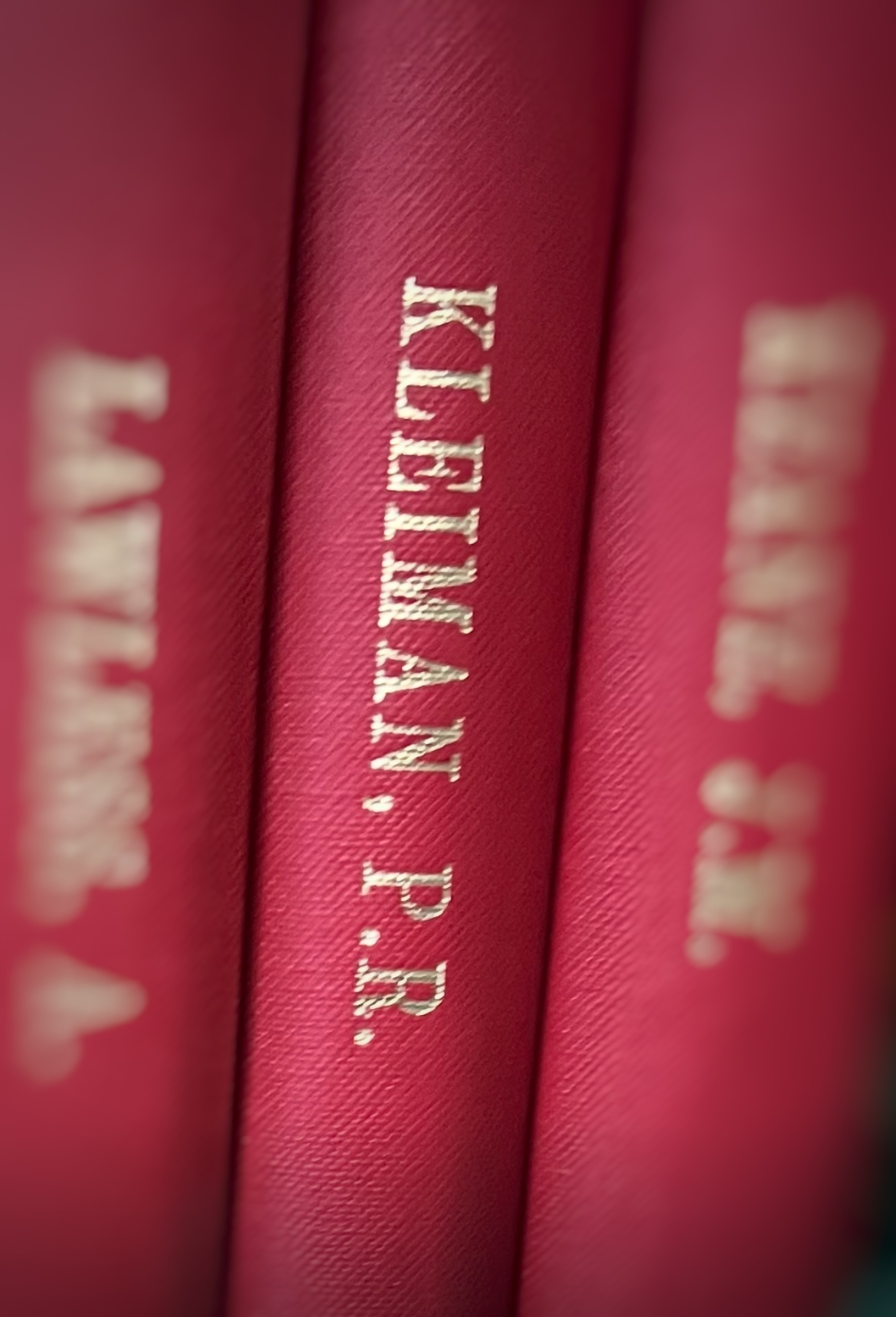
Photo by Paul Kleiman

2 Jews, 3 Arabs and 5 cups of tea

More years ago than I care to remember, five men sat around a hissing stove in a campsite outside Sofia in Bulgaria. It was 1969 and Robert and I were two Jewish lads from North London driving from London to Israel via Turkey. We were discussing life, the universe and the future of the Middle East with three Arabs: two Jordanians and a Syrian. Three teachers. Three friends on holiday together.

We had arrived at the campsite quite late in the day, set up our tent and cooked ourselves a meal. Then, as usual, we had a wander around the campsite. We noticed that a number of cars had Arabic number plates. Some of the other campers were walking around the site, and no doubt some must have seen – because it was difficult to avoid – the big sign on our windscreen which said ‘London to Tel Aviv’. To be honest, I thought the sign was a bit of a mistake, especially as it was only two years since the ‘6 Day War’ or ‘June War’ when Israel had defeated the armed forces of Egypt, Jordan and Syria, and had occupied the Sinai, the West Bank and the Golan Heights. But it was Robert’s car, and I wasn’t going to argue.

As darkness fell and we boiled up the kettle for a brew, three figures appeared. One said, in perfect English: “Apologies for disturbing you, but my friends and I saw the sign on your car. Are you really going to Israel?”

“Yes, we are”, Robert said.

“Are you Jewish?”

An awkward moment and an awkward pause. But I had one of those ‘well, in for a penny, in for a pound’ moments, and said “Yes, we are. My name is Paul. This is my friend Robert. We’re making some tea. Please join us…but I’m afraid we only have two cups”.

The first man spoke briefly in Arabic to the other two, who nodded assent, and one of them turned and walked away. Then he turned back to us: “Thank you. We will join you. I am Ibrahim, I am a teacher from Amman in Jordan. These are my friends, they are also teachers.” And pointing in the direction of the man who had walked away: “He has gone to bring some cups”.

When the man returned we all shook hands, introduced ourselves properly, sat around the stove and poured the tea.

At first the conversation was the normal campsite conversation: Where do you live? What do you do? Which football team do you support? (they knew the names of most of the Manchester United players – Best, Charlton, etc.). Then, inevitably, we came to the not insignificant matter that we were about to travel to a country that had recently defeated their countries in war and had occupied parts of their countries.

What struck me then, and has stayed with me all these years, was that there was no obvious bitterness. These were individuals who just wanted a decent life for themselves and their families. Who wanted to teach, and to do good in the world. They did not see us, as Jews, as their enemies; neither did we see them, as Arabs, as our enemies. As we sat and talked, about our lives and our hopes for a peaceful future (and football), there was a strong sense of a shared humanity; that by moving beyond the shackles of politics, religion and history, we were just five individuals, enjoying each other’s company, respecting our differences, sipping tea under the stars.