
Academics, eh? We may be great teachers. We may be great researchers. We may even be great managers and administrators. But that does not make us great educational designers….and I write this as someone who trained and worked as a designer before I stumbled into teaching design and some other subjects in higher education. Once inside academia I was immediately struck by the fact that a great number of things just didn’t seem to work very well. I was surrounded by talented, skilful, intelligent, committed and passionate colleagues who appeared to spend an inordinate amount of time and energy just getting things to work for them and their students.
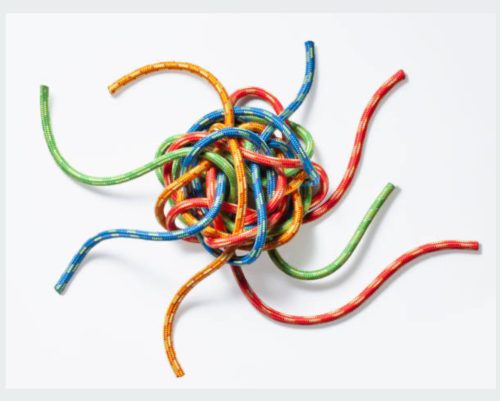
It didn’t take me long to work out that one of the primary causes of all this inefficiency and waste and the bang-head-on-desk frustration that resulted, was frequently and simply a tangle of poor design. The plethora of complex systems, labyrinthine processes and perplexing protocols that extend to every corner of our educational endeavours all too often have been created by individuals and groups who – with the best will in the world – are not well acquainted, if at all, with the basic principles of good design.
An awareness and appreciation of concepts such as ‘good design enhances the users’ experience’, or ‘good design is logical e.g. form follows function’, or ‘good design is minimal design e.g. as little as possible and only as much as absolutely necessary’, or ‘good design is consistent right down to the fine details’ was and is often entirely lacking.
There is also an aesthetic quality to good design, but I’ve yet to hear or read that word, or anything similar, when it comes to discussing the crucially important task of designing the educational experiences of students.
If we are to be architects of educational experiences, then we must accept that not only do we need to embrace the principles and practices of good design, but – crucially – we either need to become skilled educational architects and designers ourselves or ensure that at least some of us have or develop those skills so that we can help our colleagues and institutions not only detangle the knots that bind us but also, and more importantly, to create and support the wonderful educational experiences that our students truly deserve.
Paul Kleiman Design for Learning
About me:
I am an independent higher education consultant and co-founder of the educational consultancy Ciel Associates specialising in organisational and transformational change and enhancing learning, teaching and assessment. I have over thirty years experience in a wide range of higher education providers both as a consultant and, before that, in a number of management, leadership and strategic roles. My work is informed by my belief in the transformational power of education and a commitment to enabling institutions to create meaningful and sustainable change. Contact me at Ciel Associates .


 Stumbling with Confidence